

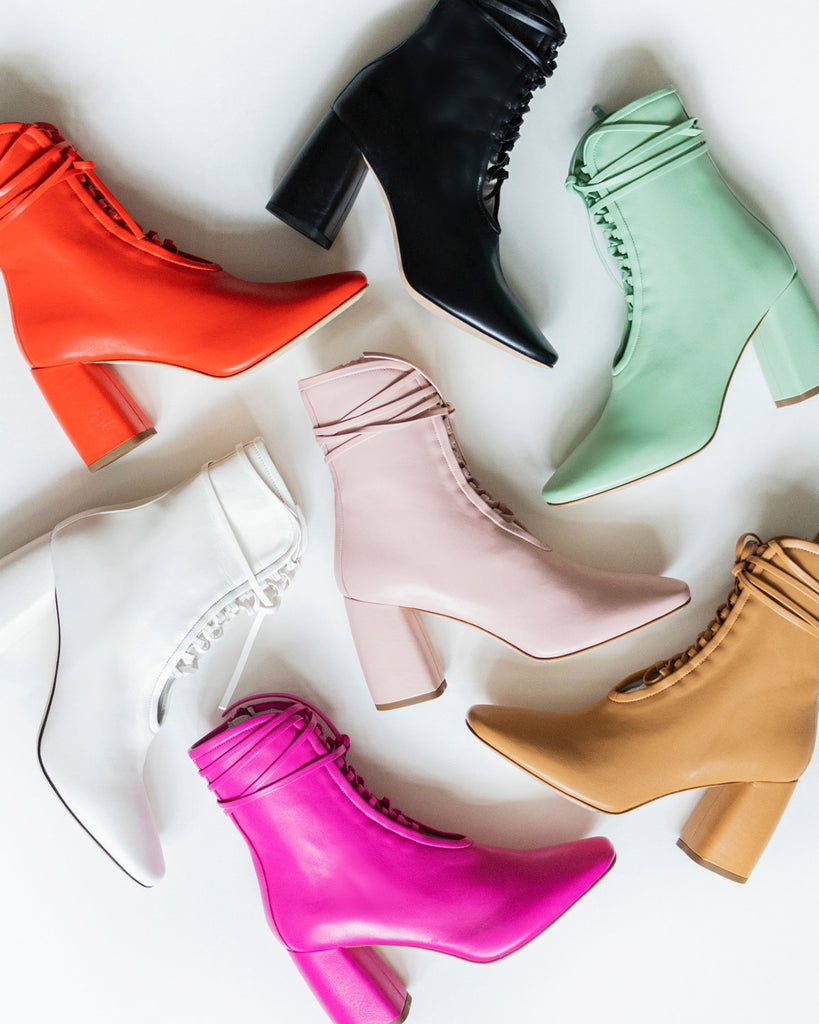


The best black leather pumps for women combine timeless polish with real comfort engineering. The right pair sits in the 90 to 120mm range, uses quality leather construction, and fits your actual foot shape so you can wear it from morning meetings to dinner without planning an emergency shoe swap.
You know the moment. It’s late afternoon, your calendar is still full, and your shoes have stopped working with you. Your posture shifts, your stride shortens, and suddenly the polished look you wanted feels like a negotiation with pain.
I’ve never believed luxury should ask that of you.
As a designer, I think a black pump earns its place in your wardrobe only when it does three jobs at once. It has to sharpen an outfit, support your foot, and hold up over time. Anything less is costume, not design.
The End of the Backup Flats Era
The backup-flats ritual became normal because too many heels were built for appearance first and wear second. That’s the core problem. The market is full of pretty shoes that fail by lunchtime.
A 2025 Podiatry Today survey found 68% of professional women report foot pain after just 2+ hours in heels, which tells you exactly why so many women still carry a second pair for the commute or the walk between meetings (reported here). If your shoes give up after two hours, they’re not luxury. They’re decoration.
I design from the opposite point of view. Start with wearability, then refine the silhouette until it feels elegant and strong.
Practical rule: If you can’t imagine walking into a full workday, stepping out to dinner, and getting home in the same pair, the shoe hasn’t earned a place in your closet.
That’s why I care so much about the details most brands skip:
- Heel geometry: Not just heel height, but how the heel sits under your body.
- Toe shape: A pointed toe can still be wearable if the internal shape respects the foot.
- Material response: Leather should mold, not fight you.
- Cushioning placement: Padding only matters if it’s placed where pressure lands.
A black pump should feel like authority without effort. It should work with tailoring, dresses, denim, and eveningwear. It should also work with your real life, especially if your day includes stairs, pavement, long hallways, and standing conversations that stretch longer than planned.
If you’re building a wardrobe around pieces that perform well, my advice is simple. Stop shopping for “special occasion” heels that behave badly, and start shopping for shoes that can handle your daily rhythm. I shared more of that mindset in my guide to office shoes for women.
Why a Black Pump is a Timeless Power Move
A black pump isn’t timeless because fashion editors keep saying it is. It’s timeless because it solves a wardrobe problem better than almost any other shoe.
It sharpens a suit. It finishes a dress. It works in daylight and candlelight. It doesn’t compete with your clothes, and that restraint is exactly what gives it power.
Black leather pumps became iconic in the 1950s, and by the 1960s they made up 25% of women’s shoe sales in major U.S. markets. Today, the global pump market is worth $12.5 billion, with black leather variants holding a 45% share because of their versatility (historical and market context here). Those numbers confirm what stylish women have known for decades. A black pump isn’t a fad purchase.
Why I call it an investment piece
When I say investment, I don’t mean “expensive.” I mean useful, repeatable, and resilient.
A great black pump gives you:
- Day-to-night versatility: It belongs in the office and at dinner.
- Visual discipline: It cleans up an outfit instead of cluttering it.
- Wardrobe longevity: It survives trend cycles because it isn’t trend-dependent.
That’s why I tell women to buy fewer, better shoes. A wardrobe gets stronger when the foundation pieces are decisive. If you appreciate that idea beyond footwear, this piece on timeless fashion for women makes the same case from an apparel perspective.
Why black works harder than other colors
Colored pumps can be beautiful. Metallics can be fun. But black leather does something those options often don’t. It disappears and defines at the same time.
It lets cut, proportion, and quality take the lead.
A black pump should never feel like an accessory you’re trying to justify. It should feel like the obvious answer.
I’m especially opinionated about this for women who travel, work long days, or want a smaller, better wardrobe. If you need one heel that can move across settings without fuss, black leather is still the smartest choice. Not because it’s safe, but because it’s effective.
How Do You Engineer All-Day Comfort Into a Heel
Comfort in a pump is engineered. It doesn’t happen because someone adds a little padding and hopes for the best.
When I work on a heel, I think about it the way I think about furniture. A beautiful chair still needs to support the body correctly. A beautiful pump should do the same for the foot.

Heel height matters, but pitch matters more
Most women have been taught to fear higher heels automatically. That’s too simplistic. Height alone doesn’t tell you whether a pump will feel balanced.
Luxury pump design operates in a 90 to 120mm biomechanical sweet spot, and 110 to 120mm heels with sculpted geometry can reduce foot fatigue by 15 to 20% over 8+ hours compared with standard 90mm heels (product and design reference here). That’s why a poorly built lower heel can feel worse than a better-built higher one.
The difference is usually in:
- Pitch: How steeply the foot is angled.
- Heel placement: Whether the heel sits where it can support your weight.
- Heel shape: A sculpted heel can feel more stable than a clunky one if it’s balanced correctly.
If the architecture is wrong, your foot slides forward, your toes grip, and pressure piles onto the forefoot. That’s where fatigue begins.
The shoe needs to support movement, not freeze it
A comfortable heel doesn’t lock your foot into a rigid pose. It allows controlled movement.
That means the outsole has to flex where the foot naturally bends. The heel counter has to hold without rubbing. The upper has to keep the foot secure without crushing it. If one of those pieces is off, the whole experience unravels.
I often tell clients to stop squeezing the shoe with their toes to “make it work.” If you’re doing that in the fitting room, the shoe has already failed.
For women who want more context on structure and support, I’ve written more about high heel arch support.
The anatomy of a comfortable pump
| Component | Function |
|---|---|
| Heel geometry | Positions your weight more intelligently and helps reduce fatigue over long wear |
| Footbed | Supports pressure points and keeps the foot from collapsing forward |
| Outsole flexibility | Allows a more natural stride and reduces stiffness while walking |
| Leather lining | Improves breathability and helps limit friction |
| Heel counter | Secures the back of the foot and helps reduce slipping |
Balance is part of comfort
Comfort is not just softness. It’s control. If your balance feels compromised, your body starts compensating immediately through the ankles, knees, and lower back.
That’s why I pay close attention to how a shoe affects posture and movement. Women who want to understand the body side of that equation may find this article on the importance of balance useful. It explains why stability changes everything once you’re on your feet for hours.
The best heel doesn’t feel squishy. It feels aligned.
I also believe in memory foam, but only when it’s part of a complete system. Cushioning is not a magic trick. If the shape, pitch, and support are wrong, extra softness just masks a bad design for a short time.
If you’re shopping seriously, ask better questions. How does the shoe distribute weight? Where does it flex? Does the heel sit under you, or behind you? That’s how you find black leather pumps for women that can carry a full day.
The Secret to a Perfect Fit for Every Foot
Fit problems are not niche. They’re common, and the luxury market still acts as if every foot should adapt to the shoe instead of the other way around.
That’s lazy design.
An estimated 32% of women over 40 deal with fit-related foot issues like bunions, yet shoppers still run into generic sizing and little real guidance on accommodating shape differences (noted here). If you’ve tried on beautiful pumps and felt instantly excluded, the problem may not be your foot. It may be the last, the cut, or the material.

For bunions and wider forefeet
You do not need a round, clumsy shoe to get relief. You need smarter shape.
Look for:
- A forgiving toe box: Not necessarily wide-looking, just better cut internally.
- Supple leather: Leather that can mold gently instead of pressing hard at one point.
- Stable support: If the foot is already irritated, instability makes everything worse.
I’m especially cautious with sharply tapered toes that narrow too early. A pointed pump can still work, but the taper must start farther forward. That difference is subtle on the shelf and enormous on the foot.
If you’re deciding between size systems while shopping, my guide to shoe sizes Italian can help you decode the conversion without guessing.
For narrow feet and heel slippage
Narrow feet get overlooked in the comfort conversation. People assume a narrow foot can wear anything. Not true.
The wrong pump on a narrow foot often creates:
- heel lift,
- toe gripping,
- friction at the back seam,
- a tense walking pattern because the foot is trying to hold itself in place.
This is where glove-fit construction matters. The shoe should follow the shape of the instep and hold the heel without forcing you to curl your toes for security.
If your heel is lifting out of the shoe, don’t blame your foot. Blame the pattern.
For high arches
A high arch needs structure. Without it, the foot ends up balancing on pressure points instead of being supported through the length of the sole.
That’s why I prefer pumps with a contoured internal feel rather than a flat, hard base. The shoe should meet the arch, not leave it suspended. If you’ve spent years feeling like heels are either too tight in front or too loose everywhere else, arch shape may be the hidden issue.
My blunt fitting advice
Try pumps later in the day, when your feet are closer to real life. Walk on a hard surface, not just carpet. Pay attention to whether the pressure is spread out or concentrated in one small spot.
And don’t talk yourself into “they’ll break in” if the pain is immediate and specific. Good leather can soften. Bad fit rarely becomes good fit.
For women who want a refined pump with a more accommodating feel, I’d start by looking at the ISABELLA collection. If you prefer a sharper profile for work, the Skyler Pump in black is another strong option to compare against your foot shape and wardrobe needs.
Decoding Italian Leather and Handcrafted Quality
Leather quality changes everything. It changes how the shoe molds, how it breathes, how it ages, and how long it stays worth repairing.
Here, too many shopping conversations become vague. “Genuine leather” tells you almost nothing. I care about the specific leather, the finishing, and the way the upper is joined to the rest of the shoe.

Premium calf leather shows 50 to 60 MPa tensile strength, can endure over 200 wear cycles, and a well-constructed pump can deliver 400 to 500+ cumulative wear hours before repair becomes part of the equation (material breakdown here). That’s why material selection is not just a luxury talking point. It directly affects cost per wear.
What I look for in leather
When I visit family-run factories in Italy and Portugal, I’m looking for leather that feels alive in the hand. It should have structure, but it should also respond.
Here’s the hierarchy I use when evaluating pumps:
- Calf leather: My favorite for a polished, durable investment pump.
- Nappa leather: Softer and often more immediately pliable.
- Patent leather: Useful when you want gloss and a more protected finish.
Patent has its place, especially in urban settings where you want a more resilient surface. But for many women, smooth calf leather offers the best balance of elegance, durability, and long-term wearability.
Handcrafted means the details are controlled
A handcrafted shoe should show restraint, not fuss. It should feel considered at every contact point.
That includes:
- Cleaner pattern cutting
- Better alignment through the upper
- More consistent finishing around the topline
- A sole construction that flexes where it should
I wrote more about what that process looks like in my piece on handcrafted women’s shoes.
A shoe doesn’t feel luxurious because the label says so. It feels luxurious because the materials and construction stay convincing after repeated wear.
If you’re building a wardrobe around sustainable luxury, this is the standard to keep. Buy the pair that gets better with care, not the pair that looks good for a month. For a classic example of that mindset in a dressier silhouette, look at the NOLA collection.
How to Style Your Black Pumps from Boardroom to Cobblestones
Versatility is where a black pump proves its value. If it only works with one kind of outfit, it’s not pulling enough weight in your closet.
I style black leather pumps for women around three real scenarios: work, events, and travel. If a pair can move through those without feeling out of place, it’s doing its job.

For the executive who needs polish all day
A pointed black pump belongs with clean tailoring. That doesn’t mean severe. It means precise.
Wear it with:
- A trouser suit: Let the pump sharpen the hem and lengthen the line.
- A midi dress: Especially one with a defined waist and minimal hardware.
- Dark denim and a blazer: A strong answer for office-to-dinner days.
I prefer fewer distractions here. Skip overly busy jewelry, novelty bags, and anything that fights the clean shape of the shoe. If your wardrobe leans professional, browse the work-ready styles that are designed to handle that transition.
For the wedding guest who wants stamina and elegance
Formal doesn’t have to mean fragile. If you’ll be standing on grass, stone, or dance floors for hours, a stable silhouette is often the smarter choice.
A block heel pump works beautifully with:
- Slip dresses
- Structured cocktail dresses
- Soft, fluid gowns that need visual grounding
For that use case, I tell women to prioritize security over drama. You want a shoe that lets you enjoy the event instead of managing it. My thoughts on choosing that shape are in this guide to the block heel pump.
For more occasion-specific options, the wedding guest edit is worth exploring.
A quick visual always helps when you’re thinking about outfit proportion and movement:
For the traveler packing one great pair
Travel styling should be strategic. You want one pair that works with a trench, a knit dress, polished separates, and evening pieces.
My formula is simple:
- Day: Black pump, cropped trouser, light knit, structured tote.
- Afternoon: Same pump, longer coat, sharper jewelry.
- Evening: Replace the tote with a smaller bag, add lipstick, keep the shoe.
The smartest travel shoe is the one you don’t have to rethink every time you change clothes.
For this role, I’d keep the rest of the palette disciplined. Black, ivory, camel, navy, and deep jewel tones all work beautifully. If you’re curating that kind of smaller, stronger wardrobe, the black shoes collection gives you a clean place to start.
Making Your Investment Last a Lifetime
A well-made pump deserves maintenance. That isn’t high-maintenance behavior. It’s how investment pieces stay in rotation instead of ending up forgotten in the back of a closet.
I treat shoe care the same way I treat tailoring. Small, regular attention protects the shape, finish, and comfort of the piece.
What to do after wearing them
Don’t toss your pumps in a pile by the door. Let them air out. Wipe the leather if it picked up dust or city grime. Store them so the shape stays clean.
My basic care routine is simple:
- Rotate wear: Give leather time to recover.
- Condition thoughtfully: Especially if the leather starts to look dry.
- Protect storage: Keep the shape from collapsing.
- Repair early: A small issue is easier to correct than a fully worn-down shoe.
Why repair matters
A luxury shoe should be repairable. That’s part of its value.
At our NYC flagship, we offer stretching and repair support because fit and longevity don’t stop mattering after purchase. A shoe that’s worth owning is worth maintaining. That’s how slow fashion works in real life.
I’m also a believer in circular habits. If a pair has reached the end of its life for you, passing it along responsibly is far better than treating it as disposable. That mindset keeps your wardrobe intentional and keeps quality in focus.
If you’re unsure whether a pair is worth repairing, ask two questions. Does the upper still have integrity? Does the shoe still deserve space in your wardrobe? If the answer to both is yes, repair is usually the smart move.
Your Invitation to Comfortable Luxury
You do not need to choose between elegance and endurance. That tradeoff has been oversold for years, and I reject it completely.
The right black pump should feel composed, intentional, and wearable. It should respect your foot, refine your clothes, and reward repeat wear. That’s what makes it an investment. Not the trend around it, but the life you can truly live in it.
If you’ve been disappointed by beautiful shoes that pinch, wobble, or wear out too quickly, take that as useful information. Your standards are correct. Keep them high.
| Author |
|---|
| Written by Daniella Shevel, Designer & Founder |
A CTA for Daniella Shevel. Explore the pump collection to find your black leather investment pair, or start with the refined Skyler Pump in black if you want a polished day-to-night silhouette.