

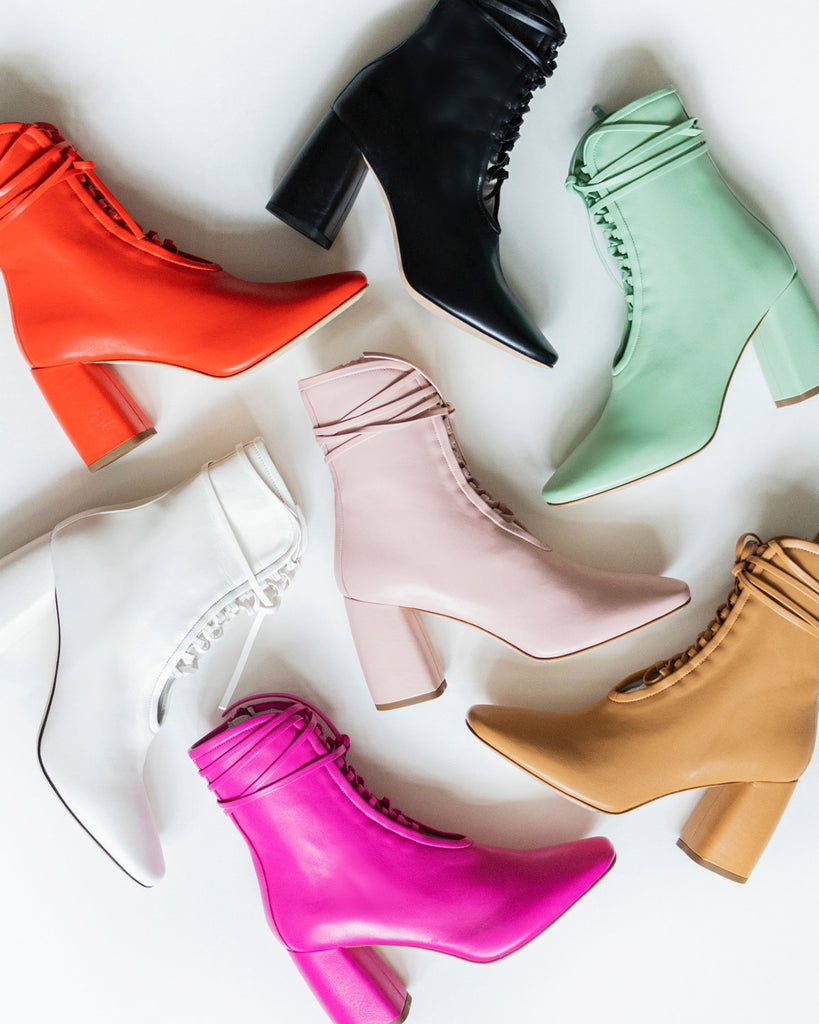


Ballet flat mules are a hybrid shoe that combines the elegant, closed-toe silhouette of a classic ballet flat with the effortless, backless design of a mule. They work so well for day-to-night dressing because they give you the polish of a flat with the ease of a slip-on.
You know the moment. You're heading out the door for a full day, your calendar is packed, and you already know there won't be time to switch shoes between coffee, meetings, dinner, and the long walk home. That's where ballet flat mules start to make real sense.
I’ve always believed luxury should support your life, not interrupt it. A beautiful shoe isn’t enough if it slips, pinches, or leaves you counting blocks until you can take it off. Ballet flat mules solve a very modern problem. They look refined, they feel unfussy, and they suit women who want one smart pair to carry them through the day.
The Effortless Elegance of Ballet Flat Mules
Some shoes are all mood and no function. Ballet flat mules are different. They sit in that rare middle ground where elegance and practicality meet.

The shape feels familiar at first glance. You get the softness and femininity of a ballet flat, but the open back changes the experience completely. It makes the shoe easier to slip on, easier to wear in transitional weather, and often easier to fit than a fully enclosed flat.
That mix isn't random. The mule has a long fashion history. According to the FIT history of the mule, the form traces back to ancient unisex slides in the Middle East, and one memorable turning point came in 1694, when the Comtesse d’Olonne wore soft red mules to church, helping move the style from private slipper to public fashion statement.
Why the silhouette still feels current
What makes ballet flat mules feel fresh isn't novelty. It's usefulness.
They answer real wardrobe needs:
- For commuters: They look more intentional than a casual slide.
- For travelers: They pack easily and work across different outfits.
- For event dressing: They offer a graceful option when a heel feels like too much.
- For women who struggle with fit: The open back can remove pressure where closed shoes often irritate.
Ballet flat mules feel polished without asking your feet to suffer for the effect.
That’s why this silhouette keeps returning. It respects how women move through a day.
If you want to see how the shape translates into a modern wardrobe, browse the mules collection and notice how easily the silhouette slips between smart, relaxed, and occasion dressing.
The Anatomy of a Perfect Ballet Flat Mule
A good ballet flat mule looks simple. A great one is carefully engineered.
I like to think of it the way I think about a beautifully balanced recipe. A few ingredients matter a lot. If even one is off, the whole result changes. With this shoe, the most important parts are the vamp, the toe shape, the lining, and the sole.

The vamp does more work than most people realize
The vamp is the upper part extending over the front of your foot. On a mule, that coverage matters even more because there's no back to hold you in place.
A shallow vamp can look delicate, but it often feels insecure. A fuller, softer vamp usually gives better hold across the forefoot and helps the shoe move with you instead of flipping off your foot with every step.
That’s one reason high-vamp ballet flat mules can feel more grounded than many classic mules. You still get the ease of a backless design, but with more structure where it counts.
Lining changes the feel of the whole shoe
Inside materials matter. A lot.
Premium construction in this category often uses 100% kid leather lining, and that material has a 10 to 15% lower coefficient of friction than synthetics, which helps reduce heel slippage in a backless shoe during long wear, as described on the Manolo Blahnik BALLERIMU page.
In plain language, that means the lining can help the shoe feel steadier and less irritating over time.
Practical rule: If a ballet flat mule feels slippery inside when you try it on, it usually won't improve with a longer day.
Toe shape affects both comfort and style
Readers often ask whether round toe or pointed toe is “better.” The honest answer is that each serves a different purpose.
- Round toe: Usually feels softer and more forgiving through the front.
- Pointed toe: Looks sharper and often dresses up more easily.
- Almond toe: Sits in the sweet spot between polish and softness.
The key isn't the label. It's whether the toe box gives your foot enough room to rest naturally without pressure at the sides.
The sole decides whether the shoe is wearable or decorative
A ballet flat mule should bend with the foot, not fight it. If the sole is too rigid, the shoe can slap, slip, or strain your stride. If it’s too thin, every hard surface reminds you.
Small-batch Italian and Portuguese craftsmanship tends to show up here in quiet ways. Better leather selection, cleaner finishing, and more thoughtful balance all affect how the shoe behaves after several hours, not just in a fitting room mirror.
Here’s a quick silhouette comparison:
| Feature | Ballet Flat Mule | Traditional Ballet Flat | Classic Loafer |
|---|---|---|---|
| Back of shoe | Open | Closed | Closed |
| Ease of wear | Slip-on, fast | Easy, but fully enclosed | More structured |
| Overall feel | Light and refined | Soft and classic | Polished and often firmer |
| Fit flexibility | Helpful for some fit issues | Less forgiving at heel | Less forgiving overall |
| Styling mood | Elegant, modern, relaxed | Feminine, simple | Tailored, sharper |
If you enjoy learning how materials shape comfort, the guide to Italian leather flats is worth reading before you shop.
Why is Comfort in Flats Non-Negotiable?
People assume flats are automatically comfortable. They aren't.
A flat can be just as punishing as a high heel if the footbed is hard, the sole is flimsy, or the shape forces your foot into tension all day. I’ve seen women buy “sensible” flats, then leave them under their desk because they hurt by lunchtime.

Flat doesn't mean supported
The biggest misunderstanding is that less heel equals less strain. Sometimes the opposite happens. Without proper cushioning, your foot absorbs repetitive impact with very little help.
Advanced insole systems make a measurable difference. The Quince leather pointy flat mule details note that Ortholite-style insoles can reduce peak plantar pressure by up to 15%, dissipate moisture 3x faster than standard closed-cell foams, and podiatric studies confirm this type of insole can lower foot fatigue by 25% over an 8-hour period.
Those numbers matter most to the woman who doesn't carry backup shoes. If your day involves stairs, sidewalks, standing meetings, dinner, and the trip home, cushioning isn't a bonus. It's the entire reason the shoe remains wearable.
What I look for when I evaluate comfort
When we assess comfort-first design, I think about three questions:
- Does the shoe soften impact? A footbed should absorb force, not reflect it back into the body.
- Does it stay breathable? Moisture and friction often create the discomfort people blame on “fit.”
- Does it support movement? A good flat should let you walk naturally, not shuffle carefully.
That’s the difference between a shoe that feels pleasant for ten minutes and one that still feels good by evening.
The chair-for-the-feet idea
I often describe the ideal comfort experience as a chair for the feet. Not squishy. Not unstable. Supported.
That kind of comfort usually comes from layers working together:
- A cushioning layer that softens impact.
- A shaping layer that responds to the foot over time.
- A stabilizing layer that prevents the shoe from collapsing under wear.
One example in this space is the walking-all-day shoe guide, which focuses on how thoughtful cushioning changes real-world wear rather than showroom comfort.
A comfortable flat should let you forget about your feet. The moment you're adjusting, gripping, or bracing, something in the design isn't working.
That’s why comfort in flats is paramount. A beautiful mule should still be beautiful at 8 p.m., when your feet are tired and your standards get more honest.
How to Style Ballet Flat Mules for Any Occasion
Styling ballet flat mules gets easier once you stop treating them like a niche shoe. They aren't. They sit right between a structured flat and an easy slide, which makes them one of the most flexible silhouettes in a wardrobe.
The commuter and office edit
For work, ballet flat mules shine with clothes that already have some line and shape. Think ankle-length trousers, full-length trousers with a clean break, or a skirt with a clean silhouette.
Try combinations like:
- Slim cigarette pants and a crisp button-down: The open back keeps the outfit from feeling too corporate.
- Wide-leg trousers and a fitted knit: The mule adds polish without the weight of a loafer.
- A column skirt and blazer: The softness of the shoe balances the structure above it.
A pointed version usually reads more formal. A rounded version tends to feel more relaxed and creative.
If your office wardrobe leans minimal, a mule can become the finishing piece that softens everything without making the outfit look casual.
For readers shopping this category, the women’s flats collection is a useful place to compare silhouettes for work wardrobes.
Office to evening without a shoe change
In this regard, the style really earns its place.
A ballet flat mule works beautifully when your day turns into dinner because it doesn't look like a compromise shoe. It still feels intentional with silk, tailoring, or jewelry.
A few reliable transitions:
- Day look: Cropped black trousers, fine knit, tote bag.
- Evening update: Add a cuff, change to a draped blouse, switch to a compact shoulder bag.
- Why it works: The mule already has enough elegance, so you only need to shift the styling around it.
If you want one pair to move from desk to dinner, choose a mule with a clean toe shape and minimal hardware.
That advice sounds simple, but it saves people from buying a shoe that only works in one setting.
The modern bridal and event choice
Not every event calls for a heel. Sometimes the chicest decision is the one that lets you stay present.
Ballet flat mules work especially well for:
- wedding welcome dinners
- rehearsal events
- indoor receptions
- gallery openings
- long celebrations where standing matters as much as posing
The backless shape keeps the look light. The ballet influence keeps it refined. In soft leather, satin, velvet, or a subtle metallic, the silhouette feels dressed without looking overworked.
If you're choosing for an event, pay attention to the hemline. Mules look especially elegant under midi lengths, ankle trousers, and dresses with movement because the open heel gives the outfit air.
For occasion dressing, the bridal and event shoe edit can help narrow styles that feel special but still wearable.
The traveler’s companion
Travel is where many women discover whether a shoe deserves space in the suitcase.
Fashion retailers often talk about looks, but not enough about performance. The Reformation flats and mules category is tied to a broader fit and travel conversation that notes 15% year-over-year growth in searches for "chic travel footwear," which tells you how many women are trying to solve this exact problem.
The right ballet flat mule can work for:
- airport dressing
- museum days
- lunch on uneven streets
- dinner reservations
- light packing when every item has to multitask
The caveat is important. Not every mule is travel-friendly. For a trip, look for a style with enough vamp coverage, a sole that feels stable underfoot, and leather soft enough to flex in a suitcase without losing shape.
A travel wardrobe built around one pair of mules might include relaxed trousers, a cotton dress, straight-leg denim, and a black slip skirt. That gives the shoe room to move across cities and occasions.
How I’d choose by lifestyle first
If you're still deciding, start with your actual week.
- Mostly office: Choose a pointed or almond toe in black, espresso, or a rich neutral.
- Mostly events: Look for texture such as suede, velvet, or subtle shine.
- Mostly travel: Prioritize softness, grip, and a shape that won't require “breaking in.”
- Mostly everyday wear: A simple leather mule with a clean profile will work hardest.
One practical option to compare within this broader category is the Flat Alba Slide Sandal, especially if your wardrobe already leans toward easy slip-on styles and warm-weather dressing.
The smartest styling move is usually the least dramatic one. Let the ballet flat mule be the elegant, capable shoe that keeps your day moving.
Finding Your Flawless Fit in Mules
Fit is where many women lose faith in luxury shoes.
If you've dealt with bunions, a narrow heel, a wider forefoot, or a high arch, you've probably heard some version of “just size up” or “they'll stretch.” That advice is often lazy. It ignores how the shoe is built.

A better starting point is understanding why ballet flat mules can work well for certain fit challenges. The open back removes pressure from the heel. A generous vamp can hold the foot without forcing it into a tight collar. Soft leather can adapt more kindly than stiff structured uppers.
Why this matters for bunions and shape differences
This issue is larger than many brands acknowledge. The Nordstrom flat mules page reflects a market gap where fit guidance is often missing, even though about 33% of women over 40 report having bunions.
That number helps explain why so many women try luxury shoes and feel excluded by them.
If you have a bunion or broader forefoot, look for:
- A forgiving upper: Soft leather usually behaves better than rigid synthetics.
- A higher vamp: It can distribute pressure more evenly across the front of the foot.
- An open back: Less rubbing at the heel often means less overall tension.
- A shape that follows your foot: The shoe shouldn't demand that your foot become narrower to be “elegant.”
What a glove-fit actually means
People hear “glove-fit” and think tight. I think the opposite.
A glove-fit shoe should feel close without conflict. It should follow the foot, not clamp onto it. That usually comes from supple materials, careful patterning, and enough give in the right places.
Here’s a helpful visual look at fit and feel in motion:
For women who know they need more room, the article on whether you need wide shoes offers a practical starting point.
The goal isn't to force a luxury fit. The goal is to find a luxury shape that already respects your foot.
A fitting checklist you can use at home
When trying ballet flat mules, walk through these checks before deciding:
- Stand still first: Your foot should sit fully on the footbed without spilling over the edge.
- Take several steps: Notice whether you grip with your toes to keep the shoe on.
- Check side pressure: The upper should feel secure, not sharp.
- Watch the heel motion: A little movement is normal in a mule. Constant flopping isn't.
- Trust hot spots: If one area pinches immediately, it usually won't disappear by magic.
One brand example in this comfort-first space is Daniella Shevel, which offers small-batch styles made by artisans in Italy, Portugal, and Brazil, along with in-store stretching and fit support through its New York City flagship. That kind of service can matter when you're close to the right fit and need refinement instead of compromise.
A Buyer's Checklist for Investing in Ballet Flat Mules
A ballet flat mule can be a wise purchase or an expensive mistake. The difference usually comes down to how closely you inspect the shoe before you buy it.
Start with materials
The upper tells you a lot. Good leather should feel supple, not papery. Suede should feel dense and smooth, not fuzzy and thin. If you're considering a vegan option, focus on finish, flexibility, and how the material feels at bend points.
Ask yourself:
- Does the material look like it will soften or crack?
- Does it feel breathable enough for long wear?
- Will it age gracefully with use?
If the shoe already looks tired in the box, it won't improve in your closet.
Then look at construction
Handcrafted, small-batch shoes often reveal themselves in subtle ways. Cleaner edges, better balance, and more thoughtful pattern placement usually show up before branding does.
Check these details:
- The sole attachment: It should look neat and intentional.
- The inside finish: Rough seams can become daily irritation.
- The symmetry: One shoe shouldn't feel or look different from the other.
- The flex point: The shoe should bend where your foot bends.
Buy the pair that still looks intelligent when you ignore the logo.
That one rule saves people from chasing status and missing quality.
Consider how the shoe fits your real life
A beautiful mule that only works with one hemline isn't an investment. A useful one can move across several parts of your wardrobe.
A smart buyer asks:
- Will I wear this to work?
- Can I travel with it?
- Does it solve a comfort problem I already have?
- Will I still want it next year?
Those questions matter more than trend language.
Think about long-term value
Sustainable luxury isn't only about materials. It's also about whether the shoe deserves repair, repeat wear, and care.
That’s part of why I encourage a buy less, buy better mindset. A well-made mule that works across seasons will almost always serve you better than a cheaper pair that looks good for a moment and then falls apart.
If circular fashion matters to you, it’s worth looking at brands that support repair, longevity, and donation programs. Daniella Shevel, for example, offers a Soles4Souls partnership with a $75 credit for donating pre-loved shoes, which ties the purchase to a longer life cycle rather than a disposable one.
A quick shopping filter
Before you check out, make sure the pair offers:
- Secure hold: Enough vamp coverage to keep the mule stable
- Soft contact points: Nothing harsh against the foot
- Versatile shape: Easy to style with trousers, denim, and dresses
- Quality finish: Materials and construction that justify the spend
- Longevity: A shoe you'd maintain, not replace on impulse
That’s the difference between buying footwear and building a wardrobe.
Caring for Your Handcrafted Mules to Ensure Longevity
A well-made mule rewards regular, simple care. You don't need an elaborate routine. You need consistency.
Small habits that protect the shape
After wearing your mules, let them rest before reaching for them again. That gives the lining and upper time to release moisture and recover their shape.
Store them with care:
- Keep them supported: Use tissue or a soft insert if the upper is delicate.
- Avoid crowded shelves: Pressure can warp the vamp.
- Protect the surface: Dust bags help prevent scuffs and fading.
Clean by material, not by habit
Leather and suede shouldn't be treated the same way.
- For smooth leather: Wipe gently with a soft dry or slightly damp cloth, then condition when needed.
- For suede: Use a suede brush and spot-clean carefully with suede-specific tools.
- For embellished pairs: Handle the decorated areas lightly and avoid over-rubbing.
For more material-specific advice, the guide to taking care of suede shoes is a helpful reference.
Good care is part of good style. Shoes that are maintained always look more expensive than shoes that are simply new.
When a pair starts to lose structure, don't wait until it's beyond repair. Professional stretching, sole work, and small repairs often extend the life of handcrafted shoes dramatically.
Conclusion Your Modern Go-To Shoe
Ballet flat mules work because they answer real needs with elegance. They slip on easily, dress up beautifully, and can feel far more practical than many women expect. For commuters, travelers, event dressers, and anyone tired of choosing between polish and comfort, the silhouette earns its place.
The best pairs aren't just pretty. They hold the foot well, use thoughtful materials, and respect how a modern day unfolds. That's the standard worth shopping for.
If you've been waiting for a shoe that feels refined without acting fragile, ballet flat mules are a strong place to start.
If you're ready to find a pair that fits your life as well as your wardrobe, explore Daniella Shevel and shop styles designed for day-to-night wear, handcrafted comfort, and lasting luxury.