

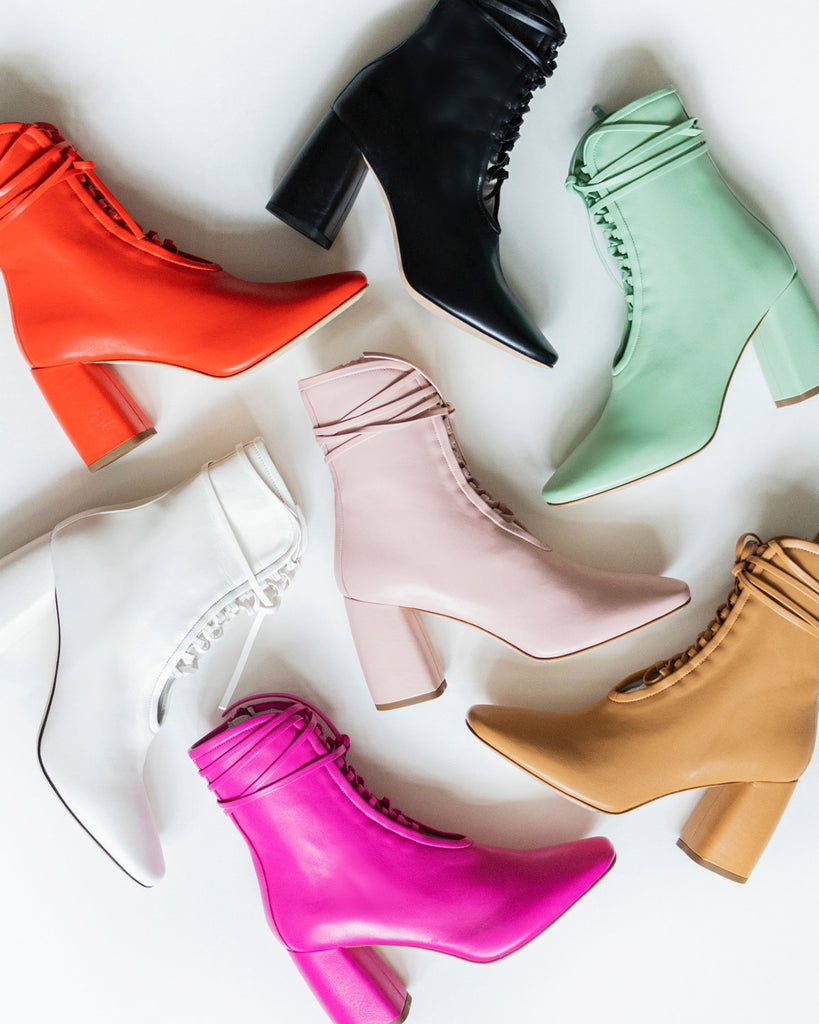


TL;DR: High heel arch support is an integrated or added structure that fills the gap between your foot's arch and the shoe's insole. It's essential for comfort and health because it redistributes pressure away from the ball of your foot, improving stability and allowing for all-day wear without pain. In practical terms, that matters because high heels can drive forefoot pressure up sharply, including 76% in 3-inch heels, 57% in 2-inch heels, and 22% even in 3 cm heels, according to research summarized here.
You can always spot the woman who’s tired of compromising. She’s polished, capable, and carrying a pair of backup flats in her tote like a quiet admission that her shoes will fail her by noon.
I’ve never believed that should be the standard.
As a designer, I’ve spent years thinking about what a heel should do for a woman, not just how it should look on a shelf. A beautiful shoe should support your posture, your pace, and your life. If it can’t handle a commute, a dinner, a wedding, or a long day on your feet, it isn’t luxury. It’s decoration.
The End of the Backup Flat
I hear the same frustration from women everywhere. They want height, elegance, and polish, but they don’t want to plan their day around pain. That’s reasonable. It should also be indispensable.
High heel arch support matters because the foot needs contact where so many heels leave a gap. When that gap stays empty, your weight slides forward, your forefoot takes the hit, and the rest of your body starts compensating. By evening, it’s not just your feet that are complaining. Your calves, ankles, and lower back usually join in.
What a better standard looks like
A well-made heel should give you:
- A supported midfoot: The arch shouldn’t hover above a flat, unsympathetic footbed.
- A stable base: You need control, not wobble, when you move through a real day.
- Enough forefoot room: Comfort dies quickly when support steals space from your toes.
- Day-to-night versatility: A shoe worth buying should work harder than a single photo moment.
You shouldn't have to choose between authority and ease. A smart heel can deliver both.
I’ve always preferred design that solves a real problem elegantly. That’s why I pay so much attention to pitch, padding, contour, and the way a shoe feels after a few hours, not just the first few steps.
If you’re already thinking about office days, events, and long city walks, you may also like this guide to comfortable wedge shoes for work. The principle is the same. Beautiful footwear should carry you through your day, not interrupt it.
Who needs this most
Some women can tolerate poor shoe engineering longer than others. The women who struggle fastest usually have:
- High arches: Less natural shock absorption, more concentrated pressure.
- Long days on foot: Commutes, meetings, events, travel.
- Narrow or pointed silhouettes in rotation: Less margin for poor internal construction.
If you’ve been told that discomfort is the price of style, ignore that advice. The issue is usually design, not you.
Why Do My Heels Hurt After Just One Hour
You leave for work feeling polished. By the time you’ve walked from the car, crossed a lobby, and stood through your first conversation, the front of your foot is already burning. That fast slide from confident to distracted is not a personal tolerance issue. It is a design issue.
Pain shows up quickly because most heels shift your body weight forward without giving the arch and midfoot enough structure to share the load. Once that support is missing, the forefoot takes over. The ball of the foot absorbs pressure it was never meant to handle alone, and your toes start gripping the shoe to keep you stable.
I see this constantly in shoe design. A beautiful silhouette can hide poor internal architecture. If the pitch is too aggressive, the footbed is flat, or the heel seat does not hold you securely, your body starts compensating within minutes. One hour later, you feel the result.

The discomfort cycle
Heel pain usually follows a very predictable chain reaction.
- Weight moves forward: The angle of the shoe increases pressure on the forefoot.
- The arch stops assisting properly: The midfoot no longer helps distribute force.
- The toes grip for balance: Your foot tries to create stability on its own.
- Muscles start overworking: Calves, ankles, and the small muscles under the foot fatigue.
- Pressure becomes strain: What felt manageable at first turns into real discomfort.
This is why a heel can feel fine in the mirror and awful an hour into real life. Standing still tells you very little. Walking, turning, climbing stairs, and stopping abruptly tell you everything.
Why the pain travels
Women often describe the problem in one spot. The arch. The ball of the foot. The outside edge. The heel.
In practice, those complaints are usually connected.
When the arch is not properly supported, force stops moving through the foot efficiently. The forefoot overloads, the toes tense, and your stride shortens. Then the ankle stiffens, the calf works harder, and posture changes further up the body. I design against that chain reaction from the very beginning, because comfort in a heel is never about one padded area. It is about how the whole foot is held and guided through motion.
Practical rule: If a heel only feels comfortable while you are standing still, it is not comfortable enough.
The mistake women are taught to make
Women are told to blame heel height first. I don’t.
Height matters, but construction matters just as much. I have worn a well-balanced higher heel that felt better than a lower heel with a flat footbed, poor pitch, and no real arch contour. The difference is biomechanics built into the shoe, not added as an afterthought.
That is the part mass-market footwear usually misses. An insole can cushion. It cannot fully correct a shoe that was shaped incorrectly from the start. If you have high arches, that matters even more, because your foot needs the shoe to meet it properly, not leave it suspended above a hard interior.
The Anatomy of a Truly Comfortable Heel
Comfort isn’t a gel pad thrown into a pretty shoe at the last minute. Real comfort starts at the pattern stage and continues through materials, construction, and how the shoe holds the foot while you move.
For women with high arches, this matters even more. High arches tend to load the heel and forefoot more intensely, so the best solution isn’t a hard bump under the arch. It’s a design that spreads force more intelligently across the foot. That aligns with guidance from Valsole’s high arch support guide, which notes that high arches concentrate loading forces at the heel and forefoot, and that the optimal strategy is engineered load-spreading technology across the plantar surface.

What integrated support actually means
When I evaluate a heel, I’m looking for a system, not a gimmick.
A comfortable heel usually includes:
- Contoured support: The footbed should meet the foot, not leave it suspended.
- Layered cushioning: Softness alone isn’t enough. The layers need structure.
- A secure heel seat: A stable rearfoot helps the rest of the foot function better.
- Balanced flexibility: The shoe should move where your foot moves naturally, not collapse everywhere.
Handcrafted construction makes a visible difference. Italian and Portuguese craftsmanship aren’t romantic marketing phrases to me. They matter because skilled makers can shape, refine, and integrate support in a way mass production often can’t.
Why generic insoles often disappoint
I’m opinionated about this. Most generic inserts are a partial fix at best.
They often fail for three reasons:
| Problem | Why it matters in heels |
|---|---|
| Too bulky | They steal precious forefoot space |
| Too rigid | They create a new pressure point instead of easing one |
| Poorly matched shape | They don’t follow the shoe’s pitch or the wearer’s arch |
That’s why integrated support wins. It can be built into the geometry of the shoe instead of fighting against it.
A comfortable heel should feel considered from inside out. You shouldn't sense a battle between the shoe and the insert.
When we source foam and cushioning systems in luxury footwear, the question shouldn’t be, “Does this feel soft in the hand?” It should be, “Does this maintain shape, support the arch, and stay elegant inside a refined silhouette?” Softness without structure doesn’t last.
What to look for in luxury design
A comfort-first design doesn’t look orthopedic. It looks polished because the support is part of the architecture. That’s the difference between a heel designed for display and one designed for a real life.
How to Assess Arch Support Before You Buy
You don’t need a lab to judge high heel arch support. You need a sharp eye, your hands, and a refusal to be charmed by pretty shoes with bad engineering.
The first thing to understand is that heels have a space problem. There isn’t much room inside them. According to The Insole Store’s discussion of arch support for high heels, the architecture of high heels is a zero-sum spatial problem. They need ¾-length arch supports or ultra-thin proprietary systems so the forefoot keeps enough room and the toes don’t get compressed.
My five-point shopping test
Use this in a boutique or while reading a product page.
-
Check where the shoe bends
Hold the shoe and flex it gently. A good heel should bend mostly at the ball of the foot. If it folds through the middle, it usually won’t support the arch well. -
Feel for contour, not just padding
Press your hand into the insole. You want shape, not a flat slab with a soft topcloth. - Look at toe space realistically If the front already looks crowded before your foot even goes in, adding support later will only make that worse.
-
Assess heel grip
The rear of the shoe should help keep your foot in place. Sliding forward creates extra pressure up front. -
Walk and turn, don’t just stand
A shoe that feels decent while motionless can still fail once you change direction.
What product descriptions should tell you
Online, I look for signs that the brand understands construction, not just styling.
Good signs include:
- Specific mention of contoured or integrated footbeds
- References to glove-fit construction
- Clear notes about slim or proprietary support systems
- Close-up photos of the insole and side profile
- Details about artisan or handcrafted production
If you’re shopping specifically for this issue, this resource on shoes for high arches is useful because it helps you judge fit needs before you fall in love with a silhouette.
Red flags I’d never ignore
- Flat insoles with no visible shaping
- Very narrow toe boxes paired with no support language
- Descriptions focused only on leather and heel height
- Shoes that twist too easily through the waist
A beautiful heel should withstand scrutiny. If a brand can’t explain how the shoe supports your foot, I’d keep walking.
Comfortable Heels for Your Real Life
High heel arch support isn’t an abstract concept. It changes how a woman moves through a specific day, in a specific city, wearing clothes that need to work just as hard as she does.

The executive commuter
She has a calendar full of meetings, an office-to-dinner schedule, and no interest in changing shoes in a taxi.
For her, the right heel needs polish, grip, and internal support that doesn’t collapse halfway through the day. A refined pump or a sleek block heel usually works better than a flimsy stiletto with a flat footbed. Height can still be elegant, but the shoe needs enough internal architecture to keep her from sliding forward every time she picks up the pace.
If this is your life, look closely at styles built for structure and steadiness, including a well-shaped block heel. This guide to the block heel pump is a smart place to start.
The all-day bride
A bride doesn’t need “ceremony shoes” and “survival shoes.” She needs one pair that can handle the aisle, the photos, the dinner, and the dancing.
The best bridal heel usually has three qualities:
- A stable heel shape
- A footbed with real contour
- Materials that hold the foot gently instead of cutting into it
I always tell brides to test shoes on a real surface and stay in them long enough to notice pressure build-up. Satin and sparkle can distract you in the mirror. Your feet won’t be distracted six hours later.
Here’s a closer look at movement, shape, and fit in action:
The fit-solution shopper
This woman has often been underserved by traditional luxury. She has high arches, maybe a tendency to roll outward, and she’s tired of being told to “just break them in.”
That advice is lazy.
Women with high arches often experience supination, or outward foot rolling, which increases pressure on the heel and ball of the foot. A 2025 podiatry study cited by PowerStep reported that 68% of women with high arches report heel pain after 4+ hours in stilettos because of poor weight distribution. Standard inserts often miss the mark because they aren’t designed for the specific mechanics of that foot shape.
If you have high arches, don’t shop for softness alone. Shop for controlled support that steadies the foot and reduces that outward roll.
For this shopper, a glove-fit upper and integrated support are usually far more effective than a random add-on insole. The shoe has to hold the foot in alignment, not just cushion the aftermath.
The global jet-setter
Travel shoes need discipline. They must work with dresses, tailoring, denim, and whatever streets you meet when you land.
For European travel, events, or long urban days, I’d prioritize a lower heel, stronger rearfoot stability, and enough support under the arch to keep the foot from tiring early. Cobblestones, stairs, and long museum floors expose weak construction immediately.
A beautiful travel heel should still feel composed even after prolonged wear. That’s the standard.
An Investment in Style and Sustainability
You feel the difference over time.
A well-made heel keeps earning its place in your wardrobe because it supports your body, holds its shape, and still looks polished after real wear. That is how I define value. I am not interested in a shoe that photographs beautifully and then sits in the back of the closet because it punishes your feet after one dinner.
That standard is why I care about small-batch production and handwork. Italian, Portuguese, and Brazilian makers still build shoes with the kind of precision that gives a heel longevity. Better leathers soften without collapsing. Better construction allows a shoe to be repaired, refreshed, stretched, and worn again. If you care about workmanship as much as aesthetics, read more about my philosophy on handcrafted women’s shoes.

Why support is part of value
Comfort is one of the clearest signs of true craftsmanship.
A beautiful heel with proper arch support requires more from the maker. The last has to be shaped with intention. The pitch has to be balanced. The insole has to support the foot where it bears load, rather than leaving the arch suspended and asking the forefoot to absorb everything. That is design, biomechanics, and craft working together.
Analysts at RunRepeat in their arch support study found that people with high arches face greater injury risk because the foot absorbs shock less efficiently. In heels, that matters even more. Integrated support can help shift pressure away from the overloaded forefoot toward the medial arch, which improves stability and reduces strain over hours of wear.
A shoe that respects your alignment protects more than an outfit. It protects your energy.
The buy-less-buy-better mindset
I have always believed in owning fewer pairs and expecting more from them. One refined heel that carries you through work, dinners, travel, and events is far more useful than a shelf of impulse buys that hurt too much to wear twice.
That philosophy also happens to be the more responsible one.
- Longevity first: A pair you reach for year after year creates less waste than shoes you replace every season.
- Repairability matters: Quality construction deserves care and maintenance.
- Versatility reduces excess: A heel that works across occasions earns its space.
Buy the pair you will still want next year, and the year after that.
The smartest luxury purchase is the one that keeps proving itself.
Step Into Your Power Comfortably
You don’t need to accept pain as the entry fee for elegance. You need better standards.
High heel arch support works when it’s built with intention. It fills the gap under the arch, redistributes pressure, improves stability, and helps a heel perform the way a modern woman needs it to perform. That’s what makes the difference between a shoe you admire and a shoe you rely on.
If you’ve spent years carrying backup flats, taking your shoes off under the table, or avoiding beautiful styles because you assume they’ll hurt, change the assumption. The right pair should support your pace, your posture, and your confidence.
For more practical wear tips before you shop, read how to wear heels comfortably. Then hold every pair you consider to a higher standard.
If you’re ready for heels that look refined and feel considered, explore Daniella Shevel. Start with styles designed for day-to-night wear, then shop the collection that best matches your life: polished work heels, event-ready pairs, and travel-friendly silhouettes that don’t ask you to pack a backup.