

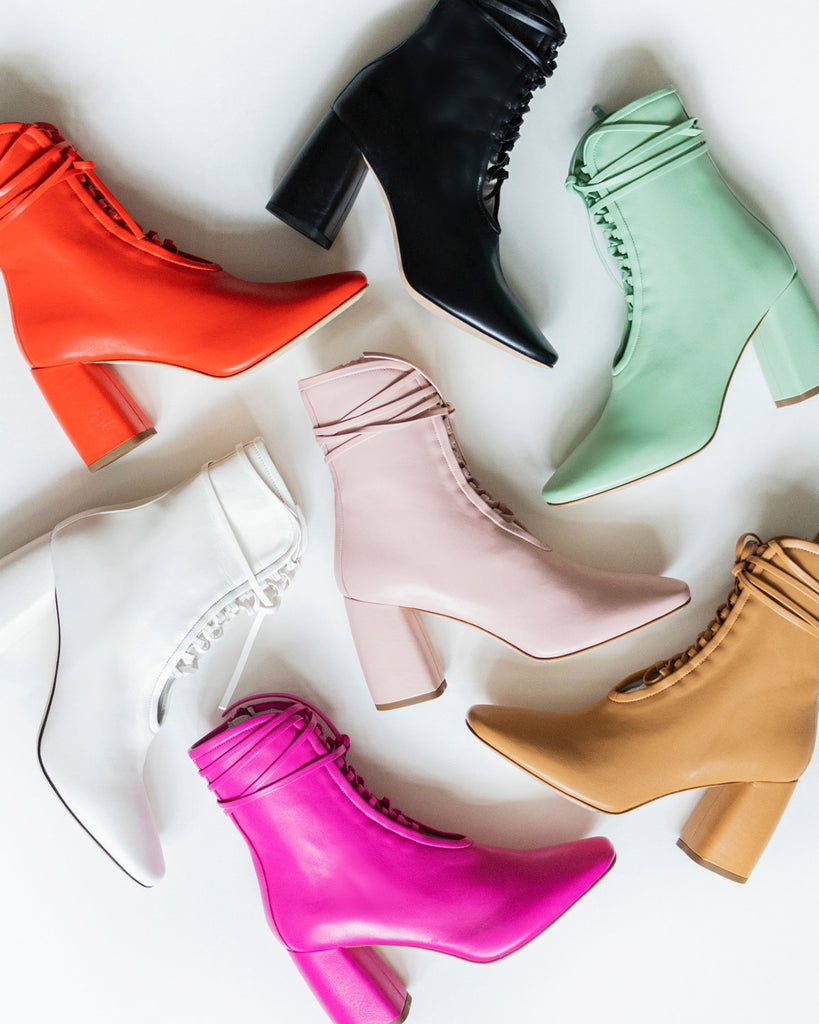


I’ve watched too many women leave home with a beautiful heel on their feet and a practical flat hidden in their tote. That ritual has always felt like a design failure to me, not a personal compromise.
Your Guide to Handcrafted Women's Shoes
Handcrafted women's shoes are worth buying when the handwork changes how the shoe fits, supports, and ages, not just how it looks. A true handcrafted shoe is an investment piece because the construction, materials, and shaping can deliver comfort and longevity that mass production rarely does.
That matters because most women have been trained to expect a trade-off. Beauty for pain. Polish for blisters. Elegance for a backup plan.
I don’t accept that trade. Luxury should not be painful.
The category is moving in this direction for a reason. The global women’s luxury footwear market was valued at USD 25,956.5 million in 2024 and is projected to reach USD 49,349.8 million by 2033, with leather holding 68.8% market share in 2024, according to Custom Market Insights. Women are buying more carefully, and they’re looking for materials and construction that justify the price.
If you’re comparing styles across a broader general shoe category, the question I’d ask first isn’t “Is it fashionable?” It’s “What in the build will still matter after an office day, a commute, a dinner, and a season of wear?”
What makes a shoe worth the investment
Three things separate real handcrafted quality from marketing language:
- Material honesty. Good leather, balanced lining, and components that mold rather than fight your foot.
- Construction discipline. The last, the pitch, the placement of padding, and the finish all matter.
- Wearability. A luxury shoe should work in real life, not only in a fitting room.
Practical rule: If a shoe is beautiful but forces you to plan your exit strategy before you leave the house, it isn’t luxury in any meaningful sense.
I care about day-to-night versatility because women’s lives are not neatly segmented. We move from meetings to dinners, from airport terminals to events, from workdays to weddings. The right handcrafted shoe should follow you through all of it without asking you to change who you are, or what your feet can tolerate.
What 'Handcrafted' Really Means for Your Feet
The first time I watched an artisan adjust a pattern for a fuller forefoot, the change looked minor. A few millimeters here, a slightly different pull there. On the foot, it was the difference between a woman lasting through an eight-hour event and spending the second half of the night searching for a chair.

That is what handcrafted means to me. It is not a romantic label or a vague promise of quality. It is a series of controlled decisions that change how a shoe meets your bunion, holds your heel on a long commute, or gives a high arch enough room without creating friction somewhere else.
I spend time in factories in Italy and Portugal because the details are easier to spot on the floor than in a marketing description. You can see where leather is cut to work with the foot’s movement. You can see whether the upper is being lasted with patience or forced into shape too quickly. You can see whether the structure around the heel and toe is being built to support the foot or to preserve a silhouette on a shelf.
The last decides more than women are told
The most important fit decision often happens before the finished shoe exists. It starts with the last, the form the shoe is built around.
If the last is too narrow at the joint, a woman with a bunion pays for it within the first hour. If it ignores instep height, a woman with high arches feels pressure across the top of the foot even when she is standing still. If the heel cup is wrong, the foot starts gripping to stay in place, and fatigue shows up long before the day is over.
A better last solves problems quietly:
- Toe shape gives the forefoot space without making the shoe look blunt
- Instep volume allows higher arches and fuller feet to sit naturally
- Heel fit keeps the foot secure without rubbing or forcing tension
- Width balance supports women whose feet are not perfectly symmetrical, which is common
For women who struggle with arch height in particular, I’ve written more about what to look for in shoes designed for high arches.
Handwork matters when it changes pressure, not just appearance
I am not interested in handcraft for its own sake. I care about where it improves wear.
Careful cutting affects how the leather relaxes over a bunion instead of cutting across it. Measured lasting affects whether the shoe flexes with the foot on a city walk or resists it. Thoughtful reinforcement affects whether the heel counter keeps you stable or digs in by hour three. Hand finishing affects whether a seam stays invisible to the eye and painful on the skin, or smooth enough to forget.
Those are small decisions. They create very real outcomes.
A woman who commutes, stands through meetings, then goes straight to dinner needs a shoe that manages pressure consistently. A mass-produced pair can look polished in the mirror and still fail because the internal build was done for speed and uniformity. Handcrafted work allows correction at each stage, which is why the fit often feels calmer on the foot.
Material choice shows up in comfort faster than people expect
Leather quality matters, but the trade-off is not merely soft versus firm. Leather that is too flimsy can lose support quickly. Leather that is too rigid can punish the exact areas that need accommodation.
The right material has memory and give. It holds the line of the shoe while softening in the places your foot asks for it. That matters for women with bunions, for women whose right foot is slightly fuller than the left, and for anyone who needs a shoe to feel as good at 8 p.m. as it did at 8 a.m.
That is why handcrafted shoes feel more personal over time. They are built with enough precision to adapt to a real foot, not an idealized one.
If you want a closer look at how I approach small-batch production, material selection, and fit, visit our Behind the Brand at Daniella Shevel.
Why Do Handcrafted Shoes Feel So Different?
I often hear the same sentence from women in the studio: “These feel different the moment I stand up.” They are usually not talking about softness. They are reacting to alignment, pressure, and whether the shoe lets the foot rest naturally instead of gripping for stability.
A shoe can feel plush in the hand and still become exhausting after an hour. What changes the experience is structure. If the heel placement is slightly off, if the vamp cuts across a bunion at the wrong point, or if the toe box forces the toes inward on a long commute, the foot starts compensating immediately.

Analysts at Markets and Data note that demand for more comfortable premium footwear has grown alongside persistent problems such as bunions, arch strain, and pain from poor fit (Markets and Data women footwear market). That tracks with what I see. The failure points are predictable.
Pitch, balance, and where your weight lands
I start with pitch. Heel height matters, but pitch matters more because it determines how steeply the foot is asked to sit inside the shoe.
A well-made heel does not dump your body weight into the ball of the foot. It spreads pressure so the forefoot is not doing all the work by cocktail hour or halfway through a client event. For a woman with a bunion, that difference is immediate. For a woman rushing between meetings, it often decides whether she arrives composed or already in pain.
Three construction choices usually separate a wearable heel from a decorative one:
- Heel placement that sits under the body correctly, so balance feels steady instead of precarious
- A forefoot shape with enough room at the pressure points, especially around bunions and fuller joints
- Internal support placed where impact happens, so cushioning helps rather than just adding bulk
Those details are adjusted by hand because small changes matter. A few millimeters in the wrong place can turn an elegant pump into a shoe you start removing under the table.
Cushioning has a job
I am careful with cushioning because too much can be as problematic as too little. If it compresses too fast, the foot loses support. If it is overly thick and unstable, the wearer starts bracing through the toes and ankle, which creates fatigue in a different way.
Good cushioning reduces shock and friction while keeping the foot level. It helps during an 8-hour wedding, a workday that includes standing presentations, or a commute with more walking than the shoe’s appearance suggests.
Women with instep pressure or arch-related fit issues usually need more than a softer insole. They need the shape of the shoe to cooperate with the foot. This guide to shoes for high arches is useful if you are assessing where support should sit and why some styles feel tiring so quickly.
Hand construction holds the fit longer
The difference often shows up after repeated wear.
In handcrafted shoes, the lasting, padding, sanding, and sole attachment are handled with more control, and that affects how the shoe ages on the foot. A counter that keeps its shape continues to stabilize the heel. A sole attached cleanly and finished properly resists the twisting and collapse that can trigger rubbing. An upper that was stretched and set with care is less likely to crease into a pressure point across a bunion or the top of the foot.
Here’s a closer look at thoughtful footwear construction in motion:
Designer’s note: I do not want a shoe to impress you for five minutes in a fitting. I want it to stay balanced at 6 p.m., after stairs, pavement, standing, and the small fit shifts that happen over a full day.
That is why handcrafted shoes feel different. The goal is not just beauty. It is a polished silhouette built to handle a real woman’s schedule, with enough precision to reduce pressure where luxury shoes too often fail.
Choosing Your Perfect Handcrafted Silhouette
The wrong silhouette can make even excellent materials feel disappointing. The right one makes your life easier.
Most women don’t need more shoes. They need sharper choices. One pair for the commute and office. One pair for travel. One pair for weddings and long dinners. Then, for many women, one silhouette that solves a fit problem luxury brands usually ignore.

The luxury market still leaves many women out. The underserved fit angle summarized by Angles Barefoot notes that 68% of women in heels report arch pain after just 2 hours, while many premium brands still don’t clearly explain how their design choices help women with bunions or high arches (Angles Barefoot overview).
That disconnect is exactly why silhouette choice matters.
Silhouette Guide for Every Occasion
| Occasion / Need | Recommended Silhouette | Key Comfort Feature | Best For |
|---|---|---|---|
| Office commute and meetings | Low or mid heel pump | Stable pitch and cushioning under the forefoot | Women who walk between meetings and still need polish |
| European travel or city walking | Low-heel boot | Ankle support, flexible leather, and grip | Cobblestones, airports, museum days |
| Wedding guest or long event | Sandal or dress heel with secure hold | Balanced heel placement and soft lining | Standing, dancing, and extended wear |
| Daily sophistication | Loafer | Slip-on ease with supportive structure | Office days, travel, and smart casual dressing |
| Bunions or high arches | Soft structured silhouette with forefoot room | Less pressure at the joint and better arch accommodation | Women ignored by conventional luxury sizing |
If loafers are part of your wardrobe, this guide to Italian loafers for women is a helpful way to think about shape, materials, and styling without sacrificing comfort.
The commuter's power pump
For the woman who’s on her feet before the first coffee meeting, a power pump should do three jobs. It needs to look authoritative, stay stable, and avoid that downward slide that crushes the forefoot.
What works:
- Moderate heel geometry instead of an extreme pitch
- Enough vamp coverage to help hold the foot in place
- Padding where impact lands, not only at the heel
- Leather that flexes cleanly across the ball of the foot
What usually doesn’t work:
- Very shallow-cut pumps that let the foot push forward
- Hard insoles that feel flat by midday
- Narrow front profiles that look elegant but punish the toes
If your work wardrobe leans structured, a polished pump or high-vamp shape is often more forgiving than a very open, low-cut court shoe. Browse our pumps collection if you want dressier options that still prioritize wearability.
The traveler's versatile boot
Travel exposes every weakness in footwear. A boot that feels acceptable in a car can feel impossible on stone streets or through terminals.
For travel, I prefer silhouettes that anchor the foot and protect it from uneven surfaces. A low-heel boot often beats a flat when the streets are rough because the structure helps with posture and fatigue.
A style such as a close-fitting bootie can work beautifully when it offers:
- Secure ankle hold
- A sole with traction
- Enough room for natural swelling during long days
- A heel shape that stays steady on uneven ground
For women building a practical packing list, our boots collection is a strong place to start.
The wedding guest's all-night heel
Formal shoes fail when they’re designed only for arrival. An event heel has to survive ceremony, cocktail hour, dinner, and the long stretch after everyone says they’ll only stay another half hour.
For weddings and evening events, I’d prioritize:
- A secure upper so your foot doesn’t grip with every step
- A more stable heel shape if the venue includes grass, pavers, or older floors
- Soft internal finish to reduce friction over many hours
- Day-to-night versatility so the shoe earns a second life after the event
If you can only imagine wearing the shoe once, it’s probably too occasion-specific or too uncomfortable to justify the investment.
You can explore event-ready styles in our wedding shoes collection. If you prefer a lighter, warmer-weather option, our sandals collection is useful for garden weddings and dressier travel.
The solution for fit challenges
This is the conversation too many luxury brands still avoid. Women with bunions, high arches, narrow heels, or fuller forefeet are often told to size up, break them in, or tolerate discomfort.
That advice is lazy.
The better approach is to choose silhouettes that reduce conflict with your foot shape from the start. For bunions, I’d look for softness and intelligent room at the joint, not excess bulk everywhere else. For high arches, I’d pay close attention to instep pressure and how the shoe holds the midfoot.
A few practical filters help:
- Choose soft or stretch-prone uppers when a rigid front panel would press the bunion
- Avoid severe toe taper if your forefoot needs honest space
- Look for secure heel fit so you don’t overcompensate with your toes
- Prioritize structure over stiffness because a firm shoe isn’t automatically supportive
That’s also why many women end up loving silhouettes they didn’t originally expect. A bootie may fit better than a pump. A loafer may outperform a ballet flat. A slightly higher vamp may feel more flattering because you’re not fighting to keep the shoe on.
The Art of Longevity Your Guide to Care and Repair
A handcrafted shoe earns its keep over time. That only happens if you treat it like an investment and not like a disposable fashion purchase.
I learned this early with a favorite pair of boots I wore constantly in New York. They looked tired long before they were worn out. Once I cleaned, conditioned, reshaped, and repaired them properly, they came back beautifully. Most shoes don’t need replacing as quickly as people think. They need attention.
Care by material
Different materials ask for different habits.
For leather:
- Wipe first. Remove surface dirt with a soft cloth before doing anything else.
- Condition lightly. Dry leather hardens and cracks faster than nourished leather.
- Rest between wears. Let the shoe release moisture and recover its shape.
For suede:
- Brush gently. Lift the nap rather than grinding dirt deeper.
- Treat spots early. Old stains set more stubbornly than fresh ones.
- Store carefully. Suede marks easily when crushed or crowded.
For mesh or mixed materials:
- Clean selectively. Don’t oversaturate areas that rely on structure.
- Watch friction points. Mixed materials can show wear where components meet.
- Use soft tools. Aggressive scrubbing ages delicate surfaces quickly.
For a more detailed routine, our guide to taking care of suede shoes walks through practical upkeep.
Storage changes how a shoe ages
Storage sounds minor until you see what poor storage does. Crushed toe boxes, warped shafts, dried leather, and misshapen counters are often storage problems, not wear problems.
I recommend a simple routine:
- Let shoes breathe after wear before putting them away.
- Use shaping support so the front and heel don’t collapse.
- Keep pairs separated so hardware, heels, and edges don’t scar neighboring shoes.
- Avoid heat because it dries materials and weakens adhesives.
A handcrafted shoe should age like a good leather bag or jacket. It should look lived in, not defeated.
Repair before replacement
Women are often told that once a sole scuffs or a heel tip wears down, the shoe is finished. That’s rarely true with better-made footwear.
Repair makes sense when the upper still has life, the structure is sound, and the fit works for you. Stretching, replacing heel tips, refinishing, and refreshing insoles can extend the pleasure of a pair dramatically.
That’s one reason I believe in in-store support. Professional stretching and repair services give a shoe a second chapter. For a woman who has finally found a pair that works with her foot, that isn’t a small thing. It’s the difference between starting over and keeping a trusted part of her wardrobe in motion.
If you’re shopping with longevity in mind, our flats collection is especially useful because these are often the pairs women wear hardest and therefore benefit most from proper care and maintenance.
Sustainable Luxury and The Future of Footwear
Luxury means very little to me if it depends on waste, disposability, and short-term thinking. Handcrafted shoes should last longer, be worn more often, and stay in rotation because they deserve to.
That’s the heart of sustainable luxury. Not virtue language. Real use. Real longevity. Better choices at the design stage, the production stage, and the ownership stage.

The sustainability gap is real. As summarized in the circularity angle tied to COMUNITYmade, few brands offer measurable programs, while Daniella Shevel’s $75 credit via Soles4Souls gives customers a concrete incentive to donate pre-loved shoes and respond to the problem that 85% of shoes end up in landfills. The same overview also notes that the vegan leather market grew 22% YoY, while long-term durability data in handcrafted luxury remains limited (circularity and sustainability overview).
Why small-batch matters
Small-batch production doesn’t solve every problem, but it does correct many bad habits of fashion. You produce with more intention. You buy materials with greater discipline. You don’t flood the market with product that was never meant to last.
For the customer, small-batch often means:
- More considered design
- Better material selection
- Less trend panic
- A stronger cost-per-wear mindset
That aligns with how I think women should buy shoes. Fewer pairs. Better pairs. More life in each one.
Circularity has to be tangible
I’m skeptical of sustainability claims that stop at adjectives. If a brand talks about responsibility, I want to know what the customer can do.
That’s why a program with a clear return matters. If you can donate pre-loved shoes and receive a $75 credit, that’s tangible. It creates a reason to participate, not just agree in theory.
If you want to explore the broader philosophy and materials approach, our sustainability page explains how we think about small-batch production, longevity, and circularity.
A note on vegan options
I’m glad more women are asking hard questions about materials. They should. But I also think honesty matters here. Some vegan materials are promising. Some still haven’t proven how they’ll age in luxury footwear over years of real wear.
That doesn’t mean avoid them. It means evaluate them seriously.
Look for:
- How the material bends
- How the finish holds
- Whether the upper can maintain shape
- How the shoe is repaired, if needed
Our vegan collection is designed for women who want that option without giving up a refined silhouette.
Finding Your Perfect Fit In-Store and Online
Fit is where desire becomes confidence, or hesitation. A beautiful shoe can still be the wrong purchase if you don’t understand how it should sit on your foot.
Online, I tell women to slow down and measure carefully. In-store, I tell them to walk longer than they think they need to. The first minute is rarely the truth.
How to shop online more intelligently
At home, do the basics well:
- Measure late in the day when your feet are less idealized and more realistic.
- Measure both feet because many women size only to the smaller foot and regret it.
- Read shape cues in the product description, not just the size label.
- Consider your real use. A wedding shoe, work shoe, and travel shoe won’t fit your expectations in exactly the same way.
Italian sizing can also confuse shoppers who are used to US conversions. This guide to shoe sizes Italian helps decode that process more clearly before you order.
What to notice during a try-on
Don’t focus only on whether the shoe feels snug or loose. Ask better questions.
Notice:
- Does your foot slide forward?
- Are your toes already bracing?
- Does the arch area feel supportive or intrusive?
- Is the heel secure without rubbing?
A good fit should feel held, not trapped. Secure, not squeezed.
The right shoe doesn’t require a pep talk. It gives you confidence almost immediately, then confirms it after real walking.
Why in-store fitting still matters
A flagship experience can save women from years of wrong assumptions about their feet. Sometimes the problem isn’t your size. It’s the silhouette. Sometimes it isn’t width. It’s volume, arch shape, or where the shoe breaks when you walk.
In-store, an expert can see what you can’t:
- where your foot is slipping
- whether a stretch will help
- whether you need a different shape altogether
- whether the shoe fits your life, not just your outfit
That’s why I still believe in trying on with purpose. Feel the leather. Walk the floor. Ask questions. Let someone who understands construction help you separate a flattering first impression from a wearable fit.
If you’d like to shop with that level of support, visit our NYC flagship information or browse online with fit in mind.
Invest in a Future Without Compromise
Handcrafted women's shoes matter because they can solve a problem women have been told to accept for too long. You shouldn’t have to choose between elegance and ease, or between authority and comfort.
I design with the belief that a woman’s real life is the brief. Commutes, events, travel, long days, difficult fit issues, and the desire to feel polished through all of it. When craftsmanship is honest, comfort becomes part of the beauty.
Find your next pair at Daniella Shevel, and shop handcrafted styles designed for day-to-night wear without compromise.