

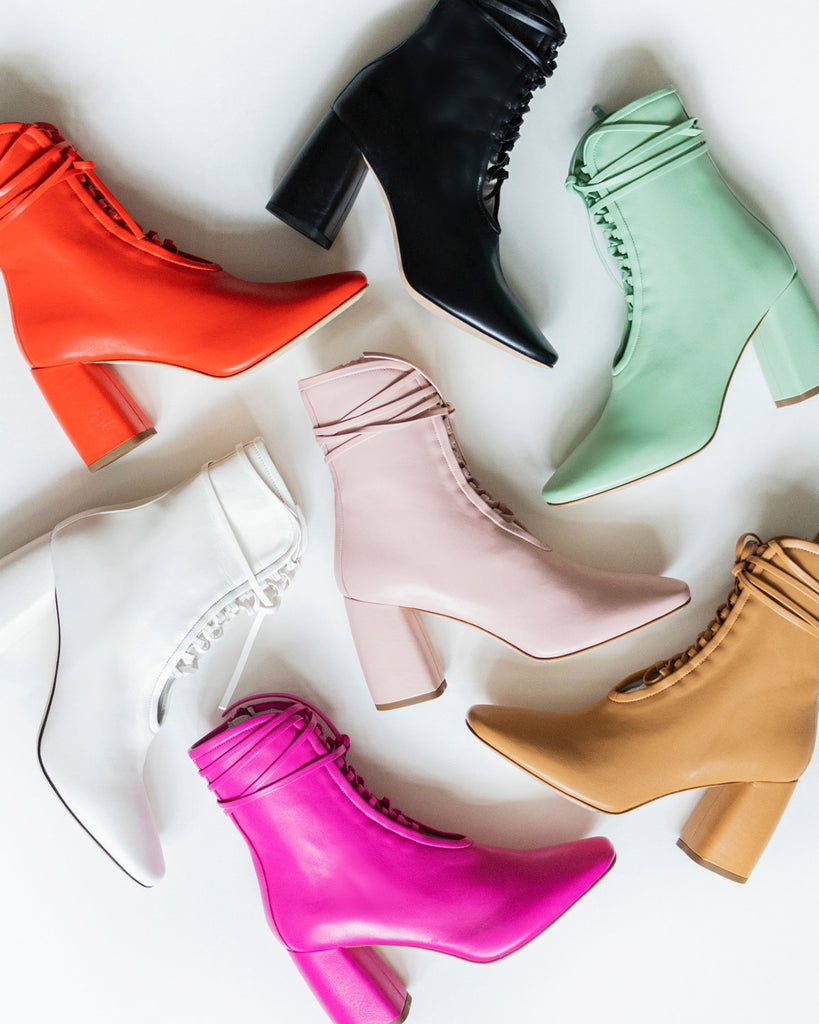


Monday morning. You are balancing a coffee, a laptop, and a tote that should not also need to carry a second pair of shoes. If your office shoes for women still require backup flats, they are not doing their job.
The right office shoe should look sharp in a boardroom, feel stable on a city block, and survive a full day without asking you to compromise. That means comfort-first design, quality materials, and a silhouette with day-to-night versatility. Luxury should not be painful. It should make your life easier.
For professional women, this is not a niche problem. The global women’s shoe market reached nearly $187 billion in 2023, with non-athletic footwear at about $128 billion, and North America held 21.25% market share, which tells you how much demand exists for polished shoes that still function in real life (women’s shoe market data).
I have always believed the most elegant woman in the room is often the one who is not distracted by her feet. She walks in cleanly. She stays standing after the meeting. She goes to dinner in the same pair.
That is the end of the backup-flats era.
If you are ready to shop with a stricter eye, start by browsing office-ready boots, pumps, and day-to-night styles at daniellashevel.com. If your wardrobe needs one hardworking pair first, begin with a polished bootie or a low, walkable heel.
Introduction The End of the Backup Flats Era

The old formula was absurd. Commute in sneakers or soft flats. Change at your desk. Undo the whole thing again at 6 p.m. if you had dinner, drinks, or an event. It wasted time, crowded your bag, and usually meant one pair looked good while the other did the actual work.
Modern office life asks more from a shoe. You may be walking to the train, crossing slick lobbies, climbing stairs, standing through presentations, then heading straight to dinner. Office shoes for women need to handle movement, not just posture.
What I recommend instead
Choose pairs that do three things well:
- Hold structure: The shoe should look intentional with tailoring, not collapse after a few wears.
- Protect your feet: Soft lining, balanced pitch, and good cushioning matter more than decorative details.
- Transition cleanly: A strong office shoe should move from commute to conference room to evening without looking overbuilt.
Key takeaway: If a shoe only works once you are already seated, it is not an office shoe. It is a prop.
The smartest wardrobes now run on fewer, better pairs. Think handcrafted boots that work with trousers and dresses, refined block heels for presentation days, and elegant flats or loafers that still feel considered with suiting.
If you want one pair that can replace two, shop with that standard. Browse day-to-night footwear at Daniella Shevel and build your work wardrobe around shoes that can keep up.
Why Is Comfort Engineering Essential for Office Footwear
Discomfort is not a small inconvenience. It changes how you work.
A 2024 Clarks survey found that over 25% of women take their shoes off at work due to discomfort, and 43% report that foot and back pain from their shoes hampers productivity (work shoe comfort survey). I do not need a focus group to tell me that. You can see it in any office by midafternoon.
Pain changes your presence
When shoes pinch, rub, or throw your weight too far forward, you adjust all day long.
You do things like:
- Shorten your stride: You stop walking naturally and start protecting your feet.
- Shift your posture: Your back and hips compensate for instability.
- Lose concentration: Small physical irritation eats attention you should be using elsewhere.
That matters in meetings. It matters when you are presenting. It matters when your day includes a commute, elevators, marble floors, and long hours on your feet.
A polished shoe that sabotages your body is badly designed. I do not care how expensive it looks.
Comfort is part of performance
Women often treat shoe pain as a dress code tax. I reject that entirely.
Comfort engineering belongs in the same conversation as tailoring, fabric, and finish because it affects:
- Focus
- Stamina
- Confidence
- Mobility
The best office shoes for women do not announce themselves as “comfort shoes.” They let you keep moving without distraction. That is the standard.
If you want to understand one of the biggest technical factors behind wearability, read our thoughts on arch supports and high heels. It is one of the most misunderstood parts of dress shoe design.
What to look for immediately
When I assess a work shoe, I look for comfort signals before I look at ornament.
Prioritize these:
- Balanced pitch: The angle of the foot should feel supported, not pitched aggressively forward.
- Soft contact points: Collar, topline, and toe area should not feel abrasive on first wear.
- Stable base: The outsole should help you walk, not force tiny apologetic steps.
- Internal cushioning: Not puffiness. Support that helps over hours.
My rule: If you feel relief taking them off after two hours, do not buy them for a workday.
Good office footwear should disappear once it is on. You should notice your meeting, your schedule, your destination. Not the shoe.
If you care how a shoe is built, not just how it is marketed, keep reading. Construction tells the truth.
Decoding the Anatomy of a Perfect Office Shoe
A beautiful office shoe is not one thing. It is a sequence of correct decisions. Material. Pattern. Lining. Heel placement. Toe shape. Cushioning. Outsole grip.
Get one of those wrong and the whole promise falls apart.

Start with the upper and fit
Fit is where most office shoes fail first.
Glove-fit construction, especially in supple Italian Nappa leather, creates a second-skin feel and can reduce shear forces on the foot by up to 40% during prolonged wear. It also avoids the rigid stitching associated with blisters in 68% of standard dress shoes (glove-fit construction details).
That matters because friction is often the main problem. Many women blame heel height when the actual problem is stiff material, bad seam placement, or a topline that cuts in the wrong place.
When I visit factories in Italy and Portugal, I pay obsessive attention to the hand feel of the leather before anything else. A refined upper should soften around the foot, not fight it. Good leather adapts. Cheap leather insists.
Here is what to assess in seconds:
- Press the toe box: It should feel pliable, not cardboard-stiff.
- Bend the vamp lightly: You want movement, not collapse.
- Check seam placement: The fewer aggressive internal pressure points, the better.
- Look for clean finishing: Sloppy edges usually predict sloppy wear.
One option in this category is the Daniella Shevel block heel pump, which is built around the idea that a dress shoe can hold shape and still feel forgiving on the foot.
Cushioning should absorb force, not just feel soft
A lot of shoes feel plush in a fitting room and punishing by lunchtime.
The difference is engineering. Memory foam cushioning systems in better dress shoes use viscoelastic foam to absorb impact more effectively than standard midsoles, helping reduce the stress that builds through long days of walking and standing. In practice, this is what makes a shoe feel civilized at 8 p.m., not just at 8 a.m.
I look for cushioning that supports the foot in zones, not one uniform slab. The heel and forefoot do different jobs. They should not be treated the same.
A strong interior setup includes:
- Heel cushioning: To soften repetitive impact on hard surfaces
- Forefoot comfort: To reduce pressure where many office shoes become painful
- Breathability: Especially in closed styles meant for all-day wear
- Stability under compression: So the shoe does not feel dead after a handful of wears
Tip: If a shoe feels comfortable only when you are standing still, it has not solved the underlying problem. Walk in it. Turn in it. Take stairs in it.
If you spend long hours at a desk, pair better footwear with a few sensible ergonomic tips for daily work. Shoes help, but posture and movement habits matter too.
Heel geometry matters more than heel height
Women often ask me whether stilettos are by nature unwalkable. Not always. Poor geometry is the issue more often than height alone.
A walkable heel needs:
- Correct pitch
- Stable placement under the heel bone
- A last that distributes weight intelligently
- An outsole that grips enough for real surfaces
That is why some lower heels still feel awful, while a well-made higher heel can feel surprisingly manageable. Height without balance is punishment. Height with balance is a design decision.
For commuter-friendly luxury, I prefer silhouettes that let you stride normally. That can be a sharp pump, a sculpted bootie, or a block heel with enough refinement to work in a formal office.
My office shoe checklist
If you want a quick filter before buying, use this:
- Material first: Prioritize Italian or Portuguese craftsmanship and uppers that feel supple from day one.
- Construction second: Favor shoes with reduced friction points and a glove-like fit.
- Interior third: Look for memory foam or comparable cushioning built for hours, not moments.
- Outsole fourth: Grip matters. Especially if your route includes polished stone, subway stairs, or wet pavement.
- Versatility last: The pair should work with at least three outfits you already own.
That is how you buy fewer pairs and wear them more often. It is also how you stop wasting money on office shoes that only look convincing while you are standing still.
If you are shopping now, start with handcrafted boots and polished pumps that can carry a workday and still look composed after dark. Browse office-ready styles at daniellashevel.com if you want silhouettes built for that exact brief.
Finding Your Flawless Fit A Guide for Every Foot
Most luxury shoe advice assumes a neutral, easy foot. Many women do not have one. They have bunions, high arches, narrow heels, wider forefeet, or one foot that never matches the other perfectly.
That does not mean you should settle for bland shoes.

An estimated 33% of professional women report having bunions that impact their shoe choices, yet only 12% find suitable luxury options (bunion-related luxury footwear gap). That gap is exactly why fit should be discussed with the same seriousness as style.
If you have bunions or a wider forefoot
Do not force yourself into rigid pointed shoes and call it discipline. Buy smarter.
What helps:
- Softer uppers: Leather that gives, rather than presses
- A cleaner toe shape: Pointed can work, but the point should extend beyond the toes, not crush them
- Minimal internal seams: Friction near the bunion joint is a deal breaker
- Strategic structure: Enough shape to look polished, without a stiff cage effect
A glove-fit upper can be a lifesaver here because it conforms more naturally to the foot. It lets you keep the elegance of a refined silhouette without the usual punishment.
If you are not sure whether you need a wider shape, this guide on do I need wide shoes is a useful starting point.
Fit rule: A shoe should skim the foot. It should never argue with your anatomy.
If you have narrow feet or heel slippage
This group gets ignored constantly. Many women do not need a wider shoe. They need better hold through the midfoot and heel.
Look for:
- Higher vamps: They secure the foot more elegantly than over-tightening the toe
- Booties and structured pumps: These usually anchor the foot better than shallow flats
- Contoured interiors: They reduce that floating feeling inside the shoe
- Thoughtful toplines: A badly cut topline is a heel-slip machine
Narrow feet often do well in sleek boots and well-cut pumps because the upper can hug the foot instead of hovering around it.
If you have high arches
High arches need support and stability, not just softness.
I usually recommend:
- A shoe with a more secure midfoot feel
- Cushioning that does not flatten immediately
- A stable heel base
- Enough flexibility to move, but not so much that the foot works overtime to stay aligned
This short video gives a useful visual on fit and foot behavior while trying on dress shoes:
How I tell women to try on office shoes
Do not stand in front of a mirror and decide in stillness.
Do this instead:
- Walk on hard flooring if possible
- Turn sharply
- Stand on one foot briefly
- Notice toe pressure on the push-off
- Pay attention to heel grip without curling your toes
If the shoe only feels good while you are motionless, you are not testing the right thing.
For women who have struggled with fit for years, I always suggest a more personal approach. Visit a store that can guide you properly, or work with an online stylist who understands shape, not just size. You will save money by making fewer mistakes.
If you have been dismissed by traditional luxury brands, start with softer booties, polished block heels, and styles designed to adapt rather than punish. Shop office shoes at daniellashevel.com if you want styles selected with real fit issues in mind.
Choosing Your Silhouette The Right Shoe for Every Office
Not every office asks for the same shoe. A litigation floor, a creative studio, and a founder’s dinner all have different expectations. Your office shoes for women should reflect that.
The silhouette does half the communication before you say a word.
The power pump
A sharp pump still has a place. It looks decisive with suiting, pencil skirts, and clean dresses.
Wear it when:
- Your office is business formal
- You want a cleaner line under well-fitting trousers
- You need one shoe that works for meetings and evening events
My advice is simple. Skip fragile, ultra-thin styles unless you spend most of the day seated. A power pump needs a stable base and enough internal comfort to survive a real calendar.
The polished bootie
This is the workhorse for modern city life. A refined bootie handles weather better, holds the foot more securely, and works beautifully with cropped trousers, midi skirts, and dresses.
For women asking how to style pointed-toe boots for the office, my answer is to keep the clothes clean and unfussy. Let the line of the boot do the work. A pointed bootie under full-length trousers is sleek. With a midi skirt, it reads intelligent and current.
The elegant flat or loafer
On dynamic days, a flat is not a compromise. It is strategy.
Choose one when:
- You have a lot of walking
- Your office leans business casual
- You want a shoe that pairs with denim, suiting, and dresses
The mistake women make is buying flats that are too flimsy. An elegant flat still needs shape, grip, and structure.
The block heel
For presentations, events, and long days, a block heel often strikes the best balance between authority and endurance.
If you want another angle on this category, our guide to comfortable wedge shoes for work is worth reading, especially if you prefer a little more height with a steadier feel.

Office Shoe Style Guide
| Silhouette | Best for Office Dress Code | Commuter Friendliness | Recommended Style |
|---|---|---|---|
| Power pump | Business formal | Moderate, best for shorter walks | A structured pointed pump with cushioning |
| Polished bootie | Business formal to creative professional | High | A sleek pointed or almond-toe ankle boot |
| Elegant flat or loafer | Business casual to smart professional | High | A structured loafer or refined flat |
| Block heel | Formal presentations, events, day-to-night dressing | High | A stable block heel pump or bootie |
Styling shortcut: The stricter the dress code, the cleaner the silhouette should be. Save hardware, heavy contrast, and chunky soles for relaxed offices.
If you are building a serious work rotation, I would start with three categories: one polished bootie, one stable heel, and one elegant flat. That covers most professional wardrobes without overbuying.
If you are ready to narrow the field, browse the work edit at daniellashevel.com and choose by dress code first, then by commute.
Beyond the Purchase Care Longevity and Sustainable Choices
A good shoe does not end at checkout. The women with the best wardrobes are rarely the ones buying the most. They are the ones maintaining what they own.
That matters because many closets are crowded with underused pairs. The answer is not to buy more office shoes for women. It is to buy better ones and keep them in rotation.
Care for leather like it deserves
Handcrafted leather needs basic discipline, not drama.
Do this consistently:
- Rest your shoes: Do not wear the same pair every day.
- Wipe them down: City dust and moisture age leather quickly.
- Use proper storage: Keep shape with inserts or tissue, and avoid crushing them in a pile.
- Repair early: A worn top lift or sole edge is easy to fix when caught soon.
I also recommend weather awareness. If you know your route includes wet sidewalks, choose a shoe with grip and enough material integrity to handle the day gracefully.
Sustainable luxury is mostly about restraint
The most sustainable shoe is often the one you will wear for years.
I believe in small-batch production, handcrafted quality, and a buy less, buy better mindset. That is the only version of luxury that makes sense now. If you want to understand the broader philosophy, visit the Daniella Shevel sustainability page.
Good design should reduce waste by earning repeated wear. It should not demand replacement because the materials gave up too early or the shape became dated in a season.
Pack smarter for travel and uneven streets
If you travel for work or mix business with leisure, one question matters more than most brands admit. Can this shoe handle real streets?
There has been a 40% YoY spike in searches for “shoes for European cobblestones”, which tells you how many women are looking for elegant shoes that can handle uneven terrain (cobblestone footwear demand). I understand that completely. No one wants to pack a beautiful heel that becomes useless outside the hotel.
What I recommend for travel:
- Choose stable heels or supportive flats: Uneven surfaces expose bad balance fast.
- Pack shoes in soft bags: Prevent scuffs against hardware and toiletries.
- Stuff the toe box lightly: It helps the shape hold.
- Wear your bulkiest pair in transit: Save suitcase space and reduce crushing.
For global city travel, I prefer shoes that can move from museum floors to dinner reservations without apology. A refined bootie, a stable block heel, or a polished flat usually does more work than an overly delicate sandal or an aggressive stiletto.
If you want to invest in fewer, smarter pairs, explore handcrafted styles at daniellashevel.com and choose with longevity in mind.
Conclusion Invest in Your Journey Not Just Your Shoes
The best office shoes for women are not decorative. They are functional luxury. They support your commute, sharpen your clothes, and let you move through a demanding day without dragging a second pair around the city.
That is why I care so much about construction, fit, and material integrity. A beautiful shoe that fails by noon is not elegant. It is unfinished.
Buy for the life you lead. Choose the pair that can handle the train platform, the lobby floor, the client meeting, and the dinner reservation after. Choose handcrafted quality over novelty. Choose comfort-first design over punishment disguised as polish.
I think of shoes the way I think of great accessories in general. They should complete your presence, not compete with it. If you are refining your full work wardrobe, this edit of top 10 watch brands for women is a thoughtful companion read.
Written by Daniella Shevel, Designer & Founder.
You do not need backup flats. You need better standards.
Step into office shoes that work as hard as you do. Explore the handcrafted, comfort-first collection at Daniella Shevel and shop your next pair now.