

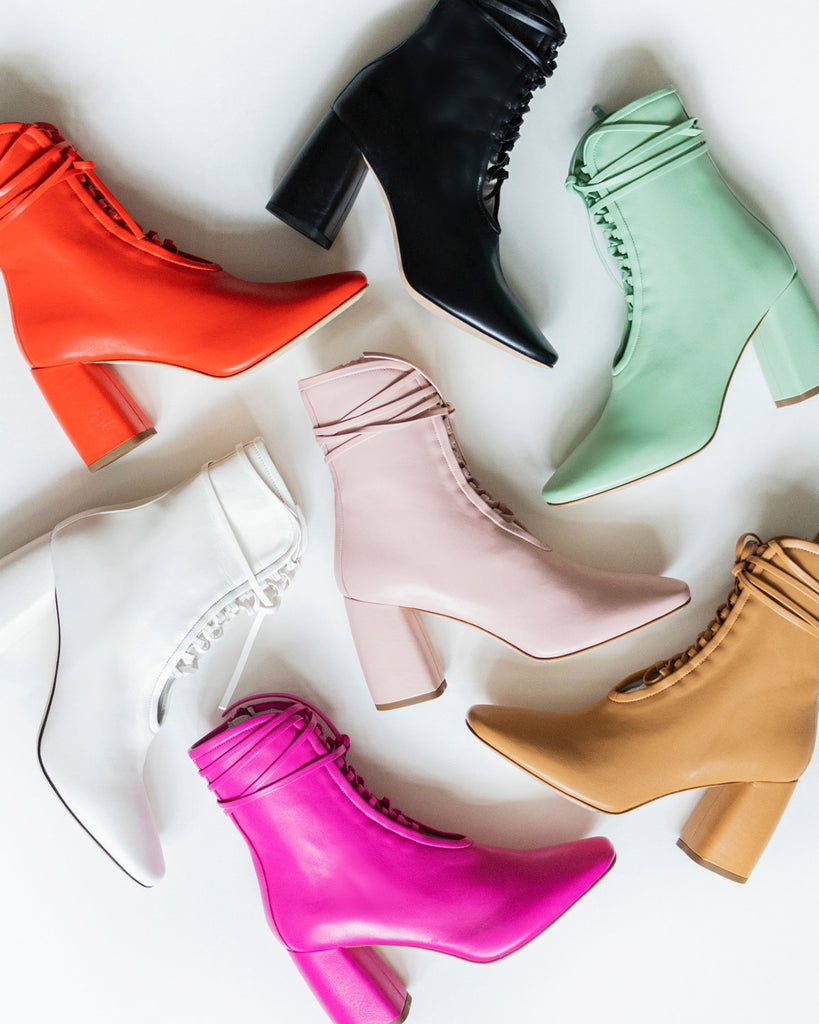


Flat heeled ladies boots are boots with a heel of 0 to 1 inch, and that small specification matters because it keeps the foot in a near-neutral position that can support 8+ hours of wear when the boot is properly engineered. In practice, they’re the modern answer to the woman who wants polish, comfort, and day-to-night versatility without carrying a second pair of shoes.
If you’re reading this while staring at a beautiful pair of boots and wondering whether they’ll survive your commute, your meetings, dinner, and the walk home, you’re asking the right question. A flat boot isn’t automatically a comfortable boot. The difference is in the build, the materials, the fit, and the way the boot manages pressure over a long day.
I design with one rule at the center of every decision: luxury should not be painful. The right pair of flat heeled ladies boots should feel composed in a boardroom, confident at an event, and dependable on real pavement.
The End of the Backup Flat
For years, women have accepted a strange ritual. We buy the polished shoe for the outfit, then hide the practical shoe in the tote.
That compromise never made sense to me. If a shoe is meant for modern life, it should handle modern life. It should carry you through the walk to work, the standing meeting, the subway stairs, the client lunch, and the last-minute dinner without asking you to surrender elegance halfway through the day.
The history of the boot explains why this category still matters. The flat-heeled boot began as a practical necessity and then became a fashion mainstay. By the late 1800s, low-heeled lace-up boots were worn across social classes, and over 70% of fashion plates from 1850 to 1900 featured them according to this historical overview of women’s footwear.
That matters because utility has always been part of the boot’s DNA. Style came later, but it stayed.
Why the old trade-off no longer works
A lot of luxury footwear still asks women to choose one of two things:
- Visual impact. Sharp lines, beautiful leather, a sleek silhouette.
- Physical ease. Enough support to get through a full day.
- Convenience. One pair that works from morning to evening.
Too often, you only get two out of three.
Practical rule: If you already know you’ll need a backup pair by lunch, the first pair isn’t serving your life.
That’s why flat heeled ladies boots have become so central to the way many women dress now. They solve a real problem. They give structure without the strain that often comes with a more pitched shoe. They also work across wardrobes in a way many occasion shoes don’t.
For office dressing, travel, and city life, I almost always come back to the same principle. The shoe has to earn its place in your closet through wear, not fantasy. If you’re building a wardrobe around pieces that move with you, my thoughts on office shoes for women follow the same logic.
What a modern flat boot should do
The modern version isn’t just a low heel and a nice upper. It should be able to do three things well:
- Hold shape so the boot still looks refined after a full day's wear
- Distribute pressure so your forefoot doesn’t absorb the entire workload
- Transition easily from work to event to weekend
That’s the end of the backup flat. Not because comfort suddenly became trendy, but because women are no longer willing to organize their day around avoidable shoe pain.
Redefining the Flat Boot Beyond a Low Heel
A flat boot gets defined too narrowly. People hear “flat” and think only about height.
That’s incomplete. Heel height is the starting point, not the whole story.
A flat heeled boot is defined by an industry standard of 0 to 1 inch. That range matters because the near-zero heel-to-toe drop keeps the foot closer to neutral, helps distribute weight across the foot, reduces forefoot pressure, and can support 8+ hours of wear when the rest of the construction is done correctly, as outlined in this boot fitting guide.

Heel height is the headline, not the full engineering brief
A low heel on its own doesn’t guarantee comfort. I’ve seen plenty of flat boots that are stiff, unforgiving, and tiring because the internal build works against the foot.
When I assess whether a flat boot is worth buying, I look at the following:
- Heel-to-toe balance. A near-neutral pitch usually feels steadier and less fatiguing over time.
- Insole architecture. Cushioning should compress without collapsing.
- Forefoot room. If the toe shape is elegant but the internal space is mean, the boot won’t get worn.
- Shaft behavior. The upper should support the leg without cutting into the ankle or calf.
- Flex pattern. The boot should bend where the foot bends, not where the factory forced a seam.
That’s the difference between a boot that feels “fine” for twenty minutes and one you trust for a full schedule.
What works and what doesn’t
Here’s the simplest way I explain it to clients.
| Feature | What works | What doesn't |
|---|---|---|
| Heel pitch | Near-neutral stance | Hidden pitch that pushes weight forward |
| Cushioning | Supportive padding that keeps structure | Foam that flattens quickly |
| Toe shape | Refined exterior with usable internal room | Narrow front that pinches by midday |
| Sole feel | Stable under repeated walking | Hard, thin base with no shock management |
| Fit | Close, glove-like hold without pressure points | Sliding heel or squeezing forefoot |
A good flat boot should feel calm underfoot. That’s the word I come back to. Calm.
A boot can look minimal and still be technically serious. In fact, the most elegant pairs often hide the most thoughtful engineering.
Why this matters for a 10,000-step day
Most women don’t need a boot for a staged lifestyle. They need one for the kind of day that changes shape three times before noon.
You may start in a car or on a train, walk several city blocks, stand through a presentation, then head somewhere social without changing. In that setting, a boot that only advertises itself as “versatile” isn’t saying enough.
The question is whether it’s built for sustained wear. Most retail categories still sort flat boots by style names and broad descriptors, which is one reason shoppers have to work so hard to identify functional pairs. If you’re narrowing down silhouettes first, my guide to flat black leather boots is a useful place to compare what translates into daily wear.
The sustainable luxury standard
For me, sustainable luxury starts with design restraint and technical honesty.
A better boot is one you keep reaching for. That means:
- Materials that age well
- Construction that tolerates repeat wear
- A shape that doesn’t date quickly
- Comfort-first design that eliminates the need for duplicates
If a pair only works for one narrow use case, it usually isn’t a smart luxury purchase. The strongest flat heeled ladies boots are the ones that move through your life naturally, not the ones that need to be managed delicately.
Why Is Handcrafted Construction Crucial for Comfort?
Here, comfort stops being a marketing word and becomes a construction question.
When I visit factories in Italy and Portugal, I’m not looking only at the surface finish. I’m watching how the leather behaves in hand, how the boot is lasted, where the tension sits, and whether the shape supports the foot or merely decorates it. A beautiful boot can still fail if the internal decisions are careless.

Leather is not a cosmetic choice
Premium flat boots often use 100% calfskin leather, and that material has reported tensile strength of about 1,200 to 1,400 PSI, which is one reason it outperforms many synthetic alternatives in long-term wear. Combined with artisanal construction that reduces seam failure, handcrafted boots can deliver a 5 to 10 year service life with proper maintenance, according to this material and construction overview from Balmain’s product reference.
Those numbers matter, but the practical effect matters more. Good calfskin stretches with intelligence. It softens without losing dignity. It adapts to the foot instead of fighting it.
Poor leather tends to do one of two things. It either stays rigid and punishing, or it breaks down too quickly and loses shape.
The internal architecture matters just as much
Women often focus on the shaft, the toe, the color, or the heel shape. I understand that. Those are the visible decisions.
But comfort lives in the hidden layers.
When we build a boot around a comfort-first philosophy, we test for things like:
- Pressure distribution under repeated wear
- Foam recovery after hours of compression
- Stability at the heel seat
- Flex at the forefoot
- Interior smoothness around the common friction points
Our own approach includes a three-part memory foam system because one density alone rarely solves the full problem. The foot needs softness in some zones and steadiness in others. Otherwise the shoe can feel plush for a few minutes and tiring after two hours.
What I look for first: if the insole feels soft but the structure underneath feels unstable, the comfort won't last.
Why handcrafted boots fit differently
Handcraft changes the result because it allows for more precise control over how the leather wraps, where it yields, and how the boot holds the foot. The absence of crude internal bulk makes a major difference.
That’s especially important for women who’ve been told luxury shoes “aren’t for their feet.” I’ve worked with clients who have bunions, narrow heels, sensitive forefeet, or one foot that fits differently from the other. In many cases, the problem isn’t the foot. It’s the shoe’s refusal to accommodate real anatomy.
A glove-fit construction helps because it reduces the random pressure points created by badly placed seams and awkward stiffness. If you’re interested in the making process itself, I go deeper into that in this article on handcrafted women’s shoes.
What tends to fail in mass-produced flat boots
Not every machine-made boot is poor, but the common weak spots are predictable.
- Too many internal seams that rub after a few hours
- Artificially stiff uppers that never relax properly
- Foam that compresses too fast
- Thin linings that expose every structural edge
- Generic lasts that ignore how women walk and stand
By contrast, a well-made handcrafted boot feels more coherent. The upper, lining, insole, and sole work together.
There’s also a sustainability argument here, and it’s one I truly believe. A boot you can wear for years, care for, stretch, and repair is a more intelligent object than one designed for a short fashion cycle.
One mention of product, where it belongs
In the comfort-first category, some brands have started addressing biomechanics more directly. For example, Daniella Shevel includes styles such as the CLEO low-heel boot and other handcrafted boot options built around memory foam cushioning and glove-fit construction for day-to-night wear.
That’s the standard I believe more luxury footwear should be held to. Not whether it photographs well, but whether it supports a real day.
Choosing the Right Flat Boot for Your Itinerary
A flat boot should match the life it’s entering. The right pair for the office isn’t always the right pair for travel, and the pair you want for a long event may not be the one you reach for on a rainy weekday.
That’s where most shopping advice falls short. Many retailers describe flat boots as “versatile” in broad terms, but they don’t address whether the boot supports posture through a long workday or helps reduce fatigue after 10,000+ steps, which is part of the gap identified in this look at how major e-commerce platforms present flat boots by category.

The office power boot
In a work setting, a flat boot has to do something subtle but important. It needs authority.
That usually means a shape with a clean line through the ankle, a leather that holds its form, and a toe that looks deliberate rather than casual. For structured trousers, midi skirts, and sharper business dressing, I’d prioritize:
- A sleek ankle profile that slides under hems cleanly
- Polished leather rather than overly slouchy materials
- A stable sole for repeated standing and walking
- A dressier toe shape that still leaves room inside
If your wardrobe leans corporate, a pointed or softly squared silhouette often works better than a rounded, casual one. The point isn’t to look severe. It’s to look resolved.
For women balancing meetings with a real commute, a low-profile boot from the CLEO collection makes sense because the shape stays refined while the lower pitch keeps it practical through the day.
The chic commuter boot
Commuter dressing requires a different kind of intelligence. The boot has to tolerate weather shifts, pavement, and the rhythm of stop-and-start movement.
I usually tell women to look for the pair that feels least fussy at 8 a.m. That’s often the pair that still feels right at 8 p.m.
A strong commuter boot should have:
- Secure hold at the heel so you’re not gripping with your toes
- Leather that can soften and adapt
- Enough sole substance to deal with city surfaces
- An upper that doesn’t collapse unattractively with wear
The boot you wear most often is rarely the flashiest one. It’s the one that asks the least from your body.
The perfect travel boot
Travel changes the brief completely. You need something that packs well, handles long walking days, and still earns its place at dinner.
For Europe in particular, I always think about transitions. Museum floors, cobblestones, uneven streets, hotel lobbies, late reservations. A boot that only works in one of those environments is taking up suitcase space without giving enough back.
For destination planning, this guide to best shoes for walking in Europe is useful because it focuses on the practical demands of travel footwear rather than purely aesthetic styling. And if you’re building a complete carry-on strategy, this roundup of best travel accessories for long flights pairs well with footwear planning because comfort usually comes from a system, not one item.
For the travel category, I’d look for:
- A shaft height that works with dresses and trousers
- A leather finish that won’t show every mark immediately
- Enough elegance for dinner without reading as “walking shoe”
- Reliable comfort from morning through evening
A versatile option for that lane is the ISABELLA collection, especially if you want one boot that can move between daytime and evening plans without changing the tone of the outfit.
The unforgettable event boot
Events create their own trap. Women often buy for the first thirty minutes of the evening, not the last three hours.
For weddings, holiday dinners, gallery openings, and long celebrations, the right flat or low-heel boot should feel dressed up, not apologetic. That usually comes down to line, material, and how the boot meets the leg.
A good event boot often includes:
- A slim visual profile
- A luxurious surface, whether smooth leather or a more tactile finish
- Comfort under prolonged standing
- A silhouette that works with hemlines from mini to midi
If you want an evening option with a more distinctive look, the ROMI collection is worth considering because the design language feels event-ready while staying grounded in wearability.
A simple decision guide
| Your day looks like | Prioritize | Skip |
|---|---|---|
| Office and meetings | Structure, polish, stable footing | Overly casual slouch |
| Commute and city walking | Secure fit, flexible leather, durable sole | Thin, hard underfoot feel |
| Travel and sightseeing | Versatility, easy styling, all-day wear | Delicate boots that need babying |
| Weddings and events | Dressy line, elegant finish, standing comfort | Shoes that only work seated |
If you’re buying flat heeled ladies boots for one specific role, be honest about that. But if you want an investment pair, buy for the broadest version of your real life.
From Cobblestones to Corporate Styling Your Investment Boots
Styling flat heeled ladies boots well is less about trend-chasing and more about proportion. The boot should anchor the outfit, not interrupt it.
That’s one reason this category has stayed relevant for so long. In the 1960s, rising hemlines pushed calf-high, low-heeled boots into high fashion, with André Courrèges’s 1963 white boots standing out as a defining example, as noted in this history of women’s footwear. That legacy still shows up now in the way flat boots work with everything from minidresses to wide-leg trousers.

For the office
The office version should feel clean and unfussy.
Try these combinations:
- Ankle boots with straight trousers. Let the hem skim the top of the boot for a continuous line.
- Mid-calf boots with a knit dress. Keep the dress structured rather than overly soft.
- Flat knee-highs with a midi skirt. A narrow shaft usually looks sharper than a loose one in professional settings.
The easiest mistake is overcomplicating the rest of the outfit. A sleek boot already provides presence.
For weekends and travel days
The cost per wear of a good boot really reveals itself. One well-shaped pair can work with denim, soft tailoring, relaxed shirting, and dresses.
I usually suggest building around one of these formulas:
- Dark denim, white shirt, long coat
- Wide-leg trousers, fine knit, belt
- Mini or midi dress, oversized blazer
- Leggings, button-down, structured outerwear
A strong boot makes casual clothing look intentional. That's one reason women keep reaching for the same pair.
For more style inspiration across silhouettes, it helps to browse the broader boots collection and compare how different shaft heights change the outfit.
For evenings out
A flat boot can absolutely read as evening, but it has to be the right flat boot. Here, leather finish, line, and restraint matter.
A few styling notes I rely on:
- Pair a refined boot with silk or satin to create tension between softness and structure
- Choose one strong silhouette in the outfit, either the boot or the dress
- Keep hosiery intentional, especially with shorter hemlines
- Avoid bulky layers that fight the shape of the boot
This video shows how much silhouette and movement affect the final look:
A few rules I don’t break
- Match visual weight. A delicate dress often needs a sleek boot, not a chunky one.
- Respect the shaft line. If the top of the boot hits an awkward point on the calf, adjust the hem.
- Let the leather speak. Better leather needs less styling noise.
- Repeat the mood, not the color. Your bag doesn’t need to match the boot exactly.
If you want the wardrobe to feel cohesive, buy boots that can play multiple roles. That’s where investment dressing becomes practical instead of theoretical.
Investing in Longevity Sustainable Luxury and Lifelong Wear
The most sustainable shoe is usually the one you continue wearing. Not the one with the loudest promise attached to it, but the one built well enough to stay in your life.
That’s why I believe in buying fewer pairs and buying with more scrutiny. If the leather is strong, the construction is thoughtful, and the fit is right, a boot becomes part of your wardrobe architecture instead of a short-term fix.
What helps a boot last
You don’t need a complicated care routine. You need consistency.
- Store them with shape in mind. Don’t let shafts collapse for months at a time.
- Condition leather when it starts to feel dry. Don’t wait until it looks stressed.
- Rotate wear when possible so moisture can dissipate naturally.
- Address fit issues early. Small pressure problems become permanent wear patterns if ignored.
- Repair before damage spreads. A minor sole or lining issue is easier to fix than a fully broken-down boot.
I also believe post-purchase service is part of the product. Stretching, repair, and fit guidance extend the useful life of a shoe in a very tangible way. That’s one reason I care so much about a high-touch retail experience.
Why sustainable luxury has to be practical
Sustainable luxury isn’t only about materials. It’s also about behavior.
A beautifully made boot that you can repair, maintain, and continue wearing for years is a stronger answer to overconsumption than a series of impulse purchases. That philosophy sits behind our work, including our broader commitments around sustainability at Daniella Shevel.
For women who care about ethics as much as aesthetics, that often means looking for three things:
| Priority | Why it matters |
|---|---|
| Longevity | You wear the pair often enough to justify the investment |
| Repairability | The boot can stay in use instead of being discarded |
| Versatility | One pair can cover multiple occasions and wardrobes |
Buy the pair you will protect, repair, and wear repeatedly. That's usually the right pair.
The real luxury
True luxury is not owning more. It’s moving through your day without distraction.
It’s leaving the house in one pair of boots and never thinking about your feet again, except to notice that they still feel good at the end of the night. It’s knowing the boot works with your body, your schedule, and your standards.
Written by Daniella Shevel, Designer & Founder
If you’re ready to build a wardrobe around comfort-first luxury, explore Daniella Shevel and start with a pair of handcrafted boots you’ll want to wear from morning to midnight.