

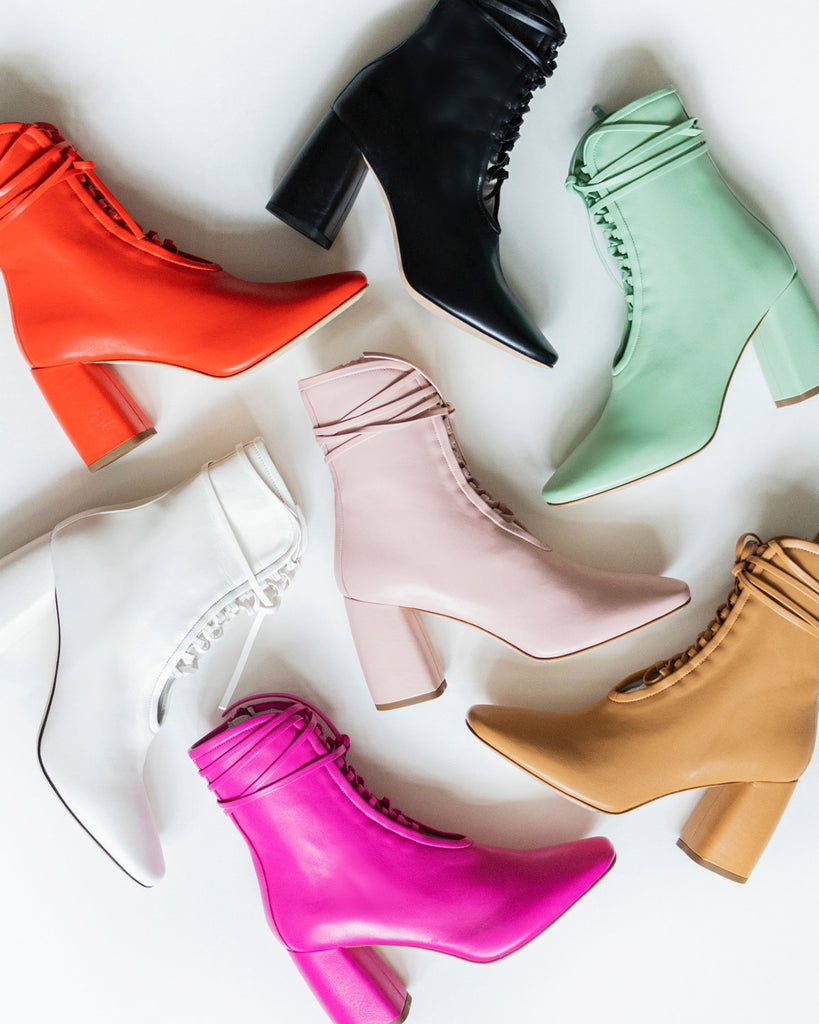


You're probably choosing between the shoe you love in photos and the shoe you trust for a long day on your feet. That tension is real. A bridal booties low heel style can solve it, because the right pair gives you structure, stability, and enough lift to feel dressed without tipping your weight too far forward.
I've always believed luxury should support your day, not interrupt it. On a wedding day, that matters even more. You shouldn't need a backup pair hidden under the sweetheart table.
What Defines a Low Heel Bridal Bootie
A low heel bridal bootie isn't just a vague styling term. In bridal footwear, it's a measurable category.
Charlotte Mills groups low block bridal heels at 1–4 cm in its block heel wedding shoe guide, while Bella Belle places many low-heel wedding shoes at 2–2.5 inches, or about 5.1–6.4 cm, as summarized in that same discussion. That's why “low heel” can look slightly different from brand to brand, but the category still has a real technical meaning.

The measurement matters
A true low heel sits in the zone where you still get polish and posture, but not the aggressive pitch of a higher stiletto. That's the difference brides feel after a ceremony, cocktails, photos, dinner, and dancing.
Low-heel booties usually offer:
- A modest lift that feels more formal than a flat
- More stability because the foot isn't pushed as steeply forward
- Better security because the bootie holds the foot more completely than a pump or sandal
If you want a deeper breakdown of heel categories, this guide to low heel wedding shoes is a useful place to compare silhouettes.
Why a bootie feels different from a pump
Heel height is only one part of comfort. A bootie changes the experience because it wraps the foot and ankle more securely.
That extra containment can help reduce the constant gripping people often do in open shoes. When a bride tells me a sandal feels “fine” for standing but not for walking, that usually points to security, not just cushioning.
Practical rule: If your foot has to work to stay in the shoe, the shoe is already asking too much of you.
A low heel bridal bootie also has a specific visual effect. It reads refined and intentional, but it doesn't force the drama of a very high heel. For city hall weddings, garden ceremonies, winter weddings, destination weekends, and dresses with slits or shorter hems, that balance often makes more sense than a traditional pump.
Why Choose a Low Heel Bootie for Your Wedding Day
The test happens about four hours in. You have crossed a lawn for photos, stood through the ceremony, and started circulating through dinner. If your toes are already compressed or your forefoot is burning, the shoe is working against your body.
Bridal heel guides place low-heel styles at around 4–6 cm, or about 1.5–2.3 inches, and describe that range as ideal for all-day wear because it supports a more natural stride and adds stability on surfaces like grass and cobblestones in Ruxene's bridal heels style height guide. For a wedding, that matters because comfort is cumulative. Small fit problems get louder with every hour you spend standing, walking, turning, and dancing.
Where low heel booties earn their place
A low heel bootie solves more than one problem at once. The lower pitch helps reduce the load that gets pushed into the ball of the foot, and the bootie upper helps keep the foot from sliding or over-gripping to stay in place. That combination is especially helpful for brides with bunions, sensitive joints, or feet that swell as the day goes on.
Some venues are hard on shoes. So are long timelines.
| Wedding condition | Why a low heel bootie helps |
|---|---|
| Grass or soft ground | A lower heel is less likely to sink or feel unstable |
| Cobblestones or old stone | More foot coverage helps control side-to-side movement |
| Long standing periods | Less aggressive pitch usually means less forefoot fatigue |
| Indoor to outdoor transitions | The foot stays more secure than it does in many sandals or pumps |
I see this often in fittings. A bride may assume she needs extra padding, but the actual issue is motion inside the shoe. Once the foot is properly contained, pressure points often calm down because the body is no longer compensating with every step.
Why brides choose this silhouette for the full day
Many brides want one pair that can handle the entire event. They do not want a photo shoe, a ceremony shoe, and a backup flat waiting under the table. They want to move normally and stay present.
That is where a low heel bridal bootie makes sense. It gives polish without asking the foot to hold an extreme position for hours. It also tends to be more forgiving for brides who need a little more room through the forefoot or a more stable base under the heel. If you are comparing options across silhouettes, this guide to comfortable wedding shoes for long events can help you sort through what affects wearability.
A well-made bootie also keeps working after the wedding. Brides wear them again with suiting, denim, silk separates, and shorter dresses because the shape feels intentional beyond the ceremony.
The best wedding shoe lets you stay focused on the wedding, not on the countdown to taking it off.
Our Comfort-First Design Philosophy
A bride usually notices poor construction at the worst possible moment. About an hour in, she starts shifting weight from foot to foot, her toes grip to stay stable, and a shoe that felt fine while sitting becomes distracting in motion.
I design against that outcome.
When I develop a bridal bootie, I start with biomechanics before ornament. The line has to be elegant, of course, but the fundamental question is how the foot will load, flex, and swell over a full day. That matters even more for brides with bunions, width differences, or a forefoot that gets sensitive under pressure.

Bella Belle's comfort guide points to one principle I agree with. A lower heel can reduce how aggressively the body tips forward, but comfort still depends on the whole build, not the measurement alone, as explained in its low heel comfort guide.
What I test first
I look at three things before I sign off on a prototype.
-
Pitch
The foot should not be shoved into the ball of the foot. If that angle is too steep, forefoot fatigue shows up quickly. -
Base geometry
A heel with broader contact to the ground usually feels steadier and wastes less energy with each step. -
Containment
The upper should keep the foot aligned without rubbing the joints or squeezing the widest part of the foot.
Those choices affect more than comfort in theory. They change gait. When a shoe is balanced properly, the body stops compensating so hard through the toes, calves, and lower back. Brides often describe that difference as feeling secure rather than padded, which is a more useful standard.
Why handcrafted construction matters
Handcrafted construction changes fit in ways you can feel by hour three, not just in a product photo. Softer leathers break in with more grace. Seam placement can avoid common pressure points. The last can be shaped with more precision, which matters if your foot is narrow at the heel, fuller at the forefoot, or prominent at the bunion joint.
I care about that level of detail because bridal shoes have to perform under real conditions. Standing still for photos. Walking on uneven ground. Dancing after your feet have already been working all day.
Here's the comfort architecture I build around:
| Element | What it does in wear |
|---|---|
| Cushioned insole | Softens repetitive impact |
| Supportive shape | Helps the foot stay in a more natural position |
| Supple upper | Adapts more gracefully to movement |
| Stable heel platform | Reduces the shaky feeling that tires feet faster |
I don't design for the first ten minutes. I design for the fifth hour.
If you are trying to understand what construction details matter for sensitive joints, this guide to bunion-friendly wedding shoes that still feel refined gives a clearer framework.
In my own line, the CLEO white leather low heel boot is one example of that approach translated into a bridal bootie. The ROMI mesh bootie takes a lighter visual route while still relying on structure and hold. If you want to compare heel profiles across dressier styles, the bridal heels collection is a useful place to start.
How to Find Booties for Bunions Wide or Narrow Feet
Fit issues don't disappear because a shoe is expensive. In fact, many women come to luxury shopping after years of being told to tolerate pain as part of dressing up.
That's why I care so much about this part of the conversation. Most bridal content still centers on appearance, while the more useful question is which shoe works for bunions, width differences, or swelling, as discussed in this bridal booties guide. A beautiful shoe that fights your foot is still the wrong shoe.

If you have bunions
The first thing I look for is forgiveness in the upper. Hard, unyielding materials can press exactly where you don't need pressure.
Prioritize:
- Soft uppers that don't create a rigid hotspot
- A shaped toe box with enough room at the joint
- Interior cushioning that helps reduce irritation from friction
A pointed toe can still work, but only if the internal shape is smarter than the outer line suggests. External silhouette and internal volume are not the same thing.
If your feet run wide
Wide feet usually need more than “size up and hope.” Going up a size can create heel slip while still leaving the forefoot unsupported.
Look for booties with:
- Glove-like construction that adapts better over time
- Less rigid edge binding around the forefoot
- Secure ankle fit so the foot isn't sliding forward
If width is your main concern, it also helps to ask about stretching. A thoughtful fitting process can be the difference between a near miss and a pair you wear.
If your feet are narrow or you slip out of shoes
Narrow feet often struggle in open pumps because there isn't enough hold through the midfoot and heel. A bootie can solve that by wrapping the foot more completely.
I'd focus on:
- A closer ankle fit
- Minimal heel lift at the back
- An upper that hugs instead of gaps
For brides dealing with pressure points around the forefoot, this guide to bunion-friendly wedding shoes offers more targeted fit advice. If you prefer an appointment-based approach, booking a virtual or in-store fitting is often the fastest way to find out whether a certain shape will work for your foot.
A bridal shoe should accommodate the foot you have on your wedding day, not the foot you wish you had.
Styling Bridal Booties with Your Wedding Outfit
You step out of the car, your dress drops into place, and the first thing that changes how you move is your shoe. That is why styling bridal booties starts with motion, not just mood boards. A bootie has to work with your hem, your venue, and the way your foot rolls from ceremony to dance floor.

I style bridal booties by looking at three things together. The line of the outfit, the amount of ankle coverage, and how stable the bride needs to feel on the day. If the shoe interrupts the gown at the wrong point, the proportions feel heavy. If the shaft height and hem length are in sync, the whole look feels deliberate.
Clean lines for city weddings
For city hall, loft weddings, and modern reception spaces, a sleek bootie pairs beautifully with a crepe gown, a bias-cut dress, or a sharply cut bridal suit. The reason is simple. A low heel bootie gives the outfit definition without asking you to manage the pitch and pressure of a higher shoe for ten hours.
I often recommend a sharper toe shape with cleaner materials in these settings. White leather, satin with minimal ornament, or fine mesh usually reads more polished than anything overly busy. If you want references for that cleaner approach, these white bridal booties for modern bridal styling show how the silhouette can stay crisp and bridal at the same time.
Romantic looks with structure
Booties are not limited to minimalist dressing. I design plenty of pairs with softness built in. Lace, pearl accents, curved top lines, and lighter materials can give a romantic dress more character while still providing more hold than an open sandal.
They work especially well with:
- Tea-length dresses that keep the shoe in view
- High-low hems that show movement from different angles
- Slit gowns where the ankle and heel appear as you walk
There is also a practical advantage. In cooler weather, a bootie finishes the outfit more convincingly than a delicate sandal, and it usually keeps the foot more stable through long hours on hard floors.
If you want to see bridal styling in motion, this video gives helpful visual context before you decide on hem length and proportion.
Venue changes proportion
A garden wedding, a barn reception, and a townhouse ceremony place different demands on a shoe. I always account for terrain because it affects posture, stride, and how confident a bride feels standing still for photos.
| Venue | Styling direction |
|---|---|
| Garden or vineyard | A grounded heel with softer detailing and enough coverage to stay secure on uneven surfaces |
| City venue | Sleek leather or mesh with a sharper toe and a cleaner line under the hem |
| Winter wedding | Structured ankle bootie with a close fit that looks intentional with heavier fabrics |
| Destination celebration | Lightweight bootie that works from ceremony through dinner and is easier to rewear |
Rewear matters here too. A bootie with thoughtful detailing and a practical heel height usually has a longer life than a very ornate pump. I see brides return to theirs with tailoring, denim, or occasion dresses because the styling was considered from the start.
Caring for Your Investment and Giving Back
A bridal bootie should never be treated like a one-day prop. If it's made with care, it deserves care in return.
I'm a big believer in buying fewer things and keeping them beautifully. That starts with simple habits after the wedding.
How to keep your booties in rotation
A few basics make a real difference:
- Clean them promptly after the event, especially if you walked on grass, stone, or city streets.
- Use proper storage so the shape stays supported and the upper doesn't collapse.
- Handle weather thoughtfully because satin, suede, leather, and mesh all ask for different care.
- Address small issues early. A loose lift, light scuff, or fit adjustment is easier to solve before it becomes major wear.
If you're buying handcrafted footwear, repair and maintenance are part of the value. That's what turns a wedding shoe into a repeat shoe.
The sustainable luxury piece
I also care about what happens after a pair has served you well. Circular fashion only works when brands make it easier to participate.
That's why the Soles4Souls credit program matters. Customers can donate pre-loved shoes and receive a $75 credit, which supports a buy-less-buy-better mindset while keeping usable footwear in circulation.
The most sustainable special-occasion shoe is the one you'll wear again, maintain well, and pass forward thoughtfully when you're done with it.
If you're considering a second pair beyond the wedding, the NOLA collection is a smart place to look for styles that extend into dinners, events, and travel.
Find Your Forever Pair
The true test happens late in the night. Your dress has settled, the photos are done, and you are still on your feet greeting people, turning quickly, and dancing on a floor that may be stone, wood, or grass covered by a thin tent liner. A good bridal bootie should still feel stable then, not just look good in the first ten minutes.
That is the standard I design for. The right pair supports your gait, holds the foot securely through long hours, and gives sensitive areas like bunions or a wider forefoot enough room to stay calm instead of getting more irritated with every step. Handcrafted construction matters here because shape, padding placement, and heel balance affect comfort in a very real way over the course of a wedding day.
If you want a refined starting point, the CLEO white leather low heel boot brings together the qualities that matter most. A stable low heel, clean lines, and structure that feels polished without forcing your feet into a position they will fight by dinner.
Choose the pair that lets you stay present in your body and fully in the day.
If you're ready to choose a wedding shoe that doesn't require compromise, explore Daniella Shevel and book a personalized fitting to find the pair that fits your dress, your venue, and your real life.