

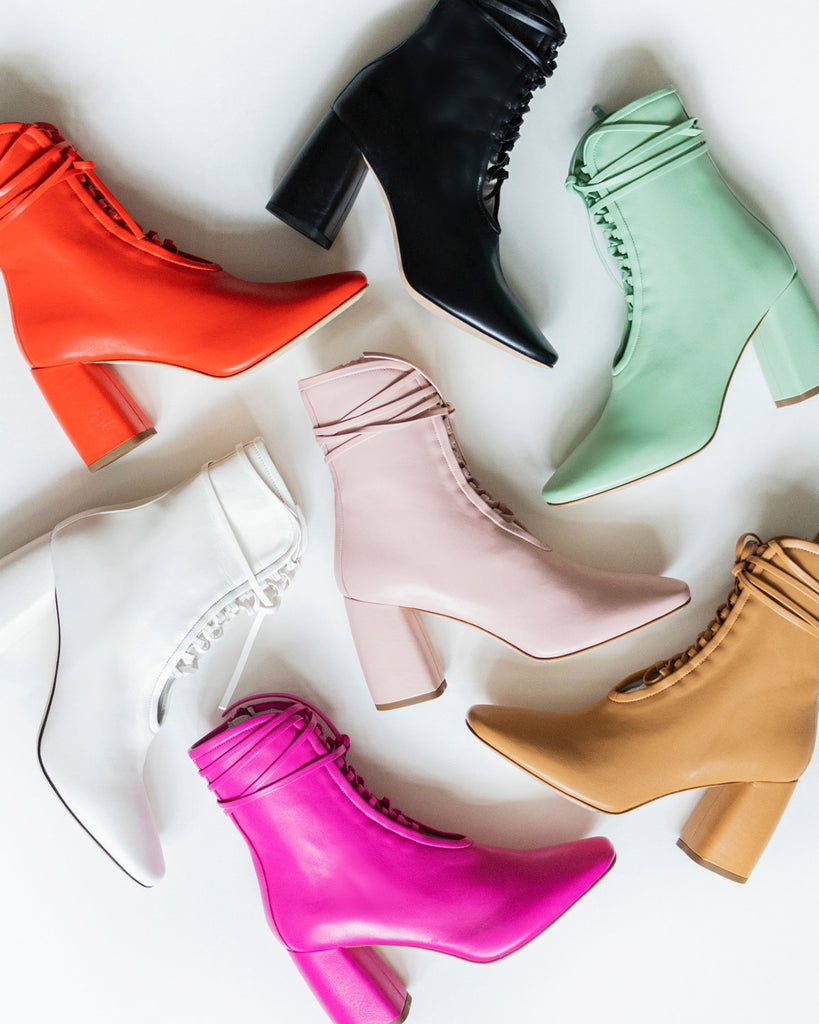


Bridal booties are the perfect wedding shoe because they combine the elegance of a heel with the stability of a boot. If you want a pair you can wear from the first photo to the last dance, choose bridal booties with a 2.5 to 3-inch heel and supportive construction built for long hours on your feet.
You're likely staring at dress photos, venue notes, and shoe tabs, trying to reconcile two competing truths. You want something beautiful enough for your wedding album, and you refuse to spend your day counting the minutes until you can kick your shoes off.
I agree with that instinct completely. I design shoes with one belief at the center of every decision. Luxury should not be painful. Bridal booties make that principle visible. They look polished, feel grounded, and let you move like yourself.
The Modern Bride's Alternative to Traditional Heels
Bridal booties aren't a novelty. They have history, purpose, and a kind of confidence that pumps rarely deliver.
The wedding boot emerged as a distinct bridal accessory during the Regency era, approximately 1811 to 1820, and those early designs in satin and kid leather reflected women's increasingly active lifestyles, according to this history of wedding boots. Later, Queen Victoria's preference for white elastic-sided boots helped establish bridal boots as elegant and practical, not merely functional.
That matters because a lot of modern bridal advice treats booties like an edgy styling twist. I don't. I see them as a return to functional elegance.

What bridal booties do better than pumps
A traditional pump leaves most of the foot exposed and asks a lot from a very small contact point. A bridal bootie changes the equation.
It gives you:
- More structure: The upper holds the foot more securely through the instep and ankle.
- More confidence: You feel stable walking over stone, grass, wood floors, and city sidewalks.
- More presence: A beautifully cut bootie reads as intentional, not like an afterthought hidden under a hem.
I've watched brides try to talk themselves into a shoe that only works while standing still. That's the wrong test. Your wedding day is movement. You're walking, turning, greeting, dancing, and staying on your feet for hours.
Bridal shoes should support the day you're actually going to have, not the still photograph you imagine first.
Why the silhouette feels so current
A bootie works because it balances romance and modernity. It can feel sleek with crepe, delicate with lace, or architectural with a minimalist gown.
That's why I often recommend starting your search with shape, not embellishment. Ask yourself:
- Do I want a sharp line? Choose a pointed toe.
- Do I need softness? Choose lace, satin, or a lighter visual texture.
- Do I want fashion edge? Choose a higher vamp and cleaner finish.
If you're still deciding whether this category fits your wedding wardrobe, I'd also look at this edit of modern bridal shoes, which helps clarify when a bridal bootie makes more sense than a sandal or classic pump.
The real emotional benefit
The best reason to wear bridal booties isn't trend-related. It's personal.
When your feet feel secure, your posture changes. You stop bracing. You stop planning an escape route to flats. You stay present.
That's the difference between wearing a shoe and relying on one.
Why Are Bridal Booties the Ultimate Comfort-First Choice?
Comfort isn't mysterious. It's engineered.
When I assess bridal booties, I look at the same things I'd examine in any serious luxury shoe: heel architecture, pitch, material response, and how the foot sits inside the shoe over time. Most wedding shoe conversations stay at the surface. I'm interested in what happens after hour one.

Start with heel architecture
For all-day wearability at weddings, expert guidance recommends bridal booties with a 2.5 to 3-inch block heel, because the broader base reduces plantar pressure and improves stability on varied surfaces, especially during 8+ hour events, as outlined in this guide to winter wedding boots for brides.
That recommendation is exactly right.
A thin stiletto concentrates force. A broader heel spreads it. The difference is obvious on cobblestones, museum floors, grass, gravel, and old wood planks. It's also obvious by the end of the reception, when fatigue starts to change how you walk.
Pitch matters more than most brides realize
Pitch is the angle created between the heel and the ball of the foot. If that angle is too aggressive, your weight slides forward and your forefoot pays the price.
I think of it this way. A well-designed shoe should feel like a chair for your feet. It should support you, not dump you forward.
That's why I prefer bridal booties that keep the foot in a more balanced position. The ankle coverage helps. The visual line can still be formal and elongated. But the structure lets the shoe do more work, so your body has to do less.
Practical rule: If a shoe looks beautiful but forces you to grip with your toes or brace through your ankle, it isn't a wedding shoe. It's a photo prop.
Stability changes your whole day
Support doesn't just affect comfort. It affects behavior.
A stable bridal bootie lets you:
- Walk naturally: You won't shorten every stride to protect yourself.
- Stand longer: Conversations, ceremonies, and receiving lines become easier.
- Dance with less hesitation: You trust the shoe, which means you move more freely.
That freedom is why I'm firm about this category. Bridal booties aren't comfortable “for a fashion shoe” alone. They're often the smarter technical choice.
If you're comparing silhouettes and want to see how comfort-first construction applies across categories, this article on comfortable wedding shoes is worth reading before you buy.
My own recommendation
If you want one clear specification, choose this: a low-to-mid heel with more surface contact area.
That usually means:
- A block heel instead of a pin-thin heel
- An ankle-high cut instead of a loose, low shoe
- A pointed or gently shaped toe that still leaves room for the foot to function
For women who know they'll be outdoors at any point, this becomes even less negotiable. Grass, stone, slick floors, and uneven paving expose bad shoe engineering quickly.
The comfort checklist I'd use myself
Here's the fast filter I'd use if I were shopping with you in person:
| What to check | What to choose |
|---|---|
| Heel shape | Block or other broad-based heel |
| Heel height | 2.5 to 3 inches |
| Foot position | Balanced pitch, not sharply tipped forward |
| Upper structure | Secure hold through ankle and instep |
| Venue reality | Stable enough for grass, paving, wood, and long wear |
Booties win because they solve several problems at once. They give height without forcing instability. They look refined without demanding fragility. They support the body without sacrificing style.
That's the entire point of comfort-first design.
Finding Your Perfect Fit and Material
You feel the difference the moment you zip a well-made bridal bootie. Your foot sits supported instead of shoved forward. Your ankle feels held. The lining feels soft against the skin instead of scratchy. That is not styling. That is engineering, and it decides how you will feel by the first dance.
I care deeply about this because brides are still being sold surface beauty over internal build. Crystals and embroidery are easy to photograph. Balanced pitch, proper padding, and clean interior finishing are what carry you through twelve hours on your feet.

Fit problems need design solutions
Brides with bunions, swelling, a wider forefoot, or a high instep need shoes built to accommodate real feet. A feature roundup in this article on wedding boots for the bride points to smart details like softer toe shapes, fewer abrasive seams, and materials with some give. I agree with the direction, but I would push the standard higher.
Do not tolerate a shoe that asks you to endure it. Choose one that works with your foot from the start.
What I'd prioritize immediately
Start inside the shoe, not outside it. I always check these points first:
- Memory foam or similar cushioning that rebounds well: You want softness with support, not padding that flattens quickly.
- Soft upper materials: Leather, satin, lace, or stretch-backed panels adapt far better than rigid synthetics.
- Minimal internal seam pressure: Thick overlays and rough stitching create hot spots fast.
- A toe shape that lets the foot function: Almond and soft square shapes are usually kinder than a severe point.
- A glove-fit feel through the heel and ankle: Security matters just as much as softness.
Daniella Shevel uses language such as memory foam cushioning and glove-fit construction for bridal and dress shoes. Those are the right things to examine when you compare brands because they speak to how the shoe is built, not just how it looks in a box.
Material is not just aesthetic
Material choice changes comfort, flex, and friction. I would choose a soft leather lining or insole first, then look at the upper. Satin and lace can be beautiful, but they need the right structure beneath them. If the upper is stiff, the shoe will crease badly, rub at the forefoot, and feel harder with every hour of wear.
I see this constantly when I visit workshops in Italy and Portugal. The best booties bend where the foot bends. The collar sits cleanly at the ankle without cutting in. The lining feels smooth, and the upper recovers its shape without fighting the foot. Handcrafted quality shows up in those details long before you inspect the ornament.
Choose the softer, better-built shoe. Your feet will notice before the ceremony is over.
A better way to judge bridal fit
Do not ask whether the bootie feels acceptable for thirty seconds on carpet. Ask harder questions.
- Does your weight feel centered, or are you being pushed onto the ball of the foot?
- Will the upper allow for natural swelling later in the day?
- Does the heel stay secure without gripping your toes?
- Can you identify a pressure point immediately?
If you feel pressure right away, walk away right away.
Sizing also causes unnecessary stress with luxury footwear, especially across European makers. If you need help translating conversions and fit expectations, read this guide to Italian shoe sizing across luxury brands.
My material hierarchy for bridal booties
If comfort leads the decision, shop in this order:
| Priority | Why it matters |
|---|---|
| Soft leather lining or insole | Reduces friction and feels better as the shoe warms to your foot |
| Cushioning with real rebound | Improves comfort through standing, walking, and dancing |
| Flexible satin, lace, or leather upper | Keeps the look refined without turning the shoe rigid |
| Clean handcrafted finishing | Gives you better shaping, cleaner edges, and less internal irritation |
| Stretch-friendly construction where needed | Helps accommodate swelling, bunions, and higher insteps |
The bridal market loves fantasy. I care about the hours after the photos. A beautiful bootie should still feel beautiful at midnight, and that only happens when fit, pitch, lining, and materials are chosen with discipline.
Matching Booties to Your Dress and Venue
You step out of the car, your dress falls perfectly, and then the shoe fails on the first surface change. I have watched that happen too many times. The right bridal bootie has to work with the gown, the venue, and the hours ahead on your feet.
Start with the silhouette of the dress. Then judge the floor with equal seriousness.

For minimalist gowns
Clean crepe, satin, and silk need a bootie with precision. I would choose a pointed toe, a slim ankle line, and a profile that looks crisp from the front. Minimal dresses expose every proportion, so the shoe needs discipline.
This pairing is especially strong for:
- City hall weddings
- Museum ceremonies
- Modern loft venues
A sharp bootie gives the look structure. It also tends to hold the foot more securely than a barely-there sandal, which matters once you start walking, standing, and turning for hours.
If you are still deciding between heel shapes, read our guide to block heel wedding shoes for stability and polish.
For romantic dresses
Lace gowns, tulle, and floral appliqué need softness in the shoe. Match the mood through texture, not excess decoration. Satin, lace panels, and refined trim usually work better than heavy beading because they echo the dress without making the foot look busy.
These combinations are reliable:
- A-line dress with a lace or satin bootie for balance and softness
- Tea-length gown with an embellished bootie when you want the shoe to be seen
- Fluid chiffon with a clean pointed toe for romance with cleaner lines
I care a lot about how this category feels by evening. Romantic fabrics can look delicate, but the engineering still matters. A bootie with a stable pitch, proper padding, and an upper that follows the foot will carry a soft dress far better than a prettier but stiffer shoe.
Match the venue before you match the fantasy
Brides often spend needlessly in this area. They shop for a photograph and forget the ground.
Use this rule:
-
Barn or vineyard wedding
Choose a structured bootie with width under the heel and dependable grip. Uneven boards, gravel, and packed earth expose weak construction immediately. -
Ballroom or formal indoor venue
You can choose a richer finish here. Satin, subtle embellishment, and a more sculptural heel work well because the surface is smoother and the setting is controlled. -
Outdoor garden or historic property
Prioritize stability first. Grass, stone paths, and old flooring demand a shoe that keeps you centered and secure through transitions.
Here's a visual reference if you want to see bridal styling in motion before deciding on your pair.
Dress length changes the conversation
A full-length gown hides most of the shoe, so the toe shape and front line do the work. A shorter hem reveals everything, including the side profile, shaft height, and heel shape.
That is how I would guide the choice:
| Dress length | Best bridal bootie direction |
|---|---|
| Full-length | Focus on toe shape and the front profile under the hem |
| Tea-length | Choose a bootie with elegant side lines and a refined heel |
| Short dress | Let the bootie carry more visual presence |
Bring a fabric swatch. Walk on wood, stone, and carpet if you can. Look at the shoe while moving, not only while standing still.
A bridal bootie should belong to the entire day. If the shape flatters the dress and the construction respects the venue, you will feel the difference long after the photos are done.
Styling Bridal Booties Beyond the Wedding Day
A good bridal purchase shouldn't expire after one event. That's one reason I love bridal booties more than fragile, single-use heels.
They have real day-to-night versatility. Done well, they move from wedding day to anniversary dinner, from vacation packing to a polished office look. That makes them a smarter investment and a better expression of sustainable luxury.
The easiest second life for bridal booties
The simplest way to rewear bridal booties is to strip the styling back.
A satin or lace pair can work with:
- Dark denim and a soft knit for brunch
- A well-fitted ivory or black suit for an evening event
- A midi dress for a dinner reservation or rehearsal-party look later on
The key is contrast. When a bridal bootie leaves the wedding context, it looks strongest against clean, modern clothing.
Which styles rewear best
In my experience, the most versatile bridal booties are the ones that avoid over-decoration. A clean pointed toe, a refined heel, and excellent materials will outlast trend-driven embellishment every time.
If you're buying with post-wedding wear in mind, prioritize:
- Neutral tones
- Elegant texture over heavy sparkle
- A silhouette that works with hemlines beyond a gown
That's the logic behind investment footwear. You're not buying a costume piece. You're buying a beautifully made shoe with a memorable first chapter.
The smartest bridal shoe is one that still looks like you after the wedding.
How I'd restyle them
For anniversaries, I'd pair bridal booties with a column dress or fluid trouser. For work events, I'd use them with a sharply cut suit and minimal jewelry. For travel, I'd pack them for dinners, gallery visits, and any itinerary that asks for polish without sacrificing walkability.
That's why handcrafted footwear matters here. Better construction ages better. Better leather or textile choices tend to look intentional outside the bridal setting. You don't get that from a shoe made only for a single photograph.
The value question
A bride often asks whether it's worth investing in a higher-quality pair. My answer is yes, if the shoe has enough restraint and enough quality to keep living in your wardrobe.
This is also where the idea of buy less, buy better becomes practical instead of abstract. One pair with longevity is more satisfying than one painful pair for the ceremony and another emergency pair for later.
Bridal booties are especially strong for this because they're not tied to one season. They transition easily into cooler evenings, city dressing, and event wear. That gives them a life far beyond the aisle.
Caring For Your Handcrafted Investment
If you buy a beautiful pair of bridal booties, care for them like the investment they are. Handcrafted shoes age well when you give them basic attention.
I'm strict about this because maintenance is part of luxury. Not fussy maintenance. Smart maintenance.
The routine I recommend
After the wedding, don't leave your shoes in the box with whatever dust, grass, or city residue came home with them.
Do this instead:
- Wipe them gently after wear: Use a soft cloth on leather or satin-adjacent finishes.
- Let them air before storing: Shoes need time to release moisture.
- Store them with shape support: Tissue or inserts help preserve the silhouette.
- Keep them in dust bags: Protection matters, especially for lighter bridal materials.
Material-specific care matters
Suede needs a different approach than smooth leather. Mesh needs a gentle hand. Satin needs protection from abrasion.
If your bridal booties include suede elements, read this guide on taking care of suede shoes before you attempt any at-home cleaning. Most shoe damage happens when people use the wrong tool too aggressively.
Protect the pair before the next wear
I also recommend thinking ahead to the second or third wear. If you know you'll restyle your bridal booties later, inspect them after the wedding and address any issues early.
Check for:
- Scuffing at the toe
- Pressure wear on the heel tip
- Loose trim or embellishment
- Areas that may benefit from stretching before the next event
Good brands and serious boutiques often offer stretching or repair guidance. Use it. A minor adjustment can make an already good pair fit even better over time.
Caring for your shoes is part of a sustainable luxury mindset. You keep better pieces longer, wear them more often, and get more pleasure from each pair.
That's the ownership experience I believe in. Buy thoughtfully. Wear beautifully. Maintain what deserves to last.
Walk Into Your Future In Comfort and Style
Your wedding shoes shape more than your outfit. They shape your experience of the day.
That's why I'm so clear on bridal booties. They offer elegance without the fragility of a stiletto, support without sacrificing style, and the kind of polish that still feels relevant long after the wedding is over. If you want to feel grounded, modern, and fully yourself, this is the category I'd start with.
I'd also encourage you to think beyond the ceremony. The right pair will carry you through fittings, rehearsal events, dinner plans, anniversaries, and future occasions when you want to feel special again. That's real value. Not just cost per wear, but memory per wear.
If you're planning a full wedding weekend, the same comfort-first logic applies to everything around it. Brides organizing guest plans or a celebration with friends often appreciate thoughtful ideas for hen party activities, especially when they want the entire experience to feel polished and personal.
Choose the shoe that lets you be present. Choose the pair that supports your body as beautifully as it complements your dress. That's not settling. That's standards.
Written by Daniella Shevel, Designer & Founder
If you're ready to shop with comfort and craftsmanship in mind, explore the bridal edit at Daniella Shevel and find a pair of bridal booties that can carry you from the aisle to the after-party, and well beyond.