

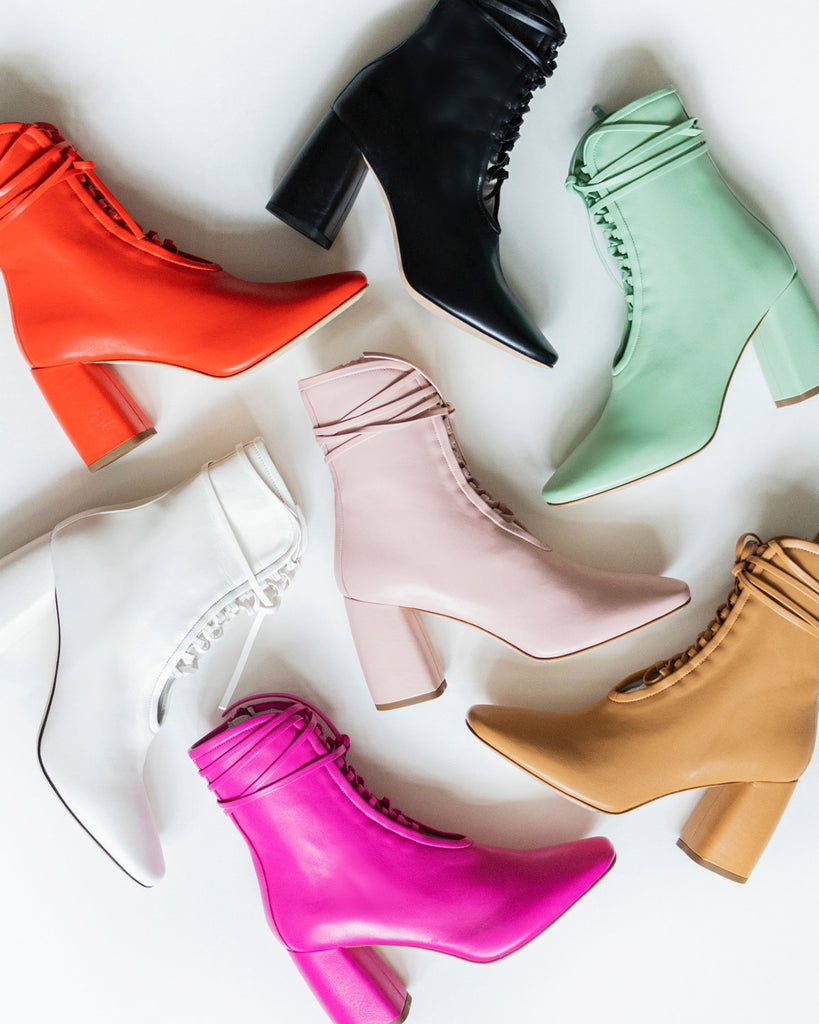


Red high heels can be comfortable. The mistake is thinking comfort comes from luck, a gel insert, or choosing a shorter heel.
Comfort comes from construction. If you choose the right pitch, support, materials, and fit, a red heel can carry you through work, dinner, travel, and events without demanding a backup pair of flats.
Red Heels Can Be Your Most Comfortable Power Shoe
Red heels have a reputation for being dramatic, beautiful, and slightly punishing. I think that reputation survives because most women have been sold color first and construction second.
That's backward.
A red heel doesn't hurt because it's red. It hurts because the shoe was engineered badly, fitted badly, or chosen for the wrong use. If you want red high heels comfortable enough for real life, you need to shop the architecture of the shoe before you shop the fantasy.
The good news is that comfort-first heels no longer live in some separate “sensible shoe” corner. Retailers now build red heel selections around features like cushioning, arch support, and more stable heel shapes because women want statement color with actual wearability, not a shoe that survives only the walk from the car to the table. If you're deciding between silhouettes, this guide on the block heel pump is a smart place to start.
Practical rule: If a heel only works for standing still, it isn't a luxury purchase. It's a photo prop.
I've always believed luxury should not be painful. The point of a beautiful shoe is to let you live beautifully in it. That means walking into meetings, crossing city blocks, lingering at dinner, dancing at a wedding, and still liking your own feet after a full day's wear.
So yes, red heels can absolutely be your power shoe. They just need to be built for a woman with a life, not just a woman in a campaign image.
If you want a comfort-first starting point, browse styles designed around support, stability, and day-to-night wear at Daniella Shevel.
Why We Expect Red Heels to Hurt
We've inherited a very old fashion story. Red heels signal confidence, visibility, and intent. For at least a century, they've carried a little theatre with them, which is part of their charm.
But that symbolism created a problem. Women learned to treat red heels like occasionwear, and occasionwear was often designed for appearance first.
The old bargain no longer makes sense
The market for heels hasn't disappeared. It has matured. The global high-heeled shoes market was valued at about US$32.6 billion in 2023 and is projected to reach roughly US$44.2 billion by 2032, according to this comfort heel retail category overview at Nordstrom.
That same retail shift matters more than the number itself. Major retailers now explicitly segment heels by comfort features such as cushioned insoles and arch support. That tells you something important. Women aren't asking for less style. They're asking for better performance.
If you've spent years trying to “learn how to wear heels,” I'd reframe that entirely. A lot of the pain women blame on themselves is a product problem, not a personal failing. This guide on how to wear heels comfortably can help you spot the difference.
Why red feels less practical than black
Black heels get treated as wardrobe tools. Red heels often get treated as declarations. Once a shoe is framed as a declaration, brands can get away with making it less wearable because buyers expect to suffer for the effect.
That's the trap.
A well-made red heel should work the same way a great black heel works. It should support a dress trouser, sharpen a dress, and add authority to a simple outfit. The color is what changes the mood. It shouldn't change your tolerance for pain.
The painful shoe trope survives because women have normalized bad engineering in beautiful packaging.
What modern buyers actually want
The woman shopping now usually wants all three:
- Presence: A shoe that changes an outfit immediately.
- Endurance: Something she can keep on through real hours, not ceremonial minutes.
- Versatility: A pair that can move between office, event, and travel wardrobes.
That's why comfort-led luxury matters. It respects the visual language of a statement heel, while finally taking the body seriously.
The Architecture of a Comfortable Heel
A comfortable heel is a small piece of engineering. Once you understand that, shopping gets much easier.
The simplest way to think about it is this. A good heel acts like a well-designed chair for your feet. It supports your weight, distributes pressure intelligently, and keeps you stable while you move.

Start with pitch, not heel height
Women are often told to “just go lower.” That advice is incomplete.
A lower heel can help, but pitch matters more than the raw measurement. Pitch is the angle your foot sits at inside the shoe. Two heels can look similar in height and feel completely different once you put them on.
When the pitch is too aggressive, your body dumps pressure into the ball of the foot. That's when you feel burning, toe crowding, and that desperate urge to step out of the shoe under the table.
Stability changes everything
A practical benchmark for reducing foot fatigue is to prioritize block or lower-heel silhouettes and added cushioning or arch support, because those features distribute pressure more evenly across the forefoot and heel, as noted in this red heel comfort assortment from LifeStride.
That's why heel shape matters so much:
| Heel type | What it usually does well | What to watch for |
|---|---|---|
| Block heel | Better stability for commuting and long standing | Can still fail if the pitch is steep |
| Lower heel | Easier pressure management for longer wear | Too-flat insoles can still feel harsh |
| Stiletto | Elegant visual line | Less forgiving if fit and balance are off |
If you want a deeper explanation of how support changes wearability, this piece on high heel arch support is worth reading.
A lower heel doesn't automatically mean comfort. A stable base with thoughtful support usually matters more.
What works and what doesn't
What tends to work for all-day wear:
- A grounded heel shape: Better for pavement, standing, and quick directional changes.
- Cushioning that doesn't collapse instantly: Softness alone isn't enough.
- A secure topline or strap: If your foot slides forward, you'll fight the shoe all day.
What usually fails in practice:
- Ultra-thin soles: They look sleek but often feel punishing on hard surfaces.
- Very narrow toe boxes: Fine for a short dinner. Usually miserable for a full schedule.
- Decorative construction: If every detail serves appearance and none serves support, the shoe tells on itself quickly.
For women who want a lower-profile option built around these ideas, the Cleo low-heel boot is the kind of silhouette that shows how much wearability comes from balance, not flash.
What Are Truly Comfortable Red Heels Made Of
Comfort in a red heel is decided long before you take the first step. It starts in the pattern, the materials, and the way the shoe holds your foot in place once your body weight shifts forward.

The real work happens inside the shoe
A lot of heel advice stays on the surface. The harder question is mechanical. Where does pressure collect? Does the upper give at the forefoot or cut across it? Does the insole rebound after hours of wear, or does it flatten and leave you standing on structure alone?
Those are the questions I ask when I design.
A comfortable red heel usually depends on three things working together. The upper has to flex without losing shape. The underfoot cushioning has to compress and recover at the right rate. The lining has to reduce friction, especially in the spots that heat up first.
Materials decide whether a heel supports you or drains you
Leather is not all the same. Some skins look polished in the box but stay stiff where the foot needs give. Others soften beautifully and start molding to the foot after a few wears. For red heels, I want that second category. A glove-fit leather upper helps prevent the rubbing and pressure that show up around the toes, the bunion area, and the back of the heel.
The footbed matters just as much. I do not look for softness alone. I look for density and recovery. If foam compresses too easily, your foot sinks, slides forward, and starts gripping to stay in place. If the foam is too firm, every hard surface feels harsher than it should. The sweet spot is cushioning that feels gentle on contact and still holds its shape later in the day. I explain that more in this guide to designer heels with memory foam.
Lining is another overlooked part of comfort. A smooth interior helps the foot settle instead of fighting against the shoe with every step. That reduction in friction is small at first, then very noticeable by hour three.
What to inspect before you buy
If you want red high heels comfortable enough for long wear, check the build in this order:
- Upper material: Soft, responsive leather usually adapts better than rigid leather that holds one fixed shape.
- Cushioning density: Press the footbed with your thumb. It should give, then spring back, not stay compressed.
- Lining feel: The inside should feel smooth and clean, without rough seams where the foot flexes most.
- Toe placement: Look at where your toes will sit, not just the pointed tip from the outside.
- Internal hold: The shoe should keep the foot stable without forcing you to claw with your toes.
The luxury you feel on the second and fifth wear
For me, luxury shows up in repeat wear. The shoe should feel good on a workday, hold up through dinner, and still be the pair you reach for again next week.
That is why small-batch Italian and Portuguese craftsmanship matters to me. It gives a designer more control over leather selection, lining quality, finishing, and the exact feel underfoot. Those details rarely announce themselves in a product photo. Your feet notice them immediately.
A Fit Guide for Every Foot
Most women who say “heels aren't for me” mean, more accurately, “these shoes were never designed for my foot.” That's a very different problem, and it has a solution.
Fit should feel like alignment, not negotiation.

If you have bunions or forefoot sensitivity
You need room in the right place, not a bigger shoe overall.
A larger size often creates heel slippage while leaving the pressure problem unresolved. Instead, look for softer uppers, more accommodating toe shape, and materials that won't press harshly over the joint. If you're working out your measurements first, use this guide on how to measure shoe size and width.
A bunion-friendly fit usually benefits from:
- Softer leather or mesh zones: These reduce direct friction on the sensitive area.
- Less aggressive toe taper: Your foot needs space where it's widest.
- Stable underfoot support: Forefoot pain gets worse when the foot collapses forward.
For women who like a sculptural look but need more forgiveness across the forefoot, the Romi bootie is a useful example of how breathable construction can help where rigid leather often doesn't.
If your heel slips out of pumps
This is one of the most common frustrations, especially with narrow heels. Women often blame themselves, but the actual issue is usually mismatch between the back of the shoe and the shape of the foot.
You'll often do better with:
- Higher vamp coverage: More hold across the top of the foot.
- Adjustable straps or slingback tension: Security without clamping the toes.
- A more centered fit through the midfoot: That's what keeps the foot from sliding.
Your foot is not difficult. The shoe is either matching your shape or it isn't.
If one foot is slightly different from the other
That's normal. It's also why trying shoes on quickly, while seated, tells you almost nothing useful.
Walk. Stand. Turn. Wait a minute. Feel what happens as your weight shifts. If you want a digital tool that can help eliminate shoe buying guesswork, this fitting resource from TryThisFit is a practical starting point before you order.
A simple fit checklist
Before keeping any heel, test these five points:
- Toes stay placed and don't crush into the front.
- Heel stays anchored without constant gripping.
- Arch feels met, not ignored.
- Ball of foot pressure feels manageable within a few minutes.
- No immediate hot spot appears at the bunion, heel, or little toe.
If one of those fails right away, don't talk yourself into “breaking them in.” Good shoes usually tell the truth early.
How to Style Red Heels from Commutes to Catwalks
A red heel earns its place in your wardrobe when it stops behaving like a special-effect piece and starts behaving like a dependable one. That's where cost-per-wear becomes real, not theoretical.
One of the biggest gaps in the conversation is durability and repeat use. The more useful question isn't whether a red heel looks good for one event. It's whether it can move across work, travel, and occasion dressing without losing comfort over time, which is exactly the gap highlighted in this discussion around statement red heel search behavior and repeat-wear questions.

For the office and the commute
A red heel at work shouldn't feel theatrical. It should feel precise.
Pair a cleaner red pump or slingback with:
- Charcoal or cream tailoring
- Dark denim with a sharp blazer
- A column dress in black, navy, or camel
The trick is letting the shoe carry the contrast. If the silhouette is stable and the pitch is sensible, the color reads polished rather than loud. For women dressing across long days, a style like the Nola heel in Lipstick Red makes the point well. It gives the look of a statement heel, but its true value is whether you can keep moving in it.
For weddings and long events
In challenging situations, bad heels expose themselves. A wedding asks a lot from a shoe. Grass, stairs, standing, dancing, late hours.
For event dressing, I'd prioritize:
- A more grounded heel base if the venue includes outdoor surfaces
- Secure straps or well-held uppers if you'll be dancing
- Materials that soften with wear rather than cut into the skin
If you're shopping with that use in mind, the wedding guest edit is the right place to compare occasion styles built for longer wear.
There's also a practical side to this. If you buy one elegant red heel and wear it only once, it's not indulgent. It's inefficient. Better to choose a handcrafted pair that can come back out for dinners, winter events, and another celebration next season.
For travel and evening plans
A strong travel shoe has to survive a lot of transitions. Airport, pavement, dinner, hotel bar, museum, another cab, another dinner.
That's why I care so much about day-to-night versatility and sustainable luxury. The most responsible shoe is often the one you keep wearing because it was made well enough to deserve space in your suitcase and your closet. If that idea speaks to you, read more about sustainable luxury footwear.
This short visual gives a feel for how a red heel can move with the body instead of fighting it:
Three styling formulas that always work
| Setting | What to wear | Why it works |
|---|---|---|
| Workday | Tailored trousers, knit, red heel | The shoe becomes the sharpest line in the outfit |
| Wedding guest | Fluid midi dress, red sandal or pump | The color adds personality without extra accessories |
| City dinner | Dark denim, crisp shirt, red heel | Clean basics make the shoe look intentional |
If you want one more versatile option for dressing up without sacrificing wearability, the Isabella pump is another useful reference point for how a refined silhouette can serve more than one occasion.
Invest in Beauty That Feels Good
The old idea that a beautiful red heel should hurt has always been lazy design.
A well-made pair earns its place because the comfort is built into the shoe from the first sketch. The pitch has to keep your weight from sliding forward. The insole needs enough cushioning to absorb pressure without turning spongy and unstable. The leather should soften around the foot instead of cutting into it. Style editors who care about all-day wear make the same point in this editorial on styling red high heels with practical comfort in mind.
That is what makes a heel worth the money. You wear it to dinner, to work, to events, and then again next season because it still feels good and still looks right.
Good maintenance protects that comfort, not just the finish:
- Condition leather regularly so the upper stays flexible and keeps molding to your foot.
- Store heels with support inside so the toe shape and vamp do not collapse.
- Replace heel tips early because once they wear down, your gait changes and pressure shifts where you feel it most.
- Rest shoes between wears after long days or wet weather so the materials can fully recover.
I design with this standard in mind. Beauty should carry you through a real day, not just a short walk from the car to the table.
If you're ready to stop treating pain as the price of elegance, explore the handcrafted, comfort-first collection at Daniella Shevel and find the red heel you'll want to wear again tomorrow.