

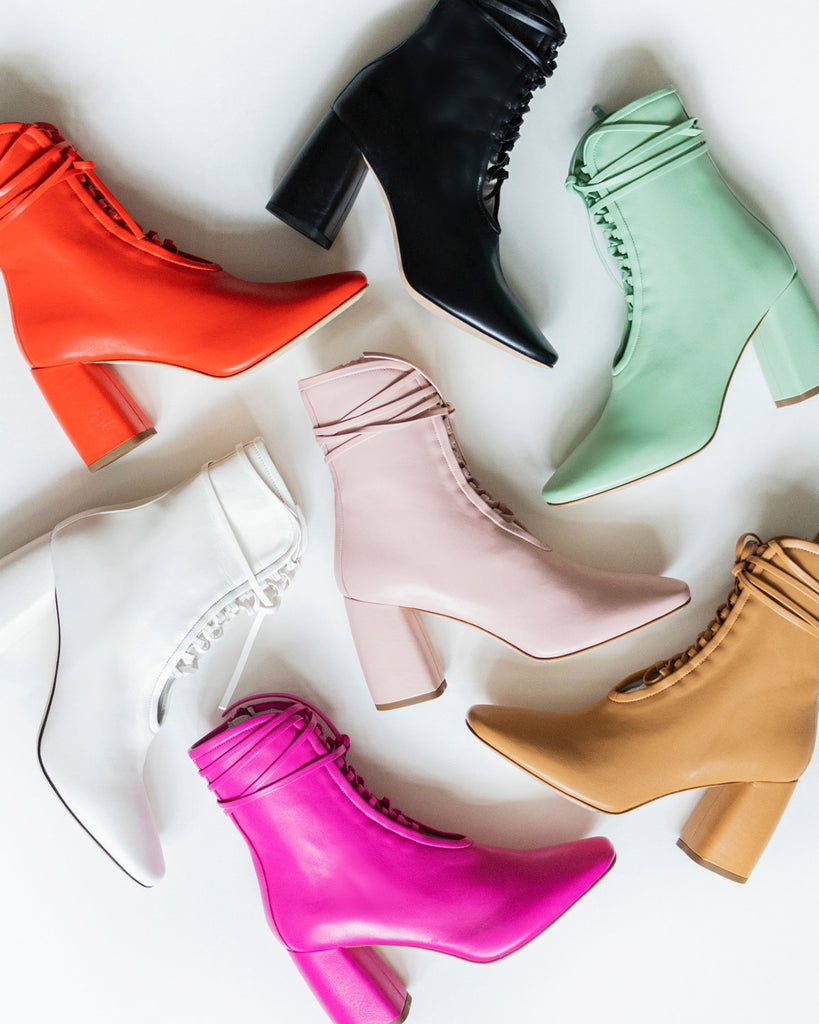


The best shoes for a high arch are those with built-in, structured support and targeted cushioning. To prevent pain, you need a shoe with a contoured footbed that meets your arch and a deep heel cup that stabilizes your foot, distributing pressure evenly from day to night. It’s about finding a shoe that’s more than just soft—it's a 'chair for the feet'.
This is what we call our ‘chair for the feet’ philosophy at Daniella Shevel.
Your Guide to the Best Shoes for High Arches

Finding beautiful shoes that don’t leave you with aching feet can feel like an endless, frustrating search. If you have high arches, you know this struggle all too well. Most shoes are made with a flat, unsupportive footbed that forces all the pressure onto the heel and ball of your foot.
But you should never have to compromise. The secret is knowing that real luxury should not be painful. Your shoes should be an empowering part of your style, offering day-to-night versatility without a second thought.
The Science of Supportive Style
High arches affect about 20-30% of us and are often the culprit behind issues like plantar fasciitis. This has created a massive demand for better footwear, with the global arch support shoe market valued at USD 2.5 billion in 2024 and projected to hit USD 4.1 billion by 2033.
At Daniella Shevel, we’ve poured our hearts into solving this. Our unique three-part memory foam cushioning system, which you’ll find in styles like the ROMI, is a perfect example of our comfort-first design. Our signature glove-fit construction means you’ll never have to deal with that annoying heel slippage again.
We believe a well-designed shoe is an architectural system. It isn't just about a soft insole; it's about a handcrafted structure that cradles and supports your foot's unique shape, from morning meetings to evening events.
This principle is at the core of our Portuguese and Italian craftsmanship. This guide is here to give you the knowledge you need to choose shoes for high arches that are as beautiful as they are functional. It’s time to leave those “backup flats” at home for good.
Why Do High Arches Need Special Support?
To understand why high arches need a different kind of shoe, it helps to know what’s happening with every step. Picture your arch like a beautiful, high-arched bridge—it’s elegant, but it has fewer pillars underneath for support. This means it’s not very good at absorbing the shock of walking.
Instead of that impact spreading out evenly, it gets concentrated in two specific spots: the ball of your foot and your heel. This is exactly why you might feel sharp, targeted pain in those areas after a long day.
The Problem with Pressure and Instability
But that focused pressure is only half the story. A higher arch is naturally more rigid and less stable. This structure often causes the foot to roll slightly outward as you walk, a motion we call supination, which can leave you feeling unsteady and is a common reason for ankle sprains.
Over time, this constant lack of shock absorption can create a chain reaction of aches and pains that go far beyond your feet. Those little vibrations travel right up your legs, contributing to discomfort in your ankles, knees, and even your lower back.
When I'm in the studio, I obsess over the inside of a shoe because I know high arches need so much more than just a soft, cushy insole. They need real, structural support that cradles the foot’s unique shape, turning that unstable bridge into a secure foundation. Written by Daniella Shevel, Designer & Founder
Rethinking Footwear from the Ground Up
The hard truth is that most shoes are built for an "average" foot, with a flat footbed that leaves a high arch completely unsupported. This forces the plantar fascia—that critical ligament connecting your heel to your toes—to constantly overstretch, which is a classic recipe for plantar fasciitis.
That's why our design process always starts with the arch. When we're crafting a new shoe, we are laser-focused on:
- Integrated Arch Support: We build support right into the shoe's foundation so it actively meets and holds your arch.
- Deep Heel Cups: These are essential for stabilizing the heel, which helps prevent that outward roll (supination).
- Targeted Cushioning: We use our signature three-part memory foam to place extra shock absorption exactly where you need it most.
These abnormal foot mechanics can contribute to or worsen joint pain. For further relief, exploring the best exercise for joint pain can be beneficial. The right shoe provides a foundation that corrects these imbalances, feeling as good at the end of the day as it did when you first put it on.
Essential Features of a Supportive Shoe
Let’s talk about what "arch support" really means. It's so much more than a soft insole. It's a complete architectural system, where every single piece works together to hold and stabilize your foot.
It all starts with a contoured footbed that perfectly mirrors the unique curve of your arch. A generic, flat insole leaves a crucial gap, but a thoughtfully designed footbed rises up to meet your arch, giving you consistent contact and distributing pressure evenly.
This is why it's so important. A high arch naturally wants to roll outward—a motion called supination—which creates intense pressure points.

You can see how the lack of contact through the middle of the foot puts all the strain on the outer edge. This is exactly what we design our shoes to prevent.
The Synergy of Structure and Cushioning
Next up is the heel counter. This is the firm, structured cup at the back of the shoe that holds your heel. For a high-arched foot, a deep and sturdy heel counter is non-negotiable, preventing that wobbly feeling and heel slippage.
Then you have the midfoot shank, a semi-rigid piece we embed in the sole. Its entire job is to provide structural integrity. It's the backbone of the shoe, ensuring it doesn't twist and that the arch support doesn't flatten out under your weight.
When we source materials for our multi-layered cushioning, we're obsessive about the details. We specifically test our memory foam for its rebound and density, ensuring it cradles the arch with responsive support without flattening out by midday.
Beyond the Basics of Shoe Design
Finally, let's talk about the cushion itself. We use a proprietary three-part system because each layer has a distinct purpose. One provides plush softness, another absorbs shock, and a third gives you resilient, rebounding support that lasts all day.
When you understand these key features, you stop being a hopeful shopper and become an educated one. You can look at any shoe and immediately spot the hallmarks of true, comfort-first design.
It empowers you to invest in shoes that give you both incredible style and day-to-night function. Our entire collection is built on these principles, which you can see in our Comfort Collection.
How We Handcraft Comfort for High Arches

Real comfort doesn't happen by chance—it's built into a shoe from the beginning. My journey to create genuinely comfortable shoes always starts with a trip to the small, family-run factories I partner with in Italy and Portugal. These are master artisans who have been passing down their craft for generations.
When it comes to creating exceptional shoes for high arch feet, we knew we had to start with the foundation. For us, that’s our proprietary three-part memory foam cushioning. It’s the soul of every shoe we make and the heart of our handcrafted process.
The Anatomy of Our Cushioned Support
This isn't just a single layer of foam. It’s a thoughtful system where each part has a specific job to do, delivering support that actually lasts all day.
- The Top Layer: This is what you feel first—a plush, responsive foam that gives you that immediate "ahh" feeling.
- The Middle Layer: Think of this as the workhorse. It's a higher-density, shock-absorbing foam cushioning the heel and ball of the foot.
- The Bottom Layer: This layer provides structural rebound, stopping the cushioning from flattening out after a few hours.
The orthopedic footwear market is projected to reach USD 13.5 billion by 2035, driven by an awareness that poor shock absorption can lead to injury. This is why styles like our ISABELLA and NOLA feature this exact cushioning system. If you want to dive deeper, you can explore the findings on orthopedic footwear growth that guide our work.
Beyond the Footbed: The Glove-Fit Construction
Of course, cushioning is only half the battle. A high-arched foot also needs a shoe that moves with it. This is where our ‘glove-fit’ construction, a signature of our Italian and Portuguese craftsmanship, comes in.
"I personally source our materials, seeking out supple leathers and stretch fabrics that feel like a second skin. It's about creating a shoe that moves with you, not against you." - Daniella Shevel, Designer & Founder
We often work with incredibly soft stretch leather, like the kind used in our much-loved CLEO boot. This unique, glove-like fit is what finally eliminates frustrating heel slippage. It's our vision of sustainable luxury brought to life: timeless shoes you'll feel amazing in for years.
A Style Guide for High Arch Footwear

Supportive footwear should be the most beautiful and empowering part of your wardrobe. I've always rejected the idea that you have to choose between looking incredible and actually feeling good.
With thoughtful, comfort-first design, you can build a collection of stunning shoes that give you true day-to-night versatility.
Investing in one amazing, supportive pair is the ultimate form of sustainable luxury. A single, well-made shoe crafted with real care will outlast dozens of trendy, throwaway pairs that only cause you pain.
For the Modern Executive
You can’t command a room if you’re distracted by aching feet. For the modern executive, that means footwear that projects strength while carrying you through a packed schedule.
This is where a shoe designed for a high arch becomes your secret weapon.
Our CLEO boot, for example, looks so sharp with tailored trousers for a powerful office vibe. But when evening comes, its sleek lines and buttery leather look just as amazing with a silk dress.
For the All-Day Wedding Guest
Weddings are an endurance sport. Between the ceremony, mingling, and hitting the dance floor, your shoes have to perform. A beautifully engineered heel can be a total game-changer.
The NOLA heel is our go-to for exactly these kinds of days. The stable block heel and cushioned footbed are designed for celebrating from the first toast to the last dance. To get a better sense of what makes a heel truly wearable, you might be interested in our guide on the block heel pump.
For the Global Jet-Setter
Nothing tests your footwear like a day spent exploring the cobblestone streets of an old European city. You need that one unicorn shoe: chic enough for a fancy dinner but durable enough for hours of walking.
I designed the ROMI with my own travels in mind. It's the bootie you can pack that works for everything, from museum-hopping in Paris to a rooftop dinner in Rome, without ever sacrificing style for comfort.
This is what our philosophy is all about. It’s luxury that empowers you to live your life to the fullest, without pain ever holding you back.
Finding Your Perfect Fit and Pain-Free Style
We've walked through a lot of information together. My hope is that you now feel empowered with the knowledge to choose footwear that truly supports you.
I’ve always believed that investing in well-made, supportive shoes is a foundational act of self-care. It’s time to stop the cycle of compromising on comfort for the sake of style. You really can have it all.
Embrace Your Perfect Fit
I know from experience that the journey to find the right shoe can feel frustrating, but it doesn’t have to be. It all starts with understanding your foot’s unique shape and needs.
To make sure you find your ideal size, our team put together a detailed guide. You can learn more about measuring your feet correctly and feel confident in your next choice.
Even with supportive shoes, our feet still carry stress. A therapeutic foot massage for pain relief can be a wonderful way to soothe hardworking feet and provide some much-needed relief.
I believe that the right shoe doesn't just complete an outfit—it gives you the power to move through your day with grace and strength. You deserve to feel incredible, from your morning commute all the way through your evening plans.
Ready to feel the difference that a comfort-first design can make? Explore our collection of handcrafted boots and heels, all engineered for all-day wear without sacrificing an ounce of style.
Your High Arch Questions, Answered
Over the years, I've heard from so many women on a quest for shoes that work for their high arches. Here are my personal answers to some of the questions I get asked the most, hoping to guide you toward comfort that doesn’t compromise on style.
Can I Really Wear Heels If I Have High Arches?
Yes, you absolutely can! This is one of the biggest myths I'm on a mission to bust. The problem isn't the heel height; it's the poor architecture of most heels. It’s all about how the shoe is built.
A heel with a gradual pitch, a secure heel cup, and a footbed with real cushioning changes everything. That’s exactly how we designed styles like our ISABELLA. It’s the soul of our comfort-first design philosophy.
Are Flat Shoes Bad for My High Arches?
It’s surprising, but often, yes. A completely flat shoe with no internal support is one of the worst things you can wear. Your arch is left hanging with nothing to hold it up, which puts huge strain on your plantar fascia.
Think of it like a bridge with no support pillars. A much better option is a shoe with at least a tiny lift and, most importantly, a contoured insole that actually rises up to meet and support your arch.
Do I Need to Add an Insole to My Shoes?
Sometimes an aftermarket insole can be a temporary band-aid, but honestly, it’s usually a red flag that the shoe wasn’t designed correctly in the first place. My goal is to create shoes with the solution built right in.
Our three-part memory foam cushioning system isn't just an add-on; it's the heart of the shoe. I designed it to be an integrated solution that molds to your foot and supports a high arch. For most of our customers, this completely eliminates the need for any extra inserts.
What Materials Are Best for Feet with High Arches?
Materials make a world of difference. From my experience, the best choices are soft, forgiving materials that have some give, like high-quality Italian stretch leather or buttery-soft suede. These materials mold to the specific curve of a high arch without digging in.
That "fits like a glove" feeling is a hallmark of our handcrafted approach. It makes the shoe feel like an extension of your foot, giving you a secure hug without restriction. This is how we bring together sustainable luxury and comfort.
At Daniella Shevel, I truly believe that luxury isn’t just about how a shoe looks, but how it makes you feel. Experience for yourself what a difference artful, comfort-focused design and Italian craftsmanship can make.