

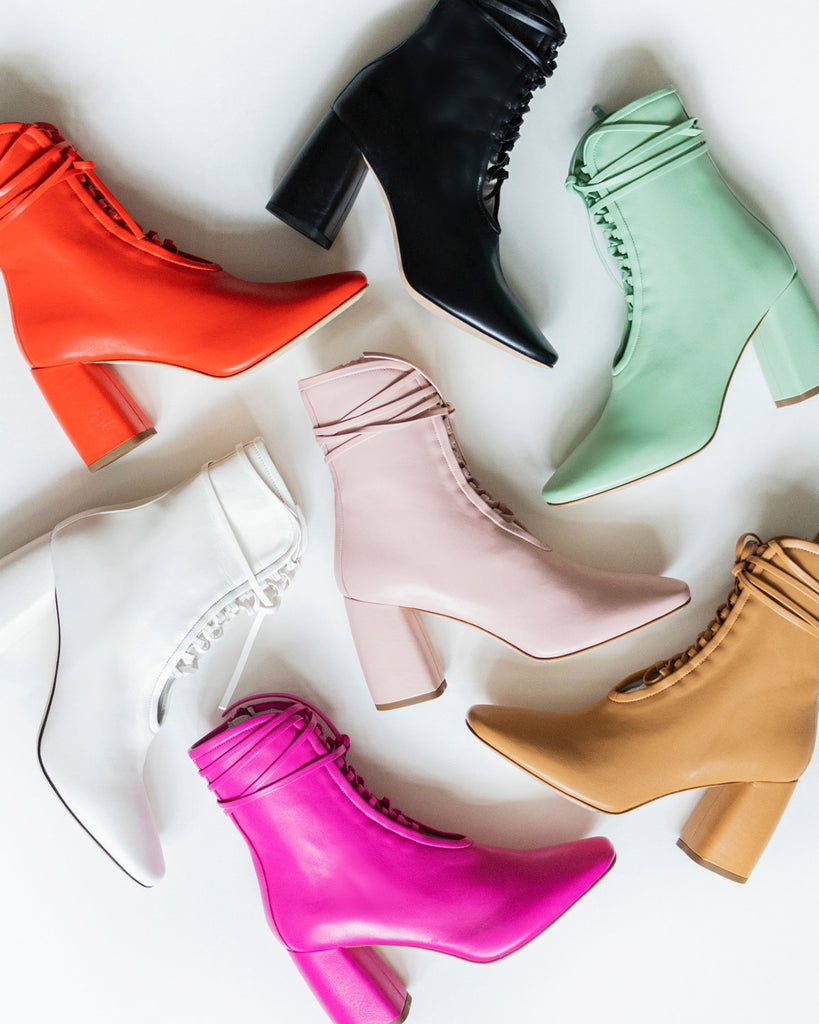


You’re probably doing what so many brides with bunions do. Saving beautiful heels, opening the product page, then zooming straight into the toe shape and thinking, “Absolutely not.”
Here’s the direct answer. Bunion friendly wedding shoes do exist, and the right pair won’t come from sizing up or buying the widest shoe you can find. They come from the right toe shape, soft materials, thoughtful heel pitch, real cushioning, and proper fitting before the wedding day.
I’ve spent years fitting women who were convinced they had only two choices: pretty or painless. They didn’t. You don’t either.
Your Wedding Day Should Be About Joy Not Foot Pain
A bride once said to me, “I’m more nervous about the shoes than the dress.” I understood exactly what she meant.
If you have bunions, shoe shopping can feel personal. You’re not just looking for white or ivory. You’re looking for relief, confidence, and the chance to walk into your ceremony without bracing for pain.
That concern is justified. Bunions affect over 3 million individuals annually in the United States alone, and the condition affects about 23% of adults aged 18 to 65, rising to 35% in women over 65 according to Family Footwear Center’s overview of bunions and shoe fit. This is common. You are not difficult to fit. Traditional dress shoes are often badly designed for real feet.
What I believe, and what I tell every bride, is simple. Luxury should never punish you for wanting to look elegant.
In Italian and Portuguese factories, the best makers obsess over millimeters. The line of the vamp. The softness of the lining. The give in the upper. Those details are what separate a shoe that photographs well from a shoe you can wear through vows, dinner, and dancing.
What brides need to hear early
- You do not need to settle for a flat if you want height.
- You do not need to hide your feet in a stiff, matronly shoe.
- You do need to stop buying shoes that cut straight across the bunion joint.
If your bunions are already flaring, support beyond footwear can help. Some brides also benefit from physical therapy for foot pain as part of getting comfortable before a long event day.
My rule: if a wedding shoe hurts in the boutique, it won’t become magical on your wedding day.
If you want a broader foundation before you shop, start with this guide to comfortable wedding shoes. Then come back and choose with a sharper eye.
What Makes a Wedding Shoe Truly Bunion-Friendly?
A bunion-friendly wedding shoe solves pressure at the source. It does not just add width and hope for the best. The shape, the materials, and the internal build all have to work together so the shoe feels elegant at the ceremony and remains wearable eight hours later.

Start with the toe box
I always look at the shoe from above first. That view tells the truth.
If the front pinches inward at the bunion joint, leave it behind. A good bridal shoe gives the forefoot proper volume and follows the line of a real foot. The most flattering options are often a square toe, a soft almond toe, or a refined pointed shape built on a smarter last. If you want that cleaner, modern line, study these square toe bridal shoes. Brides are often surprised by how polished they look once the proportions are right.
Then judge the last and the pitch
Heel height gets too much attention. What matters more is how the foot sits inside the shoe.
In the Italian factories I trust, we obsess over the last. That is the sculpted form the shoe is built around, and it decides whether your weight drops hard onto the forefoot or stays balanced. A well-shaped last creates space at the bunion joint, supports the arch, and keeps the shoe from collapsing inward as the hours pass. Lower pitch helps too. A platform or thoughtful construction can soften the angle so a heel feels stable instead of punishing.
Materials decide whether the shoe adapts or fights back
Here, luxury earns its price.
Soft nappa, kidskin, suede, stretch mesh, and carefully lined satin can all be worked, softened, and professionally stretched in the right places. Cheap synthetics resist every one of those fixes. They hold their shape, create friction, and force the foot to absorb the punishment. I have seen brides transformed by a few millimeters of expert stretching at the bunion point. That is the difference between merely accommodating the foot and designing for it.
Here is what I recommend first:
- Supple leather uppers that can relax with wear and respond well to a skilled stretcher
- Mesh or mixed-material fronts if your bunion is sensitive to rubbing
- Adjustable straps that secure the shoe without cutting across the widest part of the foot
- A smooth, soft lining that reduces heat and friction as your feet swell through the day
Skip rigid patent synthetics unless the shoe already fits beautifully with zero pressure.
Cushioning has to be structured
A pillowy insole sounds appealing, but softness alone is not enough. If the foam collapses, your forefoot takes the load anyway.
I want underfoot support that spreads pressure and keeps the foot steady. Better bridal constructions use cushioning, lining, toe-box volume, and heel geometry as one system rather than isolated features. As noted earlier, guidance from Sole Bliss highlights the value of extra toe-box room, lower pitch, and supportive foam together, which is exactly how comfort lasts through a wedding day.
A quick filter helps:
| Feature | Good for bunions | I’d skip it when |
|---|---|---|
| Generous toe-box shape | Gives the joint space and reduces rubbing | The brand widened the shoe at the midfoot but left the toe narrow |
| Lower effective pitch | Keeps pressure from dumping onto the ball of the foot | The platform feels heavy or throws off balance |
| Soft leather or mesh | Adapts to swelling and shape changes | The upper is stiff and resists stretching |
| Structured cushioning | Spreads pressure more evenly over hours | The insole feels squishy but unstable |
| Thoughtful strap placement | Secures the foot without aggravating the bunion | The strap lands directly on the joint |
If you remember only one rule, remember this. Choose shape first, material second, and heel mechanics third. Brides who reverse that order usually end up with a beautiful box and a painful night.
How To Measure and Fit Your Wedding Shoes
A bride falls in love with a beautiful heel at noon, slips it on for five minutes, orders her usual size, and spends her wedding dinner counting the minutes until she can take it off. I have watched that mistake for years. It is avoidable.

A proper fitting starts with honesty. Size labels are inconsistent, satin behaves differently from leather, and a bunion changes how a shoe must hold the foot. I fit for the shape of the foot in motion, not for the number stamped inside the sole.
Fit in the afternoon, not at breakfast
Try on wedding shoes later in the day, when your feet are closer to their real event shape. A morning fitting flatters the wrong shoe.
Measure both feet standing up, in the hosiery or liners you plan to wear, and note three things: length, the widest part of the forefoot, and where the bunion sits in relation to the shoe’s seam line. That last point matters more than many brides realize. If a seam, piping edge, or crystal trim lands directly over the joint, no size adjustment will rescue the fit.
As noted earlier, guidance from Ruxene supports leaving extra toe-box room and considering open-sided D'Orsay shapes when side pressure is the issue. I agree. In Italian factories, the best makers solve bunions by changing where the upper touches the foot, not by making the whole shoe look clumsy.
If sizing conversions are tripping you up, use this guide to Italian shoe sizes and conversions. It will save you from guessing between EU and US sizing and ending up with the right length but the wrong fit.
What to check when the shoe is on your foot
Do not judge a wedding shoe while sitting on a velvet bench. Stand up and make it work for your body.
Use this fitting check:
-
Check the contact point over the bunion
The upper should rest softly over the area or avoid it altogether. You want contact without force. -
Walk through a full stride
If the shoe twists, pushes your big toe inward, or makes you shift weight to the outside edge of your foot, reject it. -
Turn and pause
Wedding days involve slow pivots, standing still, and small directional changes. A shoe can feel fine in a straight line and fail the moment you rotate. -
Watch for sidewall collapse
Soft materials are useful, but the shoe still has to hold its shape. If the upper buckles and spills your foot sideways, it will rub more as the day goes on. -
Check heel grip without toe gripping
Your heel should feel held. If you start clawing with your toes to keep the shoe on, forefoot fatigue arrives fast.
One more insider rule. Judge fit by pressure, not by space. A bride can have room at the tip of the shoe and still have a poor fit if the side pressure is wrong.
Here’s a short fitting visual if you want to see the basics in motion:
Fitting cue: if you need pain relief accessories immediately just to tolerate the shoe indoors, the shoe is not your wedding shoe.
The right fit feels poised, stable, and quiet on the foot. That is what luxury should feel like.
Breaking In and Customizing for Flawless Comfort
A wedding shoe should never make its debut on your wedding day. That’s amateur behavior, and it ruins nights.
What matters is controlled break-in, then precise customization. Brides often think these are the same thing. They’re not. Breaking in softens the relationship between your foot and the shoe. Customization changes the shoe itself.

Use a real break-in schedule
I prefer a gentle schedule over one dramatic evening around the house.
-
First sessions
Wear the shoes indoors for brief periods on clean floors. You’re checking pressure points, not proving endurance. -
Add wedding-specific movement
Walk on hard surfaces, stand in place, try stairs, and practice turning. Brides forget that ceremonies involve standing still, which can be harder than walking. -
Test with your actual accessories
Wear the hosiery, pads, or inserts you’re considering. Small changes alter fit.
Swelling changes the fit more than most brides expect
This is why I push clients to prepare early. Feet can swell up to a full size after 6+ hours of standing, and Aetrex notes that professional stretching services and flexible knits or leathers outperform simply buying a wide size.
That’s one of the biggest insider truths in luxury footwear. Width alone isn’t the answer. Localized adjustment is.
If you want to understand what can safely be done at home before you hand a pair to a professional, read how to stretch leather shoes at home.
Professional stretching is the luxury move
In good stores and workshops, stretching is targeted. Not random. Not crude. The shoe can be eased precisely where the bunion needs room while preserving support elsewhere.
That matters because a bridal heel still has to hold you correctly. If you opt for a larger size, the heel slips, the arch misses its mark, and your foot starts gripping for stability.
A simple comparison makes this clear:
| Approach | What it does | Where it fails |
|---|---|---|
| Buying a wider size | Adds general room | Can create slippage and poor alignment |
| At-home break-in only | Softens materials gradually | Doesn’t solve a specific pressure point |
| Professional stretching | Expands the exact trouble area | Depends on shoe material and construction |
Pads and spacers are useful when the fit is already close. They are not a miracle for a badly shaped shoe.
If your bridal shoe needs a little easing at the bunion and nowhere else, customization is elegant. If it needs rescue everywhere, return it.
From Garden Ceremonies to Ballroom Receptions
Comfort doesn’t require sacrificing style. It requires choosing the right silhouette for the setting.
That’s the part brides often miss. The same bunion-friendly logic can look romantic, modern, sharp, or classic depending on the materials and line of the shoe.

For a garden wedding
You need stability first. Grass, gravel, and uneven stone are unforgiving.
I’d lean toward a block heel with a soft upper and enough room in the forefoot to handle hours outside. The NOLA style is the kind of silhouette I’d point brides toward for this. It gives you presence without the anxiety of a needle-thin heel sinking into the ground.
For city hall or a fashion-forward ceremony
For a modern bride, there's real fun to be had. A mesh bootie or sculptural silhouette can look directional while still respecting the foot.
The ROMI mesh bootie works beautifully for brides who want edge, airflow, and less visual heaviness over the bunion area. It feels intentional, not apologetic.
For black-tie receptions
A refined pump or elegant heel still belongs here. It just needs better engineering than the traditional narrow satin stiletto.
What changed in recent years is the design language itself. Innovations like bunion pockets and stretch panels rose after 2018, and flexible materials can reduce irritation by 80% compared with rigid ones, according to Bella Belle’s fit guide for bridal shoes and foot conditions. That shift is why brides no longer have to choose between flats and pain.
My styling advice by dress mood
-
Clean, minimalist gown
Choose a sharp shoe with architectural lines, like ISABELLA, so the look stays polished. -
Romantic lace or soft drape
A lower, graceful profile works beautifully. The CLEO direction keeps the look delicate and wearable. -
Reception change or second look
Bring in a shoe you’ll wear again. A versatile bridal-adjacent heel makes far more sense than a one-night-only compromise.
The smartest bridal purchase is the pair you’ll wear after the wedding, because comfort and beauty finally met in the same shoe.
Why Our Comfort-First Design Is a Game Changer
You step into your wedding shoes at noon, glance down, and feel relief instead of dread. That reaction starts long before the fitting room. It starts with design decisions made by people who understand how a bunion changes the way a luxury shoe must be built.
I have stood in factories in Italy and Portugal where pattern makers adjust a curve by a single millimeter because they know pressure does not come from theory. It comes from one hard seam, one rigid edge, one vamp cut too straight across the joint. Brides with bunions do not need more tolerance. They need better design.
That is the primary difference.
My process begins with the women I have fitted over the years. A wider forefoot. A slimmer heel. One foot larger than the other. A bunion that needs room without making the shoe look bulky. Those details shape the last, the upper, and the placement of every line you see from the outside. Beautiful shoes should respect the foot inside them.
What I care about in construction
-
Handcrafted production
Small runs allow tighter control over shaping, lining choice, edge finishing, and fit consistency. -
Soft, responsive uppers
Fine leather and carefully chosen fabrics should mold gently around the foot and hold their elegance through hours of standing, walking, and dancing. -
Targeted memory foam
Cushioning belongs where impact builds across the day, especially under the ball of the foot and heel.
The luxury answer to bunions is not solely making everything wider. It is choosing materials that stretch intelligently, building clean support into the structure, and offering real aftercare. A well-made bridal shoe can be professionally stretched at the pressure point, refined after the wedding, repaired, and worn again. That is how an emotional purchase becomes a lasting one.
Daniella Shevel offers handcrafted styles made in Italy, Portugal, and Brazil, along with in-house stretching and repair support and a Soles4Souls donation credit program. That kind of service matters because the best wedding shoe purchase does not end at checkout. It continues through fittings, adjustments, and the confidence of knowing the shoe can be tuned to your foot instead of forcing your foot to surrender.
If your celebration includes hours on the dance floor, read this guide to wedding shoes that stay comfortable for dancing before you choose your final pair.
A comfort-first shoe should look polished, precise, and fully resolved. It should let you focus on your dress, your partner, your photographs, and the way the whole day feels. That is the standard.
Walk Down the Aisle in Confidence and Comfort
Your wedding shoes should support the woman wearing them. Not test her endurance.
The right bunion friendly wedding shoes respect your foot shape, use materials that give instead of fight, and feel settled long before the ceremony begins. That’s how you get elegance with calm. That’s how you make it from first look to last dance without counting the minutes until you can take them off.
If dancing is part of the plan, this guide to shoes for dancing at a wedding is worth reading before you make your final choice.
Written by Daniella Shevel, Designer & Founder
If you’re ready to stop compromising, explore the bridal and event-ready styles at Daniella Shevel and choose a pair that feels as polished at hour eight as it does in the mirror.