

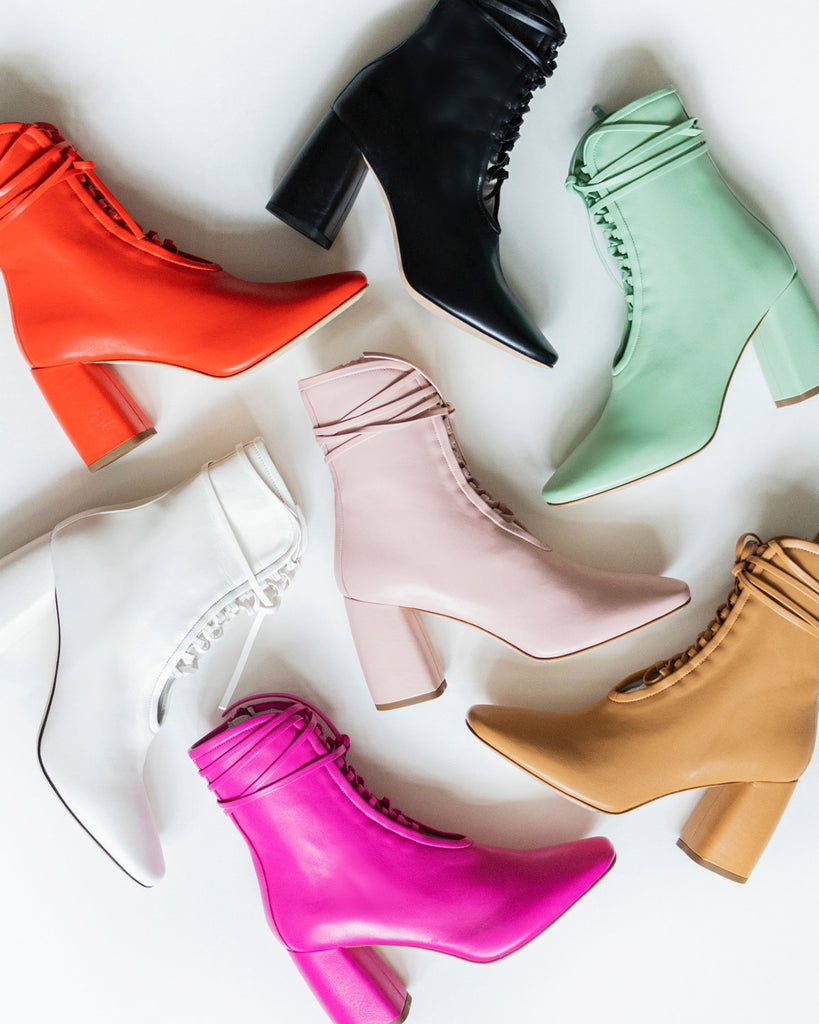


The best wedding shoes for wide feet combine a wider toe box, supple materials, and comfort engineering that reduces pressure where wide feet need space most. The smartest pairs are built with an extra 0.5 to 1 centimeter of metatarsal volume and, when a platform is used well, can reduce foot pitch by 30 to 40%, which helps ease strain on the ball of the foot.
If you're shopping for your wedding shoes with a little dread in your stomach, I understand. You want the elegant heel, the beautiful silhouette, the dress moment, and you also want to enjoy your own wedding instead of counting the minutes until you can kick your shoes off under the table.
I started designing shoes because I was tired of the old luxury bargain women have been asked to accept. Beauty on one side. Comfort on the other. I don't accept that trade-off, and you shouldn't either. Wedding shoes for wide feet should feel refined, flattering, and wearable from the first step to the last dance.
Finding Your Dream Wedding Shoes Without the Nightmare
A lot of brides come to this search feeling defeated before they even begin. They've tried on pair after pair that looked gorgeous in the box and felt awful within minutes. The problem usually isn't taste. It isn't styling. It isn't your foot. It's that the shoe was never built for you in the first place.
That's why I always tell women to stop looking for a shoe they can tolerate. Look for a shoe that was engineered to support your foot shape. That's a very different standard, and it changes everything.

What I want every bride with wide feet to know
You don't need to “make it work” with a pinched pump.
You need a few essential requirements:
- Shape first: A toe box that gives your foot room to sit naturally.
- Material second: Soft leather, mesh, or another forgiving upper that moves with you.
- Comfort engineering third: Cushioning, stability, and a pitch that doesn't force all your weight forward.
Those details sound technical, but they create a very emotional result. You stay present. You don't wince during photos. You dance. You hug people. You enjoy your own celebration.
Wedding-day foot pain isn't romantic. It's usually a design failure dressed up as tradition.
If you're drawn to added height but worry about pressure on the front of your foot, I recommend reading my thoughts on platform white wedding shoes. A well-balanced platform can look polished and feel dramatically easier to wear than a steep heel with no support under the forefoot.
My design lens
When I visit our artisan partners in Italy and Portugal, I pay attention to the details many brands treat as secondary. How soft is the upper on first wear. How does the shoe flex. Does the shape hold beautifully without forcing the foot into a narrow line that only works for a tiny slice of women.
That is the heart of comfort-first design. Handcrafted luxury should serve the woman wearing it, not punish her for the sake of appearance.
If you're beginning your search now, keep this standard in mind. Your dream wedding shoes for wide feet should feel like a relief, not a risk.
Why Do Most Bridal Shoes Hurt Wide Feet
You step into a beautiful bridal heel in the fitting room. It looks perfect from the side. Ten minutes later, your toes are pressed together, the ball of your foot is burning, and you're already wondering how you'll survive the ceremony, let alone the dance floor. I hear versions of this story all the time, and the problem usually starts long before you try the shoe on.
Most bridal shoes hurt wide feet because they are built on proportions that favor a narrow, tapered silhouette. The industry has treated that shape as elegant for so long that many brands still design for the look of a slim foot instead of a woman's foot as it moves.
The problem starts with the shape the shoe is built on
A last is the form used to construct a shoe. If the last is narrow through the forefoot, the finished shoe will squeeze there too. Soft satin won't fix it. Extra embellishment won't distract from it. A higher price certainly doesn't excuse it.
This is what I see again and again in bridal fittings:
- The length feels right, but the width is tight
- The heel stays on, but the front pinches
- The toes sit on top of each other instead of lying flat
Those are construction problems. Your foot is not the issue.
Wide feet need room where the foot naturally spreads under body weight. That spreading increases as you stand, walk, pivot, and dance. A shoe built with a narrow forefoot fights that movement all day, and your body pays for it.
Bridal styling often makes the pressure worse
Bridal shoes are often designed to look delicate, which usually means sharper toe shapes, stiffer uppers, and a more aggressive pitch. That combination pushes the foot forward and crowds the metatarsal area, which is where many women with wide feet feel pain first.
This is also why sizing up is bad advice. A longer shoe does not create the right width in the right place. It just gives you extra space at the toe or heel while the widest part still presses on the widest part of your foot. Then you start gripping to keep the shoe on, and that creates a second layer of fatigue.
If you struggle with pressure under the ball of the foot, the heel's angle is often part of the issue. I explain that more in my guide to arch supports for high heels, because support and pitch work together.
Pain is usually a design choice
I feel strongly about this. A bridal shoe should not ask you to tolerate bruising, rubbing, numb toes, or instability in exchange for looking refined. If that happens regularly, the design has failed the wearer.
At Daniella Shevel, I start with how the foot needs to sit and move, then shape the beauty around that. That means paying close attention to forefoot volume, toe shape, material behavior, and how the heel placement affects balance. Comfort is not a bonus feature we tack on at the end. It has to be built in from the first sketch.
What to look for before you commit
Use this quick filter when you're trying on wedding shoes for wide feet:
| Question | Why it matters |
|---|---|
| Does the widest part of the shoe match the widest part of your foot? | If it doesn't, pressure builds fast. |
| Does the upper give a little, or does it resist your foot? | Stiff materials hold and magnify pressure points. |
| Are you standing evenly, or are you being pushed forward? | Forward pitch increases load on the forefoot. |
| Can your toes rest naturally? | Toes that are compressed early will hurt more as the day goes on. |
My rule is simple. If a shoe feels restrictive in the first try-on, do not talk yourself into it. Wedding shoes should support your day, your posture, and your confidence. You should never have to compensate for bad design.
The Anatomy of a Perfectly Comfortable Wide-Fit Wedding Shoe
You slip on a wedding shoe that looks refined, stand up, and within minutes your toes feel crowded and the ball of your foot starts to burn. That discomfort rarely comes from one bad detail. It comes from a chain of design decisions that ignored how a wide foot sits inside a heel.

I design bridal shoes by starting with the foot, then building the beauty around it. For wide feet, that means paying close attention to shape, softness, underfoot support, and how the upper holds you without squeezing. A pretty shoe can still be wrong. A well-designed shoe feels graceful because the construction is doing its job.
Start with a toe box that respects your foot
The toe box tells me almost everything I need to know.
For wide feet, I consistently prefer shapes that allow your toes to rest in a natural position:
- Soft square toes: clean, modern, and far more forgiving across the forefoot than a sharp point
- Rounded almond toes: polished and feminine without forcing compression
- Open-sided constructions: D'Orsay styles can relieve pressure at the widest part of the foot when the pattern is cut correctly
I do not believe in asking a wide foot to disappear inside a narrow silhouette. If the front of the shoe tapers so aggressively that your toes overlap or angle inward, the design is working against you from the first step.
Material decides whether the shoe adapts or fights back
This is one of the biggest differences between a shoe that feels lovely for ten minutes and a shoe you can wear through a full celebration.
Stiff synthetics tend to hold their own shape and push back at the foot. Supple leather behaves differently. Good suede can soften beautifully. Fine mesh can create flexibility without bulk. Soft lining matters too, because friction builds slowly, then suddenly feels impossible.
This is part of our design philosophy at Daniella Shevel. We pay close attention to how the upper breaks in, how it moves, and how it responds as your feet warm up and swell slightly over the day. Comfort starts with materials that cooperate.
If you also need more underfoot support, read my guide on how arch supports affect high heels. Wide feet and arch needs often show up together, and the shoe has to handle both.
Cushioning has to be placed well, not just added
A padded insole is only useful if it supports the pressure points that take the load. I care far more about where the cushioning sits than whether a brand uses a catchy comfort label.
The forefoot needs protection. The heel needs stability. The insole should feel supportive the moment you stand, not flat and decorative. If you can already feel the floor pressing through the ball of your foot in the fitting room, that shoe will ask even more from you after hours of walking, standing, dancing, and turning.
The upper has to hold without cutting in
A wide-foot bridal shoe should feel secure, but security and tightness are not the same thing.
The best uppers hold the foot with thoughtful pattern cutting, smart strap placement, and enough give at the right points. A strap that hits directly across a fuller area can dig in fast. A vamp that is cut too low can let the foot slide forward. A closed front with no forgiveness along the sides can create pressure before the ceremony even begins.
This is why I look beyond labels like "wide fit." The key question is whether the construction respects forefoot volume and keeps the foot centered comfortably.
My checklist for a truly comfortable wide-fit bridal shoe
When I assess a shoe, I run through five questions:
- Does the toe shape let the toes lie naturally
- Does the material soften and adapt instead of resisting
- Is the cushioning placed where the foot bears weight
- Does the upper secure the foot without pinching fuller areas
- Can the shoe stay comfortable as the foot changes through the day
That is the anatomy I trust. It is how we design, and it is how I tell brides to judge every pair they try on.
Choosing Your Heel Style for All-Day Celebration
You step out of the car, take ten careful steps, and already feel yourself adjusting how you walk. That is the wrong heel.
Heel style shapes your whole day. It affects how your weight is distributed, how steady you feel during the ceremony, and whether you can dance freely at midnight without counting the minutes until you can take your shoes off.

I do not choose heel height first. I choose heel geometry. The real question is how the shoe carries your foot from morning to last dance.
Why pitch matters more than heel height alone
Pitch is the angle that tips your foot forward inside the shoe. If that angle is too aggressive, your forefoot takes the hit all day. For wide feet, that usually means burning at the ball of the foot, toe gripping, and the urge to step out of the shoe whenever you sit down.
That is why a higher heel can sometimes feel better than a lower one. If the platform is built properly or the last is engineered to reduce the forward drop, the shoe asks less from the front of your foot. We pay close attention to that in our design process because height is not the problem on its own. Poor pitch is.
How I evaluate each heel type
| Heel style | What it does well | What to watch for |
|---|---|---|
| Stiletto | Elegant line, refined profile, beautiful with a formal gown | Needs strong balance and a well-managed pitch to stay wearable |
| Block heel | Better stability, easier walking, more confidence on mixed surfaces | Can feel clunky if the proportions and upper are not feminine enough |
| Platform heel | Gives height with less forward pressure when designed correctly | Needs a clean silhouette so it still feels bridal |
| Low heel | Strong choice for long wear, movement, and dancing | Can look too casual if the shape is not polished |
| Flat | Easy to wear for hours and ideal for brides who want freedom | Needs intention, especially with hem length and gown volume |
For more style-specific guidance, read my designer heels for wide feet guide. Heel shape solves comfort problems before they start.
My honest recommendation by setting
Venue should narrow the decision quickly.
- Garden wedding: Choose a block heel or a platform with a secure, grounded base.
- Ballroom wedding: A slimmer heel can work beautifully if the pitch feels controlled and your stride stays natural.
- Beach or grass ceremony: Prioritize surface contact, ankle security, and a heel that will not sink.
- City wedding: Account for pavement, curbs, stairs, and the distance between every stop on your schedule.
I guide many outdoor brides toward block heels first because they give you steadiness without forcing you into a heavy look. A well-cut upper and the right heel proportions keep them graceful. Wide feet do not need more bulk. They need better structure.
A lot of brides assume the most delicate heel is the most elegant one. I disagree. Elegance comes from proportion, posture, and ease. If you walk beautifully in the shoe, it will look beautiful.
Here’s a visual look at heel balance and wearability in motion:
My strongest recommendation
Choose the heel that lets you walk at your full stride, turn without thinking, and stay present in the room.
That is the standard I use. If a shoe makes you brace, grip with your toes, or hesitate on every surface change, leave it behind. Your wedding shoe should support the way you want to feel. Beautiful, steady, and completely yourself.
The Importance of a Perfect Fit and How to Achieve It
You feel it the second you put the shoe on. Your posture changes. Your toes stop bracing. Your face softens. That is what a proper fit does.
Even a beautifully made bridal shoe can become miserable if the fit is off by a few millimeters in the wrong place. I see this constantly. Brides blame the heel height, but the issue is often shape. A shoe can be the right length and still press the forefoot, crowd the toes, or let the heel slip.

Fit later in the day, not first thing in the morning
Try shoes when your feet are living in the same conditions they will face on your wedding day. That means later in the day, after walking, standing, and normal swelling.
I recommend afternoon or early evening fittings for one reason. They give you the truth. If a shoe only feels good at your smallest, it is not a good fit.
What a good fit should feel like
A well-fitted wedding shoe for wide feet should feel steady, soft, and easy to trust. You should not need to "break in" obvious pressure.
Check these areas carefully:
- At the toes: Your toes should rest flat and separate naturally.
- At the widest point: The shoe should sit close to the foot without squeezing it.
- At the heel: You want hold, not friction.
- In motion: The shoe should move with you, not make you grip or shorten your stride.
This is why I care so much about shape. Toe box width, vamp placement, material softness, and pitch all affect fit. Width sizing matters, but it is not the whole story. If you are unsure whether the issue is width or shoe shape, this guide on whether you need wide shoes will help you figure it out.
My fitting advice in real life
Do not judge a bridal shoe by standing still in front of a mirror.
When I fit a client, I ask her to test the shoe the way she will use it. Walk on a hard floor. Turn. Pause. Stand still long enough to notice whether pressure builds. Try both shoes, because one foot is often slightly fuller or longer than the other.
Buy for the foot you have at the end of a long day, not the one you have before breakfast.
That single decision prevents a lot of regret.
When customization makes all the difference
Some feet need precision, not a different category of shoe. A fuller forefoot, a bunion area, or one foot that runs slightly larger can change the entire fit experience. In those cases, small adjustments matter more than people realize.
At Daniella Shevel, we offer personalized fittings, in-house stretching services, and styles built with a three-part memory foam system and glove-fit construction. I designed our shoes around the pressure points brides mention most because comfort starts long before the shoe reaches your closet. It starts in the pattern, the materials, and the way the shoe holds the foot without forcing it.
Fit is part of the design. I have always believed that.
A short fit checklist
| Fit checkpoint | Green light | Red flag |
|---|---|---|
| Toe room | Toes rest naturally | Toes overlap or curl |
| Forefoot feel | Snug, not compressed | Burning, pinching, numbness |
| Heel hold | Stable and secure | Slipping or rubbing |
| Walking test | Smooth stride | Toe gripping or wobbling |
Do not settle for almost right. For wide feet, precision is what makes a wedding shoe beautiful to wear, not just beautiful to photograph.
Your Wedding Shoe Shopping Timeline and Strategy
A rushed shoe decision is usually a bad one. Give yourself enough time to choose well, test the fit, and wear the shoes before the wedding.
I prefer a calm, practical timeline because it cuts out panic and bad compromises.
Buy before your dress fittings
This is one of the most important bridal planning details people overlook. Your hem depends on your shoe height. If you choose the dress first and the shoes later, you create unnecessary risk.
Buy your wedding shoes before your first serious alteration appointment so the gown is fitted to the height you'll wear.
Break them in the right way
Do not save your first full wear for the wedding day.
Instead:
- Wear them indoors first: Clean floors, short sessions, real walking.
- Use natural movement: Walk, stand, turn, sit, then stand again.
- Notice pressure patterns: If the same area becomes irritated quickly, address it early.
- Stop before pain starts: Breaking in should soften the shoe, not injure your foot.
If you're working with leather, this guide on stretching leather shoes at home is a good place to start. Gentle stretching can help, but it should be thoughtful. Don't attack your bridal shoes with random hacks from social media.
My recommended shopping flow
I like a simple sequence:
| Stage | What to do |
|---|---|
| Early search | Save styles that match your dress silhouette and venue |
| First try-on | Test shape, width, and heel stability |
| Decision point | Choose the pair you can actually move in |
| Before alterations | Confirm your exact event heel height |
| Final weeks | Wear them around the house and refine fit if needed |
Keep your standards high when shopping online
Online shopping can work very well, but only if you're disciplined.
Check:
- Fit notes: Look for details on width, materials, and toe shape.
- Return policy: Bridal shopping shouldn't feel like a gamble.
- Material description: Soft leather and flexible uppers matter.
- Heel details: Height alone isn't enough. You want to understand the structure.
I also think it's smart to consider what happens after the wedding. Day-to-night versatility matters. The best bridal purchase is one you'll wear again to dinners, events, and anniversaries, not a pair that lives forever in its box.
Walk into Your Future with Confidence and Comfort
Your wedding shoes should support your memories, not compete with them. If you're wearing the right pair, you won't spend the day thinking about your feet. You'll spend it being present.
That's the standard I believe in. Not emergency flats under the table. Not gritting your teeth for the photos. Not choosing between elegance and relief. Wedding shoes for wide feet can be graceful, flattering, and comfortable if the design is intelligent and the fit is honest.
I also think this choice says something larger about how we shop. Handcrafted shoes made with care, softer materials, and longevity in mind reflect a better idea of luxury. One rooted in wearability, craftsmanship, and sustainable luxury rather than one-night performance.
You deserve to feel poised from morning to midnight. You deserve shoes that respect your body and your style at the same time.
So be demanding. Choose the softer leather. Choose the smarter heel. Choose the shoe that lets you dance, not just pose.
If you're ready to find wedding shoes that feel as beautiful as they look, explore the handcrafted collection at Daniella Shevel and choose a pair you'll want to wear long after the wedding day.