

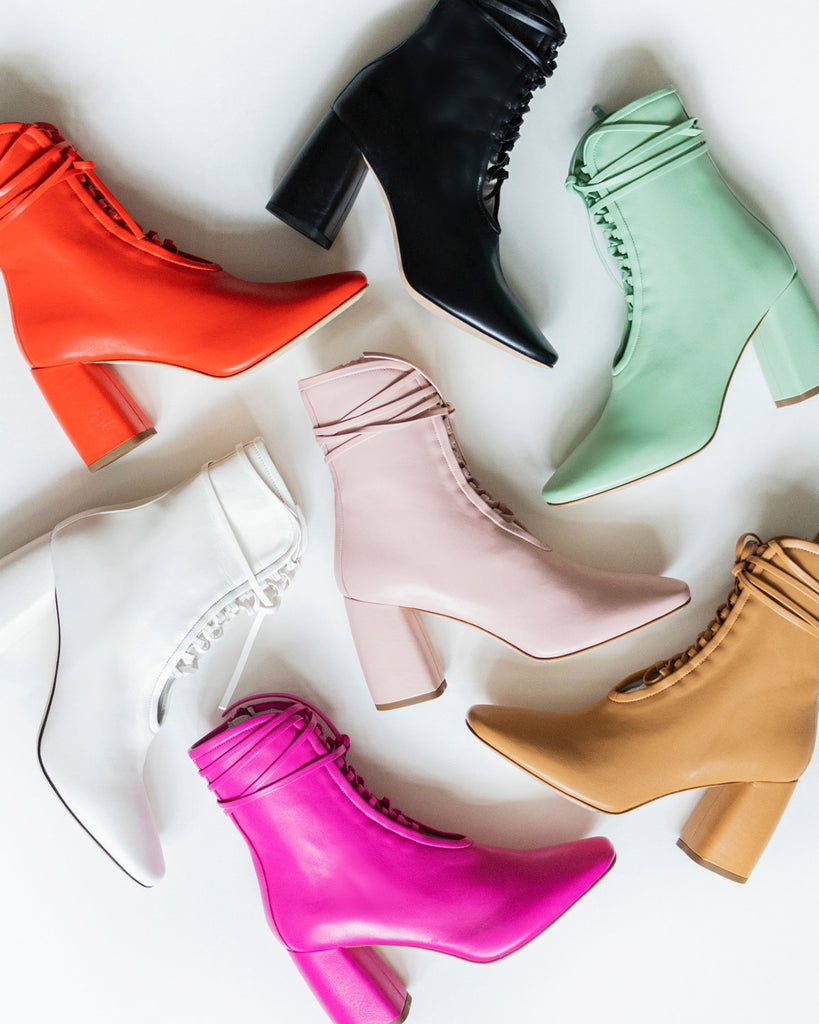


A well-designed black square toe flat can increase toe-box volume by approximately 15–20% and reduce peak plantar pressure by up to 12 mmHg during push-off, which is exactly why this shape can feel better over long days than narrower flats. When the construction is right, it can support up to 10,000 steps of daily wear without significant foot fatigue.
If you're reading this while staring at a lineup of shoes that all fail in different ways, I understand. One pair looks polished but pinches by lunch. Another feels soft for twenty minutes and then turns sloppy, flat, and unsupportive. A third works for errands, but not for a meeting, dinner, or a long city walk.
That is why black square toe flats matter. They solve a real wardrobe problem. They look clean, structured, and intelligent, and they answer the practical question that too many fashion shoes ignore: can I live in these?
I design with one belief at the center of everything. Luxury should not be painful. If a shoe only works when you're standing still, sitting beautifully, or planning your day around discomfort, it isn't a luxury. It's a costume.
The Search for the One Perfect Shoe
Most women aren't shopping for another pretty flat. They're shopping for relief.
You want the shoe that leaves the apartment at 8 a.m., handles the commute, works with tailoring, survives a full calendar, and still looks right at dinner. You want something refined enough for a boardroom, easy enough for travel, and comfortable enough that you don't keep emergency sneakers under your desk.
The real problem isn't style
The problem is compromise. Fashion keeps telling women to choose between elegance and ease, as if comfort automatically lowers the style quotient.
I don't buy that. I never have.
When I think about the women I design for, I think about the executive crossing SoHo in a blazer and full-length trousers. I think about the woman flying with only a carry-on and refusing to waste packing space on backup shoes. I think about the client who has bunions, a high arch, or forefoot sensitivity and still wants shoes that feel elegant, not apologetic.
Black square toe flats work because they don't ask you to split yourself in two. They let you be polished and practical at the same time.
What women actually need from a flat
A worthwhile flat has to do more than sit low to the ground. It needs to support your day.
That usually means:
- A shape with intention that doesn't crowd the forefoot
- Materials with give that mold without collapsing
- Enough structure to stay elegant from morning to night
- Day-to-night versatility so one pair works harder in your wardrobe
A black square toe flat answers all four. It has the authority of a sharper silhouette, the versatility of black footwear, and, when designed properly, the kind of comfort that makes you stop thinking about your feet.
That last point matters most. The right shoe should fade into the background of your day, not dominate it.
What Makes a Black Square Toe Flat a Wardrobe Staple
Black square toe flats didn't become enduring because fashion editors needed a new shape. They lasted because the silhouette sits at the intersection of beauty and function.
Fashion history connects them to two long-running design stories: the ballet flat and the squared toe. Ballet flats have roots traced back to the 16th century, then saw a major modern revival in the late 1940s through Rose Repetto's designs. Audrey Hepburn's black ballet flats in Funny Face helped turn the category into a staple. By the middle to end of the 1950s, toe shapes in flats had flattened into a square form to create more room for toes to move and breathe, which tied the look directly to wearability in everyday shoes, as noted in this history of ballet flats and square toe development.

Why the silhouette keeps returning
The square toe has resurfaced repeatedly because it does something very few trend-driven details do. It looks modern while serving the foot.
One earlier precursor appears in fashion history in 1795, when Charles Didelot reportedly invented a squared-toe box under the working name “flying machine” to help dancers rise onto their toes, according to this footwear history of ballet flats and square toes. I love that detail because it reminds us the square toe was never just decorative. It was tied to movement from the beginning.
Black then gives the shape its staying power. Vintage fashion reporting described black flats as the most common and versatile choice, which is exactly why this silhouette continues to function as a baseline wardrobe shoe.
Why I consider it an investment shape
A black square toe flat succeeds because it carries structure without stiffness. It sharpens soft outfits, balances tailoring, and feels less precious than a round ballet flat.
If you're trying to buy less and wear more, this is one of the most useful categories to build around. I like the framing of lasting style with purpose because it mirrors how women get dressed now. They want pieces that justify their place.
For more on how leather changes the daily experience of a flat, I also recommend reading about leather flats shoes and what makes them worth it.
Practical rule: If a flat only works with one mood, one hemline, or one season, it isn't a staple. A staple has range.
Why Is Finding Comfortable Flats So Difficult
The biggest myth in footwear is that flat means comfortable.
It doesn't.
A badly designed flat can feel harsher than a mid heel because it often strips away the very things your foot needs: cushioning, internal volume, secure shape, and support in the right places. Women buy flats expecting relief, then end up with rubbing at the heel, compression at the toes, and fatigue through the arch by mid-afternoon.

A square toe can still fail you
Many shoppers get misled. A shoe can look generous from above and still feel cramped once it's on.
Independent fit-focused guidance makes this point clearly: toe box height and width matter because a shape can look square but still compress the forefoot if the construction is narrow or low-volume. The primary concern is internal volume, not visual outline, as explained in this fit-focused analysis of ballet flats and toe box shape.
That distinction matters if you have:
- Bunions that need less side pressure
- Wide forefeet that spill over narrow footbeds
- Toe crowding that gets worse in shallow uppers
- Long commutes where repeated friction becomes the ultimate foe
Why so many flats break down by noon
I see the same design mistakes again and again.
| Problem | What it feels like | What to avoid |
|---|---|---|
| Thin soles | Hard impact underfoot | Flats with no meaningful cushioning |
| Shallow uppers | Pressure across the toes | Styles that look sleek but sit too low |
| Rigid materials | Rubbing and blisters | Uppers that don't soften with wear |
| Weak structure | Sloppy fit after a few hours | Shoes that collapse once warmed by the foot |
A beautiful flat should never punish you for having a real foot.
That is why fit-solution shoppers need to be more selective than trend shoppers. If you have high arches or bunions, you already know that a pretty silhouette on a product page tells you almost nothing about how the shoe behaves in motion. This is also why guides focused on luxury shoes for high arches and bunions are far more useful than generic trend roundups.
If your toes feel crowded when you're standing still, the shoe won't get kinder after five city blocks.
How to Style Black Square Toe Flats for Any Occasion
The beauty of black square toe flats is that they do what very few shoes can do well. They anchor a wardrobe without flattening it.
The shape reads cleaner than a rounded ballet flat and less severe than a pointed flat. That puts it in the sweet spot for women who want polish without fuss.

For the office
Here, the style earns its keep.
Pair black square toe flats with:
- Wide-leg trousers and a fitted knit for a clean weekday uniform
- An ankle-length cigarette pant and crisp button-down when you want structure
- A fluid midi skirt and blazer when you need softness with authority
The square toe gives shape under longer hems, which is useful now that pants are less cropped than they used to be. It also looks intentional with suiting. A round flat can sometimes read too delicate. A pointed flat can feel too aggressive. This shape lands perfectly in between.
If you like a slightly dressier finish, browse black patent leather ballet flats for polished work looks.
For dinner and evening plans
At night, keep the rest of the look fluid. The square toe brings enough architecture on its own.
Try these combinations:
- Black silk trousers with a sculptural top
- A slip dress and fine jewelry
- Dark denim with a sharp jacket and lipstick
I especially love black square toe flats for women who are done pretending they enjoy standing in heels through long dinners. A structured flat gives you composure without that strained, end-of-night posture heels can create.
Biomechanical studies show that a square toe box can increase volume by 15–20% and reduce peak plantar pressure by up to 12 mmHg during push-off, supporting up to 10,000 steps of daily wear without significant foot fatigue when the design is done well. That is why this style can move from office to evening so gracefully. The comfort isn't imaginary.
A quick visual always helps when you're deciding how polished you want the finish to feel.
For travel days
This might be my favorite use case because travel exposes every weakness in a shoe.
You need enough refinement for lunch or dinner, enough ease for airport movement, and enough comfort to handle a city you don't know yet. Black square toe flats pack beautifully into that problem.
My travel formula is simple:
- On the plane wear them with relaxed knit trousers and a trench
- For daytime switch to denim, a fine sweater, and a roomy tote
- For evening keep the same shoes, then change the top and jewelry
A strong travel shoe should never feel like a compromise piece. It should feel like the most edited item in your suitcase.
If you're building a compact wardrobe, start with black. It gives you the widest day-to-night versatility and the least friction when packing.
Investing in Quality Handcrafted Footwear
You feel the difference by week three.
A flat that was chosen well still holds its line, still supports your foot, and still feels good at 6 p.m. A flat that was chosen poorly starts collapsing at the sides, rubbing across the forefoot, and forcing your body to compensate step after step. That is the consequence of cheap construction. It shows up in comfort, posture, and how often you replace the pair.

Material quality changes comfort
As a designer, I start with materials because they determine how the shoe will behave on an actual foot, not just on a shelf. Good leather adapts. Poor material resists, traps heat, and creases in the wrong places. In a square toe flat, that matters even more because the shape only works when the upper has enough softness to follow the foot without collapsing over it.
What I want you to check first is simple:
- Breathable leather that helps regulate heat during long wear
- Cushioning that springs back instead of flattening after a few outings
- A supportive outsole that bends where your foot bends, not everywhere at once
- Clean finishing at the edges and seams because sloppy construction creates friction fast
If you want a clearer sense of why premium hides age better and feel better under pressure, read Italian leather flats and what makes them a smarter investment.
Why small-batch work matters
Factory scale changes the product. I have seen it firsthand.
In small-batch production, the upper can be adjusted more carefully to the last, leather selection is more consistent, and finishing gets more human attention. Those are not romantic details. They affect whether a flat keeps its structure, whether the topline cuts into the foot, and whether the shoe supports natural movement instead of fighting it.
That is why I respect handcrafted production in Italy and Portugal. The value is precision. A well-made black square toe flat should feel balanced from the first wear, especially across the forefoot where women with bunions or width sensitivity usually struggle most.
One example in this space is Daniella Shevel, a luxury footwear brand that produces small-batch styles with glove-fit construction and memory foam cushioning across collections designed for day-to-night wear.
Cost per wear is the only math that matters
Buy fewer flats. Buy the pair that keeps earning its place.
A strong black square toe flat works hard because it handles commuting, dinners, travel, and long days without asking you to trade style for relief. That is what makes handcrafted footwear worth the investment. You are paying for better materials, better pattern cutting, and better biomechanics in motion.
Good shoes become the pair you keep reaching for.
Finding Your Perfect Fit with Daniella Shevel
If you have bunions, a wider forefoot, toe crowding, or no patience left for shoes that need "breaking in," start with fit before aesthetics. Always.
That doesn't mean sacrificing style. It means becoming ruthless about what makes a shoe wearable. Look at the depth of the toe box. Pay attention to how the upper sits over the forefoot. Notice whether the material has the softness to adapt without losing structure.
What to check before you buy
Use this checklist:
- Stand, don't just sit because forefoot spread changes under weight
- Check side pressure around the bunion area or little toe
- Notice heel security so you aren't clawing with your toes to keep the shoe on
- Assess upper softness because good leather should work with you, not against you
If you struggle to find your size across brands, it helps to start with a proper guide to how to measure shoe size and width accurately at home.
My direct recommendation
Choose black square toe flats if you want one of the smartest wardrobe investments available right now. They are more timeless than they get credit for, more useful than trend pieces, and far better for many women than narrow almond or pointed flats.
But be disciplined. Don't buy the shape alone. Buy the construction.
The right pair should feel composed, breathable, and secure. It should support your work life, your social life, and your travel life without requiring a backup plan. That is the standard.
If a shoe pinches in the store, slides when you walk, or makes you negotiate with your own feet, leave it behind.
Luxury should feel like ease.
If you're ready to stop buying beautiful shoes that stay in the closet, explore Daniella Shevel and shop with a comfort-first lens. Start with the black styles, look for the pair that fits your real life, and choose the shoe you'll want to wear from morning to night.