

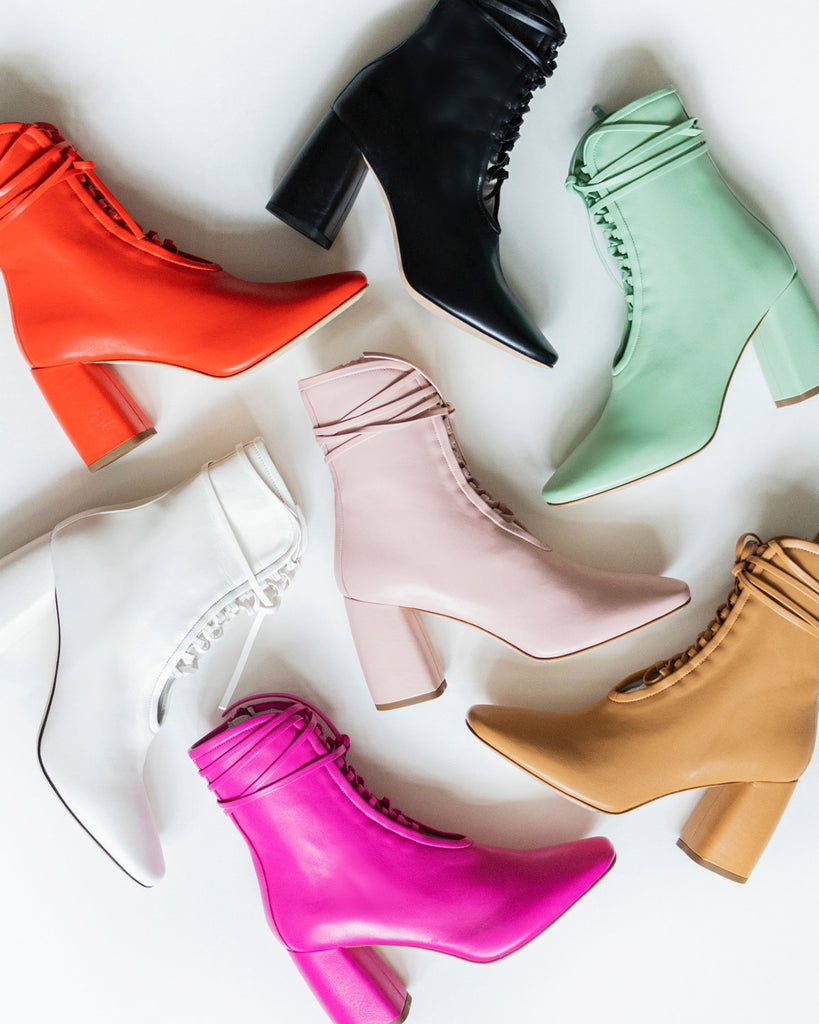


You can absolutely wear beautiful luxury shoes with high arches and bunions. The key is fit that accounts for one finger width of toe clearance, enough room for the bunion, and enough vertical space through the instep so the midfoot isn't compressed.
If you've ever slipped on a gorgeous pair of heels in the boutique, stood up, and felt the front pinch while the top of your foot pressed hard against the vamp, you already know the problem. The shoe isn't “too tight.” It's wrong in two different ways at once.
That's the part most brands miss. A bunion needs space and softness at the front of the shoe. A high arch needs depth, support, and a shape that respects the volume through the middle of the foot. If a shoe solves only one of those issues, the other one often becomes more obvious the second you start walking.
I started paying close attention to this conflict while working through luxury fit problems that standard sizing never addressed. A sleek silhouette can still be comfortable, but only if the construction is doing quiet work inside the shoe. That means material choice, toe shape, pitch, support, and how the upper wraps the foot all have to cooperate.
Luxury should not be painful. That belief sits at the center of how I think about design, and it's why women who've been disappointed by traditional designer shoes often find that the right pair feels less like a compromise and more like relief.
The Search for Style Without Sacrifice
There's a familiar moment many women know too well. You find the shoe. The leather is beautiful, the line is elegant, the heel height feels plausible, and you can already see it with tailoring, denim, or a dress. Then you try it on.
The bunion rubs first. Then the top of the foot feels trapped. By the time you've taken a few steps, you're negotiating with yourself. Maybe it will stretch. Maybe you only need it for dinners. Maybe beauty costs something.
It shouldn't.
The women I hear from most often are not asking for “comfort shoes.” They're asking for luxury shoes for high arches and bunions that still look polished in a boardroom, at a wedding, or walking through SoHo at the end of a long day. They want pointed boots that don't crush the forefoot. Pumps that don't force all the pressure onto the bunion. Flats that don't go dead under the arch after an hour.
Why this search feels so personal
Foot pain changes how you move through a day.
It changes how long you stand at an event. It changes whether you walk to dinner or call a car. It changes whether you buy a shoe because you love it, or because you're tired of being excluded by shoes that were never built for your foot shape in the first place.
That's why fit-led luxury matters. It respects anatomy without giving up refinement.
Practical rule: If a shoe looks elegant but asks you to endure rubbing, pinching, or pressure “until it breaks in,” it's not a luxury experience. It's just expensive discomfort.
The other problem is language. “Wide fit” often sounds useful, but it can be too blunt an instrument. A woman with a bunion and a high arch may need extra room in one area and more structure in another. She doesn't necessarily need a shoe that's uniformly bigger everywhere.
What changed my perspective as a designer
When I visited factories and reviewed samples, I became far more interested in the hidden geometry than the visible trend. A millimeter of shape at the toe, a softer facing, a more forgiving upper, or better support under the arch could completely change whether a shoe felt wearable.
That's where handcrafted design earns its place. It lets you refine the silhouette and the fit at the same time.
If you're interested in the making side of that process, this look at handcrafted women's shoes is worth reading. It explains why craftsmanship isn't only about beauty. It's also about control, precision, and long-term comfort.
Understanding High Arches and Bunions
A bunion and a high arch can live on the same foot, but they create very different fit demands.
A bunion is a bony bump at the base of the big toe caused by bone misalignment, and shoes with narrow toe boxes or high heels can worsen pressure by forcing the body forward and squeezing the forefoot, according to the Bunion Institute's guidance on shoes for bunions.
A high arch creates almost the opposite problem. Instead of needing only width at the front, the foot often needs more vertical volume through the instep and stronger support underneath so pressure is distributed more evenly.

The bridge and the hinge
The easiest way to understand this is to think of the foot as two problem zones.
The arch is like a bridge. If it sits high, the shoe has to clear more height through the middle. If the upper is too shallow, the top of the foot feels pressed down even when the length looks correct.
The big toe joint is more like a hinge. When a bunion forms, that hinge becomes prominent and sensitive. A tapered toe shape or stiff material can rub that area with every step.
Those two issues don't cancel each other out. They compound.
What each condition needs from a shoe
For bunions, the shoe usually works better when it has:
- A wider forefoot shape: The toes need space instead of crowding.
- Soft uppers: Leather, suede, or mesh can reduce friction over the bunion area.
- Lower, steadier heel profiles: Less forward pressure usually means less aggravation.
For high arches, comfort depends more on:
- Extra depth through the instep: Length alone won't solve vertical pressure.
- Structured support: The foot needs more than a soft insole.
- Balanced cushioning: Pressure often lands harder at the forefoot and heel.
These aren't theoretical distinctions. They're why one shoe can feel roomy in the toe and still hurt across the top of the foot, or feel secure at the arch but brutal on the bunion.
Why standard shopping advice falls short
Most fit advice still simplifies the problem too much. It tells women to size up, switch to a wider width, or avoid pointy shoes. Some of that helps, but it doesn't address the whole shape of the foot.
A high-arch shopper often also needs to think about midfoot volume, not just front width. A bunion shopper often needs material forgiveness and toe-box shaping, not just a looser size.
A shoe can feel wrong even when the length is technically right. That's often the clue that the real issue is shape, not size.
If you're also active outside of dress shoes, this guide to running shoes for high arches is useful because it shows how much arch-related comfort depends on support and pressure distribution, not just extra space.
For a brand-specific perspective on this fit issue, this article on shoes for a high arch speaks directly to the difference between going up a size and choosing a silhouette designed to support the foot properly.
What usually doesn't work
A few patterns fail repeatedly:
| Shoe feature | Why it often fails |
|---|---|
| Narrow pointed toe | Compresses the bunion area |
| Stiff forefoot leather | Creates friction instead of adapting |
| Flat low-support footbed | Leaves the high arch unsupported |
| Shallow vamp | Presses on the instep |
| High pitch with little cushioning | Pushes body weight into the forefoot |
Once you understand those mechanics, your shopping gets sharper. You stop blaming your feet, and you start recognizing when the shoe was never engineered for your shape.
Why Is Finding One Shoe for Both So Difficult?
The market tends to separate these problems into two different conversations.
Bunion advice usually points you toward roomy toe boxes, soft uppers, and low heels. High-arch advice usually points you toward support, cushioning, and more structure. That split leaves a real gap for women who need both at once, as noted in Aetrex's discussion of extra wide women's shoes and bunions.
The design conflict is real
A shoe can easily become clumsy if the front is enlarged without being sculpted well. It can also become restrictive if the midfoot support is rigid but the upper doesn't allow enough volume through the instep.
That's why the phrase “wide fit” often disappoints. It suggests a single adjustment. In reality, this shopper usually needs multiple small adjustments working together.
Here's the tension designers have to solve:
- A bunion-friendly front can't look bulbous or lose the elegance of the last.
- A supportive arch area can't feel like a hard band across the top of the foot.
- A refined heel height can't shift too much weight into the forefoot.
- A sleek silhouette can't depend on compression to appear elegant.
What the eye wants and what the foot needs
Luxury dress shoes often rely on visual tricks. A narrower toe makes the leg line look longer. A high pitch makes a shoe look sharper. A firm upper can hold a beautiful shape on the shelf.
But those same choices can punish a woman who needs room at the bunion and relief through the instep.
The most wearable dress shoes hide their engineering. They don't announce “comfort.” They simply remove the pain points that usually come with polished shoes.
Here, design becomes more like tailoring. You're not making the shoe larger. You're making it smarter.
What actually closes the gap
The most promising solutions usually involve details that aren't obvious at first glance:
- Hidden stretch zones around pressure points
- Removable or adaptive cushioning where support needs vary
- Toe-box shaping that gives volume without looking orthopedic
- Softer forefoot materials paired with more stable underfoot structure
That combination is also why this discussion of whether you need wide shoes matters. Many women don't need a bluntly wider shoe. They need one that respects the mismatch between forefoot sensitivity and midfoot height.
The difficulty, in other words, isn't that style and comfort can't coexist. It's that most footwear is still designed as if the foot only presents one fit challenge at a time.
The Ultimate Checklist for Bunion and High Arch Relief
When I assess a shoe for this particular fit problem, I don't start with the label or the stated width. I start with the construction. If the shape and support are wrong, a luxury price tag won't save it.
Use this checklist when you shop for luxury shoes for high arches and bunions.

Start with the front shape
The toe box should be sculpted, not merely wide.
A good forefoot shape gives the bunion room without making the shoe look blunt. That often means a more intelligent almond, soft square, or refined rounded shape. A sharply tapered point almost always asks the forefoot to collapse inward.
Look closely at where the shoe starts narrowing. If it narrows too early, your big toe joint will know immediately.
- What works: A silhouette that keeps width longer through the ball of the foot.
- What doesn't: A pointed profile that looks elegant in the box but turns the forefoot into a pinch zone.
Then check the upper material
Material can decide whether a shoe feels luxurious or hostile.
For a bunion, soft leather, suede, or mesh is often the difference between wearable and impossible. For a high arch, the material also needs enough give to accommodate the instep without creating a hard line of pressure across the top of the foot.
Italian and Portuguese craftsmanship often stand out. Better materials don't just look richer. They respond better to the body.
Designer's note: The most forgiving uppers don't collapse into sloppiness. They soften where the foot needs kindness and hold where the shoe needs shape.
Support has to be inside the shoe, not promised by the size chart
A high arch needs actual support underfoot. A shoe that is only soft can still leave the foot unstable.
Look for:
- Built-in arch support: The foot should feel held, not suspended.
- Cushioning through impact zones: The forefoot and heel often take more load.
- A stable base: The shoe shouldn't wobble or pitch you forward unnecessarily.
If you want a deeper look at how support changes heel comfort, this guide to arch supports in high heels is a useful companion.
Pay attention to pitch, not just heel height
Two shoes with similar heel heights can feel entirely different.
Pitch is the relationship between the heel and the forefoot. A shoe with a severe forward pitch can overload the bunion area even if the heel itself doesn't look dramatic. A better-balanced shoe distributes pressure more gracefully.
That's why some low heels still hurt, and some moderate heels feel surprisingly manageable.
Here's a quick comparison:
| Feature | Better for this fit challenge | Usually worse for this fit challenge |
|---|---|---|
| Toe shape | Sculpted almond, rounded, soft square | Early taper, sharp point |
| Upper | Soft leather, suede, mesh | Rigid, unforgiving forefoot |
| Support | Built-in arch support and cushioning | Flat footbed with minimal structure |
| Pitch | Balanced, steady | Aggressively forward-shifting |
| Heel type | Stable block, well-balanced low heel | Narrow, unstable, forefoot-heavy |
Look for hidden problem-solving details
The smartest shoes don't always advertise their best features.
Sometimes it's a lining that reduces friction. Sometimes it's a softly padded insole that makes a long event survivable. Sometimes it's a cutline that avoids landing directly over the bunion.
These details matter more than trend language.
- A seam over the bunion area: risky
- A little extra depth through the vamp: helpful
- An upper that molds instead of fights: often essential
- A sole that bends naturally but still supports: ideal for day-to-night wear
What I'd skip without hesitation
Some styles are too costly in comfort for this foot shape.
I'd be cautious with:
- Very sharp point-toe pumps: They rarely respect a bunion.
- Paper-thin flats: They don't do enough for a high arch.
- Rigid slingbacks with no give: They can create a chain reaction of forefoot pressure and heel instability.
- Shoes that require a painful break-in period: If the first try-on is punishing, the odds are poor.
The goal isn't to buy more shoes in search of one miracle pair. It's to buy fewer, better pairs made with comfort-first design, sustainable luxury values, and enough technical intelligence to support real life.
How to Master Your Fit at Home and In-Store
Even a well-designed shoe can fail if you test fit the wrong way. Most women check length, glance at the mirror, and decide too quickly.
For high arches, the fit problem is not just length or width. A raised arch creates extra vertical volume, so the shoe has to accommodate the midfoot circumference and instep height. Podiatry-oriented guidance also recommends leaving about one finger width of clearance at the toe while avoiding midfoot compression, as explained in Dr. Comfort's guidance on shoes for a high instep.

The fit checks I trust most
Length still matters, but it isn't the whole story.
At home or in-store, I'd check these things in this order:
-
Toe clearance
You want about one finger width at the front. If the toes are already touching, stop there. -
Instep pressure
Stand up and notice the top of the foot. If the upper digs into the arch area or creates a compressed feeling through the middle, the shoe may be wrong for your volume even if the size seems correct. -
Bunion contact
The shoe should not press or rub directly on the bunion when you shift weight forward. -
Heel hold
A little movement can happen, especially in softer constructions, but repeated lifting often means the foot is compensating for poor midfoot fit.
The mistake many shoppers make
They size up to relieve the bunion and accidentally create instability everywhere else.
That larger size may give a little extra space at the front, but it can also let the heel slip and change where the arch support sits under the foot. The result is a shoe that feels simultaneously looser and less comfortable.
A better question is this: does the shoe match your shape?
If the front feels cramped and the middle feels tight, don't assume the next size up will fix it. The last may simply be wrong for your foot.
How to test a shoe in motion
Don't only stand still. Walk, turn, and pause.
Notice whether:
- Your weight pitches forward
- The forefoot starts heating up quickly
- The arch feels supported or stranded
- The bunion area starts rubbing after only a few steps
That short walk tells you more than a seated try-on ever will.
A practical way to soften leather pressure points is careful stretching, but stretching should fine-tune a nearly right shoe, not rescue a badly shaped one. If you need guidance, this article on how to stretch leather shoes at home lays out sensible limits.
A quick visual fit tutorial can also help you see what these pressure points look like in real time.
In-store fitting is worth using well
If you're trying shoes in a boutique, bring the honesty you usually save for the end of the day. Don't ask only, “Is this cute?” Ask:
- Can I feel the top of the shoe pressing on my instep?
- Is the bunion already aware of the seam or edge?
- Would I wear this for work, dinner, or an event without planning an exit strategy?
That's the right standard. A polished shoe for an all-day life has to earn its place by how it moves with you.
Discover Your Perfect Daniella Shevel Silhouette
A woman with high arches and bunions usually learns to shop in categories that do not talk to each other. One shoe claims arch comfort. Another promises bunion relief. A significant challenge is finding a luxury silhouette that handles both at once.

I design for that overlap because it changes the entire shape of the shoe. A high arch often needs thoughtful instep accommodation and a stable base underfoot. A bunion needs the forefoot to stop fighting the foot. Put those together, and the right silhouette has to distribute pressure differently from heel to toe.
For workdays and long city hours
For a full day on your feet, I look first at balance. A low heel boot like CLEO can make sense because the pitch is calmer and the foot does not get shoved forward with every step. That matters for bunions, but it also matters for high arches, which often get tired faster when the shoe tips weight into the ball of the foot.
ISABELLA suits women who want a cleaner office shape without the strained feeling many dress shoes create by noon. The best work silhouette should hold its line with tailoring while still leaving enough volume at the front of the shoe for the foot to exist naturally.
For bunion sensitivity that still looks refined
Some uppers behave beautifully. Some look polished on the shelf and turn hostile within ten minutes.
ROMI is useful here because a more forgiving upper can reduce rubbing over the bunion without making the shoe look overly casual. I have found that this kind of construction often succeeds where rigid, heavily structured leather fails. You keep the sharp visual line, but the contact point softens.
If you prefer something lighter, NOLA offers a more generous feeling forefoot with a slimmer visual effect. That trade-off matters. Many women want room, but they do not want the shoe to read wide or heavy.
A refined shoe for this foot type needs controlled softness. Too stiff, and the bunion gets punished. Too loose, and the arch loses stability.
For events that run longer than planned
Special-occasion shoes are often the final test because standing cocktails, long dinners, and wedding floors expose every shortcut in the fit. This is when bad fit gets exposed quickly.
The silhouettes I trust for these moments usually share three traits:
- A steady heel shape: Better stability means less gripping and less forefoot fatigue.
- An upper with some give: Evening swelling is common, especially around the bunion area.
- Enough interior support for repeat wear: A beautiful event shoe should survive more than one outing.
The occasion styles at Daniella Shevel reflect that design brief. They are meant for women who need elegance, but also need the shoe to keep working after the first hour.
For women who keep getting pushed into “wide shoes”
Generic width advice often misses the actual geometry of the foot. A woman with a prominent bunion may need more space across one part of the forefoot, while a high arch may need a very different kind of hold through the midfoot. If the shoe only gets wider overall, the fit can become sloppy in one area and painful in another.
That is why I recommend choosing silhouette before category. Start with how and where you will wear the pair.
| Occasion | Better silhouette direction |
|---|---|
| Office and meetings | Low heel boot, supportive flat, stable pump |
| Travel days | Soft bootie, cushioned flat, flexible loafer-like shape |
| Weddings and events | Balanced heel, forgiving upper, sculpted forefoot |
| Everyday polished wear | Supportive flat or low heel with soft materials |
You can browse the full range at Daniella Shevel and focus on silhouettes built for real movement, not just a quick try-on.
The right pair should support the arch, respect the bunion, and still look luxurious with the rest of your wardrobe. That combination is rarer than it should be, but it is exactly the standard worth holding.
Investing in Comfort That Lasts
True luxury in footwear isn't only the finish of the leather or the elegance of the last. It's the ability to wear the shoe fully, confidently, and often.
That's why I always come back to a simple standard. A beautiful shoe should support the life you lead. It should work for meetings, dinners, travel, events, and the long walk that wasn't on the calendar. If it only works when you're seated, it isn't serving you.
This is also where sustainable luxury becomes practical. Buying fewer pairs that are thoughtfully made, wearable for longer stretches, and worth maintaining is usually the smarter wardrobe move. Handcrafted shoes with better materials can often be cared for, stretched carefully, and kept in rotation far longer than impulse purchases that felt wrong from day one.
Luxury shoes for high arches and bunions aren't a fantasy category. They exist when the design respects the whole foot. Not just width. Not just appearance. The whole geometry of how you stand and move.
If you've spent years assuming your foot shape excludes you from refined footwear, I'd challenge that idea. The issue was never that you wanted too much. You wanted what good design should have offered all along.
Explore the latest styles from Daniella Shevel if you're ready to shop for handcrafted, comfort-first luxury shoes that can carry you from work to weddings without asking you to pack backup flats.