

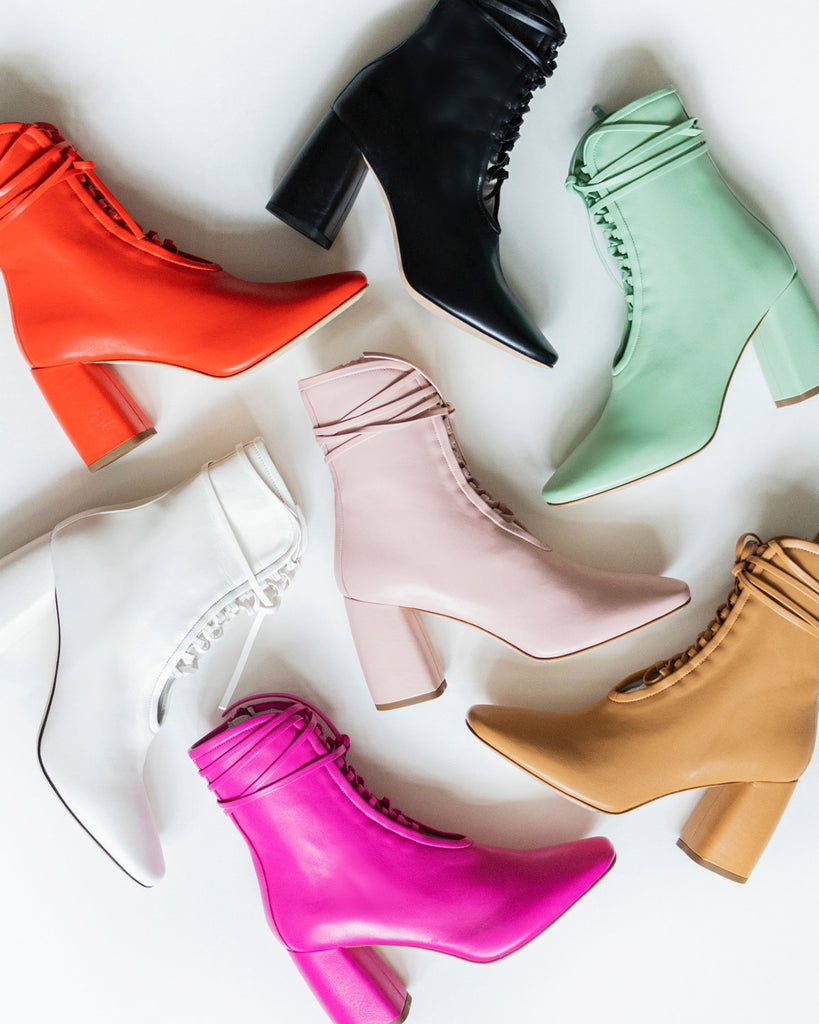


You know the moment. You leave for work in beautiful shoes, then stash a “real” pair under your desk, in your tote, or in the back of a taxi because you already know what your feet will feel like by noon.
That routine is exactly why italian leather flats matter when they’re made well. The right pair doesn’t just look polished. It supports long commutes, tricky fit issues, and the kind of day that starts with a meeting and ends at dinner without forcing a shoe change.
An End to the Backup Pair of Shoes
I’ve always believed luxury should feel as good as it looks.
For many women, the backup pair isn’t a styling trick. It’s a quiet concession. The heels are for the entrance. The flats are for survival.

I started designing with that exact tension in mind. I wanted shoes that held their shape, looked refined with tailoring, and still made sense for women moving through real cities, real schedules, and real foot pain.
Why the backup pair happens
Most uncomfortable flats fail in one of three places:
- The upper is too rigid. It rubs at the bunion, cuts into the toe line, or refuses to soften where your foot needs space.
- The sole is too flat in the wrong way. People assume “flat” means comfortable. It doesn’t. A flat shoe without thoughtful cushioning can feel harsh fast.
- The fit is aesthetic first. Many luxury styles are cut to look sleek in the box, not to move with you through a full day.
That’s why a pair can feel fine for twenty minutes and miserable after two hours.
Practical rule: If you already plan your outfit around where you can sit down and take your shoes off, the shoe isn’t working hard enough for your life.
What changes when comfort comes first
A proper pair of italian leather flats should let you do all of this without thinking about your feet every ten minutes:
- Commute confidently
- Walk into a client meeting looking composed
- Stand through events without fidgeting
- Go straight to dinner without a shoe swap
That’s a very different standard from “cute and tolerable.”
I also think comfort changes posture. When your shoes don’t distract you, you move differently. You stop negotiating with pain and start paying attention to the room.
If you’re building a wardrobe around polished pieces that can perform, my guide to office shoes for women goes into detail about how to tell the difference.daniellashevel.com/blogs/updates/office-shoes-for-women) goes deeper into what makes a work shoe worth buying.
The Soul of Italian Leather Craftsmanship
The phrase “Italian leather” gets used loosely. In practice, it should mean something specific in your hands and on your feet.
It should feel supple, not papery. It should soften with wear instead of collapsing. And it should age with character, not fatigue.
Why italian leather flats have lasting appeal
The modern ballet flat became part of everyday luxury in 1947, when Rose Repetto handcrafted the first modern Italian leather ballet flats for her son Roland Repetto, helping shift the silhouette from stagewear into fashion. That story sits within a much older tradition of Italian leatherwork tied to Tuscany and Florence, where vegetable tanning with oak and chestnut tannins helped define the country’s reputation for exceptional hides. Today, Italy produces over 70% of the world’s high-end leather goods, which helps explain why the phrase still carries weight in footwear (Aerosoles history of the ballet flat).
That heritage matters because it shaped the standards many of us still chase in a great flat:
- Softness without fragility
- Breathability without a plasticky feel
- Structure that bends, rather than breaks down
If you’re interested in how that same heritage shows up across categories beyond shoes, this piece on timeless Italian craftsmanship offers a useful broader lens.
What good leather actually does
I’ve spent enough time in factories to know that beautiful leather isn’t only about appearance. It changes how a shoe behaves from the first fitting onward.
A better hide tends to:
- Mold more gracefully to the shape of the foot
- Hold finish better through repeated wear
- Respond well to hand-finishing and careful stitching
- Improve with care instead of looking tired too quickly
Mass-market leathers often look polished at first glance but feel coated. They can resist stretching where you need relief, then crease harshly where you don’t.
What to look for when shopping
If you’re deciding whether a pair of italian leather flats is worth the investment, I’d focus on these questions:
| What to check | Why it matters |
|---|---|
| Does the leather feel supple right away? | Stiff uppers usually demand a harder break-in period. |
| Is the interior finished cleanly? | Rough seams and edges create friction quickly. |
| Does the shape look balanced off-foot? | A well-made flat should look elegant without appearing strained. |
| Can the shoe be maintained or stretched? | Longevity depends on serviceability, not just initial beauty. |
One of the easiest ways to train your eye is to compare silhouettes. Loafers are especially helpful because they show structure so clearly. My thoughts on that are in this guide to italian loafers for women.
Why Do These Italian Flats Feel So Different
You notice it halfway through the day. The meeting ran long, the block was farther than expected, and you are still not thinking about your feet. That is usually the first sign that a flat was built well.
Comfort in a flat comes from a chain of decisions working together. The outsole affects stability. The insole affects pressure and fatigue. The upper affects whether the shoe moves with your foot or fights it by noon.

Start with the part that meets the ground
I pay close attention to outsoles in the factory because that is where a lot of beautiful flats fail. A leather sole can look refined on the shelf and feel treacherous on polished floors or uneven streets.
One premium construction pairs a buffed leather outsole with a TPU insert for added grip. Quince notes that this setup can reduce slip risk by up to 30% compared with a standard leather sole in its Italian leather handwoven ballet flat.
That difference shows up in your stride. Women compensate for slippery soles without realizing it. They grip with the toes, tighten through the calves, and shorten each step. On a travel day or a 10,000 step day, that tension adds up fast.
Then look under the foot
Padding is not just about softness. It is about placement and restraint.
A flat with too little cushioning feels sharp under the ball of the foot. A flat with too much foam can throw off the fit, create heel instability, and make the shoe feel bulky. I prefer a measured amount of cushioning that absorbs impact without changing the line of the shoe. In practical terms, that means a flat can handle standing meetings, airport terminals, and old city streets without turning clumsy.
A well-made flat should let your foot relax into its natural gait instead of bracing for the next step.
The upper is where fit problems get solved or ignored
This matters even more for women with bunions, fuller forefeet, or sensitive joints. A stiff upper presses exactly where the foot needs relief. An upper that is too loose can collapse and lose shape after a few wears.
The best Italian flats balance softness with control. The leather gives where the foot needs room, but the pattern and last still keep the silhouette clean. That balance is why two flats made from similarly nice leather can feel completely different on the body.
I see the same issue with sizing. A woman may think she needs to size up for width, when the problem is the shoe shape itself. If you are comparing European sizing and trying to avoid that mistake, this guide to Italian shoe sizes and fit helps decode what the numbers do and do not tell you.
What I look for during development
For a flat to work in real life, not just in a product photo, these details matter:
- An outsole with grip for pavement, tile, and cobblestones
- Underfoot cushioning that reduces fatigue without making the fit unstable
- A soft, responsive upper that accommodates movement at the forefoot
- Clean interior finishing so seams and edges do not create hot spots
- A shape that stays polished even after hours of walking
At Daniella Shevel, styles such as the Isabella collection are designed around that balance. The goal is a flat that still looks refined at dinner after earning its keep all day.
Where comfort claims usually fall apart
A thin sole can keep a shoe looking delicate, but it often leaves you feeling every hard surface beneath you. An aggressively pointed toe may look elegant off-foot and crowd the forefoot once you start walking. Very soft construction can feel wonderful for twenty minutes and unsupportive by late afternoon.
Those are real trade-offs. Good design does not pretend they do not exist. It solves them as cleanly as possible.
For readers comparing silhouettes with different levels of coverage, the flats and slides collection offers a useful side-by-side view of how shape affects wear.
Finding Your Perfect Fit for Any Foot Type
Fit is where many luxury shoppers get discouraged. The shoe is beautiful. The leather sounds promising. Then the bunion rubs, the heel slips, or the toe box feels elegant for five minutes and impossible by lunch.
That doesn’t mean your feet are the problem. It usually means the last, leather choice, or finish wasn’t designed for real variation.

Bunions need softness, not denial
A meaningful share of luxury shoppers, estimated at 40% of women, report struggling to find a proper fit from traditional designer brands because of issues like bunions or narrow heels. The same verified data notes that supple Nappa leather with elongation-at-break of over 50% can gently mold around bunions, especially when paired with artisan stretching services for a more custom-like fit (Suggies guide).
That lines up with what I see in fittings.
A bunion-friendly flat doesn’t need to look orthopedic. It needs the right softness in the right place and a shape that doesn’t collapse the forefoot visually.
Narrow heels need grip and shape
Heel slip is often treated like a sizing issue. It’s frequently a shape issue.
If your heel is narrow, look for:
- A secure topline that hugs without digging
- Supple leather that can settle closer to your foot
- An interior that isn’t slick to the point of constant movement
When a flat is too open in the heel, people instinctively claw with their toes to keep it on. That creates strain quickly.
Wider forefeet need balance
A wider forefoot doesn’t automatically require a round, bulky silhouette. The trick is proportion.
The most elegant fit usually comes from a shoe that:
| Foot concern | What helps |
|---|---|
| Bunion area sensitivity | Soft Nappa leather and room where the joint needs it |
| Narrow heel | A closer topline and less internal slipping |
| Wider forefoot | A refined toe shape with smarter width distribution |
| High arch | A footbed that doesn’t feel flat and dead under pressure |
Fit note: The right pair should feel close, not aggressive. You want contact and support, not compression.
If you’re shopping across European sizing and trying to avoid guesswork, this guide to shoe sizes italian helps translate what those numbers mean in practical terms.
When stretching makes sense
Stretching is useful, but only when the base shoe is compatible with your foot.
It can help if:
- The leather is high quality
- The pinch point is localized
- The rest of the shoe already fits well
It won’t fix a last that is structurally wrong. If the arch placement, pitch, or heel shape is off, stretching only solves part of the problem.
That’s why I always tell women to judge fit by walking, turning, and standing still. A mirror won’t tell you what your feet will say two hours later.
Styling Your Flats from Boardroom to Cobblestones
A woman leaves for work at 8 a.m., walks to the train, stands through meetings, crosses a few city blocks for lunch, and still wants to go straight to dinner without changing shoes. That is the defining styling test. A flat has to look polished at a conference table and still feel stable on old pavement, subway stairs, and long hotel corridors.
That is why I design with use in mind, not just outfit photos. On the factory floor in Italy, I look closely at how a shoe sits under a trouser hem, but I also care about what happens after 10,000 steps. The right pair should solve both.

For the office
Flats work beautifully with tailoring when the proportions are disciplined. A clean vamp, a refined toe, and leather with enough structure will hold their own against a sharp trouser or blazer.
I come back to these combinations often:
- Ankle-length trousers and a fine knit for a precise, quiet silhouette
- A longer trouser with fluid drape when you want the shoe to appear in motion, not dominate the look
- A midi skirt and structured blazer for days that call for authority without the strain of a heel
For many women, office style is also a comfort calculation. If you deal with a bunion or a wider forefoot, a very shallow cut can look elegant in the mirror and feel punishing by lunchtime. A softly almond shape usually gives a better balance. It still reads professional, but it does not squeeze the front of the foot the way an aggressive point often does.
For commuting, travel, and weekends
These situations quickly expose weak flats. A pair can look beautiful in a taxi and fail completely on foot.
For commuting and walking-heavy trips, I look for three things: enough coverage to keep the foot secure, a sole that can handle uneven ground, and leather that still looks good after a full day of wear. If you are planning a city itinerary with long walking days, my guide to the best shoes for walking in Europe goes deeper into what performs.
A practical packing formula helps:
- One neutral flat
- Two bottoms you already know you wear often
- One knit or light layer
- One dress that works day to night
- One bag that does not demand a second shoe category
That is how you stop carrying a backup pair.
A softer, versatile shape like the Nola collection earns space in a suitcase because it works with denim, travel trousers, and cleaner evening pieces. That range matters more than novelty when you are packing for real life.
For evenings when you still want ease
A flat can look dressed for dinner if the materials are right and the outfit has intention. Good leather does a lot of the work here. It catches light differently, holds its shape better, and avoids the collapse that makes many flat shoes look casual.
Wear them with:
- A column dress
- A silk trouser
- A dark jean and sculptural top
- A monochrome set with strong jewelry
I often tell clients to judge evening flats by finish, not heel height. If the topline is refined and the leather feels substantial, the shoe will hold up in a more dressed setting.
For a closer look at how movement and styling work together, here’s a short visual reference:
A simple styling test
Before a flat earns a place in your closet, run it through real scenarios:
- Would I wear this with tailoring?
- Would I trust this on a city trip with serious walking?
- Would I wear this to dinner and still feel pulled together?
If the answer is yes all three times, you have a pair with range, and range is what makes a beautiful shoe useful. I would always choose one hardworking pair over several that only function in narrow situations.
The Promise of Longevity Care and Sustainability
A good pair of leather flats should earn its place over time. That means two things. You care for it properly, and the brand gives you a responsible path when the pair has reached the end of its life with you.
That’s what sustainable luxury looks like in practice. Not slogans. Systems.
How to care for italian leather flats
Most wear damage starts with neglect, not drama.
The simplest habits make the biggest difference:
- Wipe them down after wear. City dust and surface grime dull leather quickly.
- Let them rest. Wearing the same pair every day without pause can accelerate breakdown.
- Store them with shape in mind. Don’t crush them at the bottom of a tote.
- Address friction early. If a sole or heel edge starts wearing unevenly, service it before the whole shoe suffers.
For softer finishes and more delicate materials, this guide on taking care of suede shoes is helpful even if your wardrobe mixes suede with smooth leather.
Why circularity matters
Many conversations about sustainability in footwear stop at vegan alternatives. There’s a real gap around what happens to genuine leather shoes after years of wear.
The verified data here is useful and specific. A circular program tied to Soles4Souls offers a $75 credit for donating pre-loved shoes, and the same source notes that high-quality, repairable chrome-tanned Italian leather often outlasts vegan alternatives by 2 to 3 times, which can reduce overall waste when the pair is maintained and responsibly recirculated (Sustainable Outfits feature).
What responsible buying looks like
I think a thoughtful purchase has three stages:
| Stage | Better question |
|---|---|
| Before buying | Will I wear this across multiple parts of my life? |
| During ownership | Can I maintain, stretch, or repair it if needed? |
| After heavy use | Is there a program that keeps it in circulation? |
Buy less, buy better only works if the product is made to stay useful. Otherwise it’s just expensive waste.
That’s why longevity and sustainability belong in the same conversation. A repairable, serviceable leather flat has a different environmental story from a disposable trend shoe, even if the trend shoe looks “conscious” on paper.
Experience the Daniella Shevel Difference
You leave the hotel at 8 a.m. in flats because the day looks manageable on paper. By lunchtime, you have already crossed a few city blocks, stood through meetings, and started calculating whether you should head back for the backup pair. I have designed against that exact moment for years.
Women do not need another beautiful flat that works for twenty minutes. They need one that handles a real schedule, especially if they are dealing with bunions, a narrow heel, swelling on travel days, or the kind of walking that turns into 10,000 steps.
That is the standard behind Daniella Shevel.
I care about the details that change how a shoe feels at 4 p.m., not just how it looks at 9 a.m. That means soft Italian leather that gives where it should, structured support that keeps the shoe from collapsing, and proportions that respect the shape of an actual foot. Luxury has often treated fit issues as an exception. In practice, they are normal.
What I build reflects that:
- Handcrafted production in Italy and Portugal
- Refined silhouettes designed for long wear
- Fit considerations for wider forefeet, bunions, and heels that slip
- Versatility that makes sense for work, travel, and evenings out
- A design approach rooted in care, repair, and repeat wear
I have seen on the factory floor how small adjustments change everything. A cleaner topline can reduce rubbing. A better placement of elastic can hold a narrow heel without squeezing the forefoot. A softer lining can make a polished flat wearable on a long travel day. These are not flashy changes, but they are the reason one pair gets worn constantly and another stays in the closet.
The women who return to the brand usually say some version of the same thing. They forgot about their shoes. That is a compliment.
If you visit the New York flagship, the conversation is practical. Where do you feel pressure first? Does one foot need more room? Are you buying for commuting, a trip, or an event that involves more standing than sitting? Good fit guidance should answer those questions clearly.
The right flat should carry your day without asking for a backup plan.
If stylish flats have trained you to expect compromise, I would reconsider that assumption. A well-made pair should meet the demands of your real life and still look polished by dinner.
If you’re ready for a pair that can handle work, travel, dinner, and the walk in between, explore Daniella Shevel and shop handcrafted italian leather flats designed to end the backup-pair habit for good.
Written by Daniella Shevel, Designer & Founder