

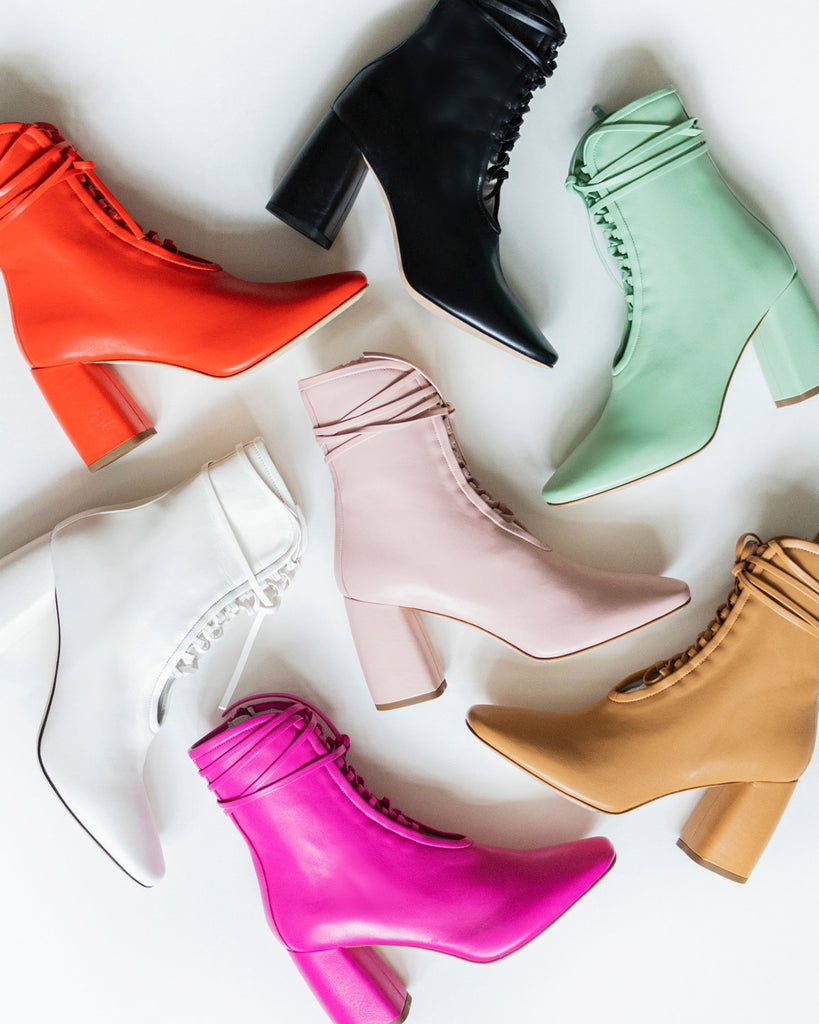


You’re probably doing what every bride does. You’ve found the dress, started thinking about the photos, and then hit the annoying question that affects your whole day: can you wear a beautiful heel for hours without regretting it by cocktail hour?
My answer is yes. Platform white wedding shoes are the smartest choice if you want height, polish, and real comfort from ceremony to last dance. They’ve surged in popularity, with The Knot highlighting 19 trending styles that reflect how brides now want fashion that can handle a full celebration (The Knot).
I design shoes with one rule in mind. Luxury should not be painful. If a bridal shoe looks perfect in photos but makes you limp before dinner, it failed.
The Modern Bride's Answer to All-Day Elegance
The old bridal rule said you had to choose. You could have a delicate heel, or you could have a comfortable wedding day. I don’t agree with that, and I never have.
A modern bride needs shoes that work through a long ceremony, photos, greeting everyone, dinner, and dancing. She also wants a clean silhouette, flattering height, and something that feels intentional with her gown. That’s exactly why platforms have become such a strong bridal choice.
What I love about platform white wedding shoes is that they don’t read as a compromise. They read as confidence.
Why brides are choosing them now
The appeal is simple:
- They add height: You get the lift many gowns need without forcing your foot into an extreme angle.
- They feel more secure: Brides often feel steadier in them than in a traditional stiletto.
- They transition well: A good platform works for the aisle and the dance floor.
The bigger shift is taste. Brides are dressing for movement now. They want day-to-night versatility, not a shoe that only survives the walk down the aisle.
My rule: If you’re planning to stand, walk, hug, pose, and dance in one pair, comfort has to be built into the design from the start.
I’ve seen this mindset significantly shape bridal shopping. Women aren’t asking only, “Is it pretty?” They’re asking, “Will this still feel good later?” That’s the right question.
Color matters too. Crisp white can look striking, especially on deeper or olive complexions, while ivory is often the safer match for many gowns. One mistake I always tell brides to avoid is pairing bright white shoes with an ivory dress. That mismatch shows up fast in photos.
If you’re shopping for a wedding shoe you’ll enjoy wearing, start with platforms. They give you elegance without the punishment, and that’s the standard every bridal shoe should meet.
Understanding Your Platform Silhouette Options
Not all platforms feel or look the same. The wrong silhouette can fight your dress, your venue, or your walking style. The right one makes everything easier.

Block heel platforms
This is the easiest recommendation for most brides.
A block heel platform gives you a stronger visual base and a more grounded feel. If your venue includes grass, stone, old floors, or long stretches of standing, this shape usually makes the most sense.
It suits:
- A-line gowns: The structure balances volume beautifully.
- Garden weddings: The wider heel is more practical.
- Brides who want confidence: Especially if you don’t wear heels often.
For brides who like this idea but want more everyday styling inspiration too, this guide to a block heel pump is useful because the same logic applies: stability changes how long you can comfortably stay in your shoes.
Stiletto platforms
This silhouette is for the bride who wants drama, length, and a sharper line.
A stiletto platform still looks refined and dressy, but the front platform softens the experience compared with a classic thin-soled heel. If your gown is sleek, fitted, or minimal, this shape often feels right.
Choose it if:
- Your wedding is formal and indoors.
- You want a more elongated leg line.
- Your dress has a cleaner, more sculptural shape.
This is the silhouette that proves comfort-first design doesn’t have to look practical in a boring way. It can still feel glamorous.
Wedges and fashion-forward alternatives
Wedges don’t get enough credit in bridal conversations. They distribute weight more evenly and can be excellent for outdoor events, destination weddings, and brides who value security over delicacy.
They aren’t for every gown, but they can be right for:
- Beach ceremonies
- Vineyard weddings
- Brides wearing shorter or more relaxed dresses
If you want a modern version of that easy, polished mood, these Platform Mules show how a platform can still look sleek rather than heavy.
Bridal sneaker platforms
This is the rebel option, and I mean that as a compliment.
A satin or dressed-up platform sneaker works best for a second look, a city celebration, or a bride whose style leans modern and unfussy. It won’t suit every ceremony, but it can be exactly right if the goal is movement and personality.
The smartest bridal shoe isn’t the one that looks most fragile. It’s the one that keeps your posture, pace, and mood intact all day.
Here’s the shortcut I’d use:
| Silhouette | Best for | Overall feel |
|---|---|---|
| Block heel platform | Garden, vineyard, all-day wear | Stable and polished |
| Stiletto platform | Ballroom, black-tie, sleek gowns | Glamorous and refined |
| Wedge or sneaker platform | Beach, destination, second look | Relaxed and modern |
Why Are Platforms a Bride’s Best Friend for Comfort?
Comfort in a platform isn’t magic. It’s mechanics.
The key concept is pitch reduction. A higher heel becomes more wearable when the front of the shoe is lifted too, because your foot isn’t forced into such a steep angle.

What pitch reduction means
A platform changes how high the heel feels, not just how high it measures.
According to this bridal shoe guide, a 5-inch heel with a 1-inch platform reduces the perceived pitch to approximately 3 to 3.5 inches, which shifts pressure away from the ball of the foot and improves stability for 8+ hour events (Ruxene).
That matters because the ball of the foot is usually where brides start to suffer first.
Think of it this way:
- Less incline: Your foot sits at a friendlier angle.
- Better pressure distribution: The front of your foot doesn’t take the full hit.
- More support underneath: The sole does more work for you.
Why this matters on a wedding day
Wedding days aren’t normal days. You don’t sit when your feet ask for a break. You keep moving because people need you, photographers need you, and the schedule keeps going.
Platform white wedding shoes earn their place then.
They’re especially useful when your venue includes:
- Grass: A narrow heel can sink and wobble.
- Cobblestones: Uneven ground punishes unstable shoes fast.
- Historic floors: Slippery surfaces expose every design flaw.
I pay close attention to this when thinking about bridal construction. A shoe has to carry weight well, not just look delicate from the side. That’s why I care so much about the relationship between heel shape, front platform height, padding, and sole structure.
The hidden platform advantage
Some brides love the comfort idea but don’t want the shoe to look obviously chunky. Fair enough.
A hidden platform is often the right answer. You keep a more classic pump silhouette, but the shoe still gives you the engineering benefit underneath. That’s one of my favorite solutions for brides who want tradition from a distance and relief up close.
If arch fatigue is part of your concern, this article on arch supports for high heels is worth reading because support and pitch work together.
Design note: The most comfortable heel often doesn’t look “orthopedic” at all. The intelligence is inside the construction.
If you want height, choose a platform that reduces effort with every step. Don’t get seduced by heel measurements alone. The pitch tells the true story.
A Perfect Fit for Your Perfect Day
Most bridal shoe advice stops at style. That’s lazy. Fit is what decides whether you love your shoes or rip them off under the table.
This matters more than many brands admit. A 2025 bridal survey found that 42% of brides reported foot pain from ill-fitting shoes, and 28% cited bunions or arches as barriers. The same source notes that fit solutions are still largely ignored in platform content, even though features like glove-fit construction or memory foam could directly address those concerns (Ruxene).

If you have bunions
You do not need to settle for a clunky shoe just because your foot needs more kindness.
What usually causes trouble is not the platform itself. It’s the combination of a rigid upper, a narrow toe shape, and pressure right at the bunion joint. A platform can help if the shoe is built with a forgiving upper and thoughtful forefoot padding.
Look for:
- A softer upper: Stretch leather or flexible satin is often kinder than stiff synthetic material.
- A cleaner seam placement: Hard seam lines over sensitive areas are a mistake.
- A less aggressive toe shape: You want space, not compression.
One practical resource if this is your issue is this guide to bridal shoes for wide width, because width and bunion comfort usually overlap.
If you have high arches
A high arch bride often says the same thing: “The shoe is beautiful, but I feel unsupported halfway through the event.”
That usually means the insole isn’t doing enough, or the pitch and shape don’t line up with your foot. In my own design process, I pay close attention to where the foot lands and whether the cushion placement supports standing, not just a few minutes of trying on.
A better bridal platform for high arches should include:
- Targeted cushioning: Not just a thin layer everywhere.
- Secure hold through the midfoot: Your foot shouldn’t slide forward.
- Balanced structure: Too-flat support in the wrong place can feel just as bad as none.
If your feet are wide or narrow
Fit becomes personal very quickly.
A wide foot usually needs a more generous toe box and a material that adapts. A narrow foot needs grip and shape so the foot doesn’t swim inside the shoe. Brands often design for neither particularly well.
I believe a bridal shoe should feel close to the foot without squeezing it. That glove-fit idea matters because secure shoes are often more comfortable than loose ones. Friction from sliding creates its own problems.
Buy for your real foot at 8 p.m., not your optimistic foot at 9 a.m.
One option in this conversation is Daniella Shevel, where styles are handmade in small batches and built around features such as a proprietary three-part memory foam system and glove-fit construction. For brides who’ve struggled with pressure points before, those details are worth prioritizing.
The fit test I’d insist on before you buy
Don’t just stand in the shoe. Do this instead:
- Walk on hard flooring: Carpet hides problems.
- Stay in them long enough to notice pressure: Pain rarely appears instantly.
- Turn and pivot: Receptions involve more than walking straight.
- Test them later in the day: Feet change.
If your shoe pinches in the salon, it won’t transform into kindness at your wedding. Be ruthless about fit. A bridal platform should support you, not train you to tolerate discomfort.
Styling Platforms for Every Wedding Venue and Gown
A platform only works if it suits the setting. Good bridal styling always comes down to proportion, surface, and mood.
For some brides, the shoe is hidden most of the day. For others, it becomes part of the look, especially with a slit, mini, tea-length hem, or a second dress. In both cases, the platform has to belong.

The grand ballroom
For a grand ballroom, a stiletto platform shines.
A formal indoor venue can handle a cleaner, more elongated silhouette, especially with a satin column gown, mermaid shape, or anything with a dramatic train. I’d keep the shoe refined rather than overly embellished unless the dress is very minimal.
A classic point of reference is a white satin pump. If your style leans timeless, this article on white satin pumps will help you judge whether you want that polished finish or something with more lift.
For brides also shopping options, browse the bridal collection early rather than at the last minute. Height decisions can affect hemming.
The outdoor garden or vineyard
I’m much firmer here. Choose a block heel platform or wedge-inspired shape.
Delicate heels and soft ground are a bad pairing. You need contact with the ground and enough stability to handle lawns, pathways, and uneven terrain without altering your posture.
I’d pair this with:
- A-line gowns
- Soft chiffon or floral lace
- Any dress with movement
If you want to compare venue-friendly heel shapes, the wedding guest edit is useful because many of the same practical rules apply to outdoor events.
The relaxed beach ceremony
For a relaxed beach ceremony, restraint wins.
For a beach wedding, I prefer a lower-profile platform, wedge, or dressier sneaker approach over anything too severe. Salt air, sand, and movement call for ease. Your shoe should feel intentional, not overworked.
A shorter hem, a slip dress, or a soft bohemian silhouette all pair well with this direction.
To see how movement changes the look of a stylish bridal shoe, this quick video helps:
The modern city hall elopement
A city wedding allows for fun.
A city wedding gives you room for a sharper fashion statement. A sleek platform pump, sculptural sandal, or even a white bootie can look incredible with a mini dress, a well-fitted suit, or architectural gown.
I especially like a city bridal look when the shoe has after-the-wedding potential. The Romi is the kind of silhouette that works for women who want something modern and wearable beyond the ceremony.
The right wedding shoe should match your venue as closely as it matches your dress.
If your dress has volume, the platform can help balance it. If your dress is minimal, the shoe can carry more personality. Keep the relationship intentional and the whole look becomes more convincing.
Choosing Materials for Sustainable Luxury and Longevity
A bridal shoe shouldn’t be disposable. If you buy well, you should be able to wear that pair again, keep it beautifully, or pass it on.
That starts with materials.
What I look for first
I prefer handcrafted materials that age well and mold more naturally to the foot. Italian and Portuguese craftsmanship still matters because touch, finish, and structure affect comfort just as much as appearance.
For bridal shoes, I look closely at:
- Leather quality: Better leather usually breathes better and adapts more gracefully.
- Lining softness: Rough interiors ruin even a pretty shoe.
- Sole integrity: A wedding shoe still needs to perform under real wear.
For brides who want their values reflected across the whole wedding, this article on eco-friendly choices for modern brides is a thoughtful companion read.
Sustainable luxury is about longevity
I don’t believe sustainable luxury means sacrificing beauty. I think it means choosing pieces with enough quality and versatility to stay in your life.
That could mean:
- Wearing your shoes again to formal dinners or anniversaries
- Choosing a cleaner silhouette that isn’t locked to one trend
- Repairing and maintaining them instead of replacing them
Brand policies matter here, not just materials. If a company talks about craftsmanship but treats the product as disposable, I lose interest.
Circularity matters
One of the more practical signs of commitment is whether a brand supports what happens after the purchase. The sustainability page outlines an approach that includes a Soles4Souls partnership and a credit for donating pre-loved shoes.
That matters because it turns “buy less, buy better” into something real.
A wedding shoe becomes an investment piece when you can imagine wearing it again, caring for it properly, and keeping it in circulation rather than in a box forever.
If you’re deciding between a cheaper pair and a better-made pair, ask the harder question. Which one will still deserve space in your wardrobe after the wedding? That answer usually points you toward quality.
Final Touches Your Pre-Wedding Shoe Checklist
Buying the right shoe is only half the job. Preparing it properly is what saves you on the day.
Before the wedding
Start wearing your shoes indoors well before the event. Not for hours at a time, and not on dirty floors. Just enough to learn how they move with your foot.
Use this checklist:
- Break them in gradually: Short sessions are better than one marathon session.
- Walk on hard surfaces: You need to feel contact points.
- Practice in your dress length: Hem and heel work together.
- Test your turns: Receptions involve pivots, stairs, and quick direction changes.
If a spot feels tight, address it early. Stretching can help in specific pressure areas, especially near bunions or across the forefoot, but it should be done carefully and professionally when possible.
Do a full dress rehearsal
I always recommend one complete run-through.
Put on the gown, the undergarments, the shoe, and any accessories that affect how you stand or move. Walk, sit, stand, and take a few stairs if you can. Brides often discover the primary issue isn’t heel height. It’s hem length, ankle security, or a strap rubbing after movement starts.
If you’re traveling
Destination brides need to protect the shape and finish of their shoes.
A few practical rules:
- Pack them in dust bags
- Keep them in your carry-on
- Stuff the toe lightly with soft tissue
- Avoid crushing them under hard accessories
After the wedding
Clean them as soon as possible. Satin, leather, and specialty fabrics all need slightly different care, but delay makes everything harder.
If you want a broader perspective on keeping investment footwear in rotation, the journal section at Daniella Shevel updates is a useful place to keep reading.
A bridal shoe deserves the same level of care as the dress. If you treat it that way, you’ll get much more than one day out of it.
Your Questions on Bridal Platforms Answered
Can I wear platforms with a very long train
Yes, if the shoe gives you reliable balance and your hem has been fitted with that exact height in mind. Long trains and unstable shoes are a frustrating combination. Do your final fitting in the actual pair you plan to wear.
How do I clean white satin platforms after the wedding
Handle stains quickly and gently. Don’t scrub. Use fabric-appropriate care, test any product in a small area first, and consider professional cleaning for visible marks. Satin is beautiful, but it doesn’t reward aggressive treatment.
Are platform sneakers appropriate for a formal wedding
Sometimes. They work best for a second look, a fashion-forward city wedding, or a bride whose style is intentionally less traditional. For a very formal ceremony, I still prefer a polished platform heel.
Should I match bright white shoes to an ivory gown
Usually no. Crisp white and ivory can clash. If your dress is ivory, choose a tone that harmonizes with it rather than fighting it.
Are platform white wedding shoes good for brides who don’t usually wear heels
Often, yes. The right platform can feel more manageable than a traditional high heel because it offers more support and a friendlier angle. The key is still fit. Never assume “platform” automatically means comfortable.
If you’re ready to choose a pair that feels elegant, wearable, and worthy of the day, explore Daniella Shevel and shop with a comfort-first eye. Start with the bridal edit, compare silhouettes, and pick the pair you’d still want on your feet long after the ceremony ends.
Written by Daniella Shevel, Designer & Founder