

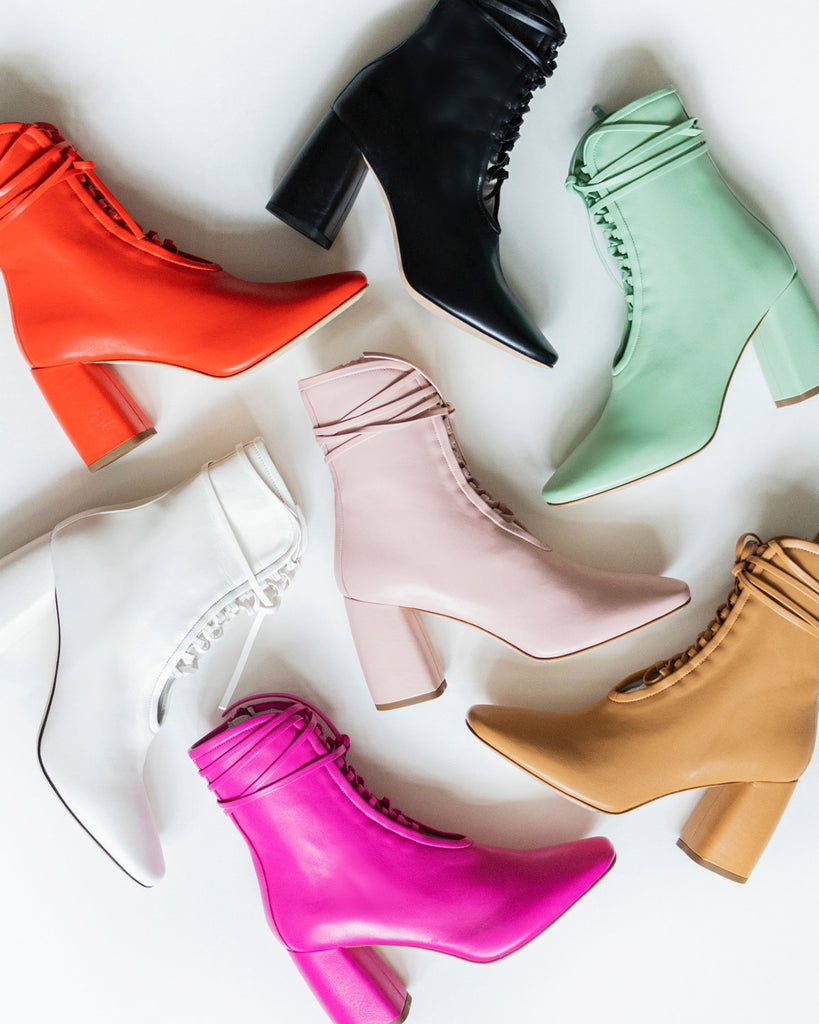


A 90 mm heel is about 3.54 inches, which puts it firmly in the high-heel category and above the 2 to 3 inch range most comfort guides associate with all-day wear. The most comfortable 90mm heels work because they manage pitch, forefoot pressure, cushioning, and fit far better than the average dress shoe.
You feel this difference long before you can describe it. It's the meeting that runs into dinner, the wedding that turns into dancing, the city day that includes stairs, pavement, and too much standing. The shoe either supports your life, or it subtly starts negotiating against it.
For years, women accepted the ritual of the backup flat. Beautiful heel on the way in. Emergency shoe on the way home. I've never thought that compromise was good enough for luxury footwear. A high heel can be elegant, handcrafted, and refined without punishing the person wearing it.
The question isn't whether a 90mm heel is high. It is. Rather, the question is whether the shoe has been engineered well enough to make that height wearable.
The End of the Backup Flats Era
The old rule was simple. If the heel looked polished enough for the boardroom or special enough for a wedding, it probably wasn't going to last through the full day. Women learned to plan around the pain.
That's why so many wardrobes became split in two. There were the “real” shoes, and then there were the shoes hidden in the tote.
I see that mindset changing. The women buying luxury now want day-to-night versatility, not fantasy products. They want a pump or bootie that can handle a commute, a presentation, a dinner reservation, and the walk back to the car. They want style that performs.
You shouldn't have to choose between looking composed at 9 a.m. and being able to stand comfortably at 9 p.m.
That shift starts with one honest point. A 90mm heel is not a comfort heel by default. It only becomes wearable when the designer treats comfort as part of the architecture, not as a soft insole added at the end.
In the studio, the conversation always gets practical. Not “Is it pretty?” first. But “Where will pressure land?” “How stable is the heel placement?” “Will the toe box punish the foot by lunch?” Those questions matter more than marketing language.
If you're building a wardrobe for work, event dressing, or polished daily wear, this same thinking applies. A shoe that works in real life has to respect movement, standing time, and the way feet swell through the day. That's why a thoughtful guide to office shoes for women matters just as much as the silhouette itself.
Luxury should not be painful. That idea sounds obvious, but in footwear it still changes everything.
The Anatomy of a Genuinely Comfortable High Heel
A comfortable 90mm heel starts with structure. I often think of a shoe as a chair for your feet. If the chair is balanced, supportive, and shaped correctly, you settle into it. If it's off by even a little, your body starts compensating immediately.

Pitch matters more than most shoppers realize
At this height, the angle inside the shoe is everything. A neutral explainer on comfortable heels and forefoot load notes that a 90 mm heel is a biomechanical high-heel threshold for most wearers because plantar load shifts toward the forefoot as heel height rises. That's why this category becomes much less forgiving than a mid-heel.
The heel number alone doesn't tell the whole story. What matters is how the shoe redistributes that force.
A well-designed 90mm heel often includes:
- Controlled heel-to-toe drop so the foot doesn't feel sharply tipped forward
- A contoured insole that spreads pressure instead of creating one hot spot under the ball of the foot
- Support through the arch so the forefoot doesn't do all the work
- Upper stability that keeps the foot from sliding forward with each step
If those elements are missing, the heel can feel dramatic in all the wrong ways.
The toe box decides whether elegance turns into pain
A pointed shoe can still be comfortable. The problem isn't the visual shape alone. The problem is when the internal shape doesn't allow the foot to sit naturally.
A good toe box gives the forefoot enough room to exist without sloshing around. That sounds simple, but it's where many high heels fail. If the toes are compressed, pressure rises quickly and walking gets shorter, stiffer, and less graceful.
Practical rule: If your toes are already negotiating for space when you first try the shoe on, the problem won't improve once your feet warm up.
Cushioning has to be strategic
Softness is not the same as support. A flat layer of padding may feel pleasant for a few minutes, but it often compresses fast and leaves the same pressure points underneath.
The best all-day high heels use cushioning in zones. Usually that means targeted support under the ball of the foot, meaningful arch contact, and some shock absorption where the heel strikes.
That's also why details like high heel arch support deserve more attention than they usually get. In a 90mm shoe, comfort isn't one feature. It's a system.
Why Do Most 90mm Heels Hurt After Two Hours
Most painful high heels aren't exposing a weakness in your feet. They're exposing a design shortcut.

A consumer guide from Calla explains that 90 mm is approximately 3.54 inches, which places it firmly in the high-heel category, while 2 to 3 inches is the range most comfort-focused guides identify as most wearable for all-day use. It also notes that higher heels put more pressure on the foot, which is exactly why a 90mm style needs serious compensation through cushioning and pitch control in order to feel wearable for longer periods. You can read that context in Calla's guide to the most comfortable heels.
Where the failure usually happens
In mass-market and fashion-first heels, I see the same issues over and over:
- The pitch is too aggressive and pushes the body forward
- The sole is rigid and doesn't soften impact where it needs to
- The foot slides toward the toe because the upper doesn't hold it properly
- The toe box narrows too early, which squeezes the forefoot instead of framing it
When all of that happens at once, the shoe doesn't just feel high. It feels relentless.
Why the two-hour mark feels so common
The first stretch of wear is often deceptive. You're fresh, seated more often, and not yet irritated by repetitive pressure. Then the pattern builds. Standing in place, walking on hard surfaces, and climbing stairs all magnify the same stress concentration at the front of the foot.
That's why a heel can feel fine in a fitting room and disappointing in real life.
I always tell clients to separate event comfort from movement comfort. A shoe can be lovely for arriving, sitting, and posing. That does not mean it's built for a city day. If you need practical guidance on extending wear time, this piece on how to wear heels comfortably is useful because it forces the conversation back to mechanics, not wishful thinking.
If a 90mm heel hurts quickly, the answer usually isn't “I need to get used to heels.” It's “this shoe is asking my forefoot to do too much.”
Finding Your Perfect Fit For Any Foot Shape
A 90mm heel can feel calm and balanced on one foot, then harsh on another. The difference is rarely toughness or tolerance. It is geometry.
As a designer, I start with the same question every time. Where does this foot need space, and where does it need containment? That diagnostic matters more than any blanket promise of comfort. A helpful consumer roundup on comfortable heels for women points in the right direction by focusing on shape-specific needs like bunions, wider forefeet, and sensitive pressure points instead of relying on generic rankings.

A good fit test is simple. Identify where your foot expands under load, then check whether the shoe supports that shape or fights it. That is how you separate a pretty fitting-room shoe from one you will still want on after dinner.
If you have bunions or a wider forefoot
The forefoot needs usable volume, not just a label that says "wide." In the studio, I look at where the shoe breaks across the ball joint. If the upper cuts across the widest point of your foot, pressure builds fast.
Look for:
- Softer uppers that give at the joint instead of pressing into it
- A toe box with real width where the forefoot spreads
- Minimal internal seams or stiff reinforcements near the bunion area
Patent leather and sharply tapered toes can still work for some feet, but they leave less margin for error. If width is a recurring issue, this guide on how to tell if you need wide shoes helps you assess the shape you need.
If you have a narrow heel
Rearfoot fit controls more than people expect. A loose heel counter changes your gait. You start clawing with your toes to keep the shoe on, and that extra gripping creates fatigue through the arch and forefoot.
A better match usually has:
- A vamp that holds the foot farther back on the shoe
- An upper line that sits close to the heel without gaping
- A rear shape that cups the heel instead of letting it lift
This is why two pumps with the same heel height can wear so differently. One stays with the foot. The other has to be managed all day.
If you have high arches
High arches often need contact through the middle of the foot. If there is too much empty space under the arch, the shoe stops sharing load properly. The heel and ball of foot do all the work.
I usually advise clients to judge support before softness. Extra padding can feel pleasant at first touch, but a contoured footbed and a stable midfoot are often what extend wear time.
Good fit means the shoe works with your foot's structure, so pressure is distributed instead of piling up in one spot.
A simple fit diagnostic before you buy
Use this checklist when you try on a 90mm heel:
| Fit checkpoint | What you want to feel |
|---|---|
| Toe position | Toes sit naturally without folding or immediate rubbing |
| Heel hold | The back stays secure with no significant slip when you walk |
| Arch contact | The midfoot feels supported instead of suspended |
| Forward slide | Your foot stays placed, rather than drifting into the toe box |
| Standing test | Pressure feels balanced across the foot, not concentrated in one hot spot |
Daniella Shevel is a useful benchmark here because the design approach centers on glove-fit construction, shape-conscious support, and handcrafted proportions. For shoppers who have been underserved by standard luxury sizing, that kind of build philosophy shows what a 90mm heel can feel like when fit is treated as engineering instead of marketing.
Styling Comfortable Heels From Commute To Cocktails
A wearable 90mm heel earns its place by surviving context. It has to move from one setting to another without asking for a wardrobe reset halfway through the day.
That doesn't mean every 90mm heel should be your subway shoe. It means the right one can cover far more of your day than people expect, if you match the silhouette to the job.
For the office and city movement
If your day includes sidewalks, elevators, standing meetings, and dinner after work, stability becomes part of style. A pump or bootie with a secure upper and balanced heel placement usually performs better than a very open, very delicate design.
For this kind of schedule, I lean toward:
- Higher-vamp pumps that hold the foot in place
- Booties that add shaft support
- Cleaner lasts that look polished with suiting and denim alike
A commute-to-meeting wardrobe also benefits from restraint. You want a shoe that looks intentional at noon and still sharp at 8 p.m.
For weddings and long event dressing
Event comfort is its own category. Open-toe or more forgiving front shapes can sometimes feel easier over several hours of standing because they reduce crowding at the forefoot.
A wedding guest should ask different questions than an executive. Will you be standing through a ceremony? Walking on grass or stone? Dancing later? The most elegant answer is often not the flimsiest stiletto.
A heel can be beautiful for a seated dinner and still be the wrong choice for a ceremony lawn, a museum day, or a city commute.
For travel and day-to-night packing
People often overestimate versatility. Some 90mm heels are manageable for short windows. Fewer are comfortable for serious walking.
A feature focused on comfortable nude heels and real-life wear highlights the important distinction between comfortable for an event and comfortable for all-day walking. It notes that heel pitch and forefoot pressure are the main determinants of walking comfort, and that only designs engineered to reduce pitch and cushion the forefoot are viable for a 10,00-step day that includes commuting and standing.
That's the right lens. Don't ask whether a heel is “comfortable” in the abstract. Ask whether it fits your actual itinerary.
For a travel wardrobe, I'd divide shoes this way:
- City dinner heel for polished evening wear
- Stable day shoe for movement-heavy hours
- One crossover style that can bridge office, dinner, and moderate walking
That's how day-to-night versatility stops being a slogan and starts becoming useful.
The Daniella Shevel Difference Engineering Comfort
The part most shoppers never see is the editing. Good heel design is often a process of removing small annoyances before they become big ones.
A beautiful line matters. So does the leather, the finish, the silhouette, and the way the shoe reads from across the room. But if the balance is off, none of that survives contact with real life.

What comfort-first engineering usually includes
When I review a luxury heel that feels expensive and wearable, these are the signs I look for:
- An anatomically sensible last that follows the foot instead of fighting it
- Balanced heel placement so the body feels centered
- Targeted cushioning rather than generic softness
- Supple materials that adapt with wear
- Internal construction that limits forward slide
In handcrafted Italian and Portuguese craftsmanship, these refinements often show up in subtle ways. The shoe feels calmer. The walk looks smoother. The wearer stops thinking about survival.
This video gives a useful visual sense of how comfort and luxury can be discussed together in footwear design.
What doesn't work at 90mm
At this height, decorative thinking fails fast. A thin pretty sole with no meaningful support. A dramatic toe shape with no internal volume. A heel placed for appearance rather than balance. Those choices photograph well and wear poorly.
I've spent enough time in factories to know that comfort doesn't happen by accident. It comes from repeated fit adjustments, material testing, and saying no to details that make the shoe look slightly sharper but feel significantly worse.
The most luxurious heel is the one that lets you stay present in your day instead of counting the minutes until you can take it off.
That's also why sustainable luxury and comfort-first design belong in the same conversation. Shoes you can wear are the shoes you keep, repair, and reach for again.
Investing in Sustainable Luxury That Lasts
The most comfortable 90mm heels are rarely impulse purchases. They're considered pieces. You buy them because they solve a problem in your wardrobe and keep solving it over time.
That's where sustainable luxury becomes practical, not abstract. Handcrafted footwear made in small batches, with materials chosen for longevity and fit, usually supports a buy-less-buy-better approach. The goal isn't a closet full of painful options. It's a tighter edit of shoes that work.
That thinking also favors brands that help extend the life of what you own. Repair services, stretching, and material care matter. So does circularity. Daniella Shevel's sustainability page outlines a broader commitment to longer wear, responsible production, and a donation partnership that gives pre-loved shoes another life while offering store credit.
If you're shopping well, ask one final question before you buy. Will this shoe still serve me after the event, after the season, after the first impression fades? If the answer is yes, that's where value begins.
If you're ready to shop a pair built for polished, real-life wear, explore Daniella Shevel and find the comfortable heel that can carry you from morning meetings to evening plans without the backup flats.
Written by Daniella Shevel, Designer & Founder