

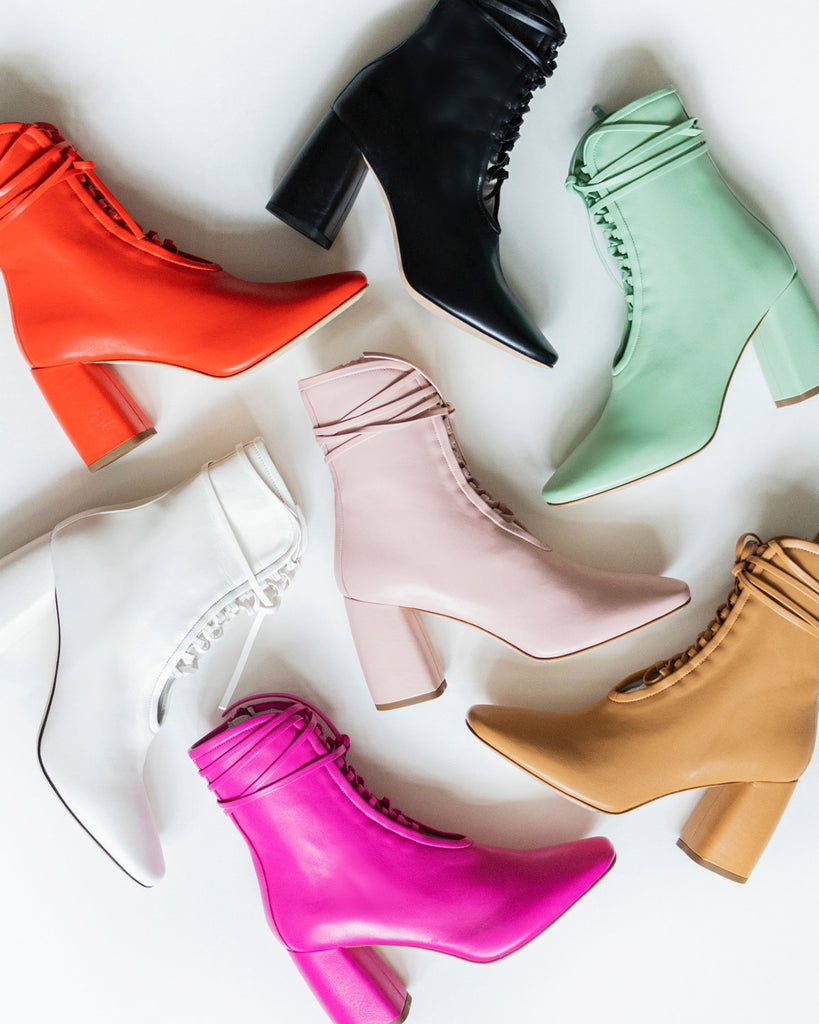


Styling ankle booties comes down to two moves: choose a silhouette that supports your leg line, and control the space between your hem and the top of the boot. The most reliable proportion is a hem that sits just above the ankle bone, with roughly 2 to 5 inches of skin when you're wearing cropped lengths, because that keeps the line clean and prevents bunching.
If you're standing in front of your closet wondering why one pair looks polished and another looks awkward, the answer usually isn't your outfit. It's the boot architecture. I always style from the shoe up because the boot decides the line of the leg, the weight of the outfit, and whether you'll still feel good walking home after dinner.
I've spent years obsessing over what makes a shoe flattering and wearable at the same time. That's why I don't believe in “pretty but impossible.” Luxury should carry you through your day, not punish you for having one.
The Foundation of Flawless Style Your Bootie Silhouette
The best ankle-boot outfits start with the right shoe. Not the blazer. Not the jeans. The boot.
If you get the silhouette right first, the rest becomes easy. If you get it wrong, you'll keep changing your outfit when the underlying issue is the shape at your ankle.
Start with the leg line
Modern styling advice consistently favors leg-lengthening details like a pointed toe, a low-cut front, or a shaft that sits above the ankle bone. A taller or snugger shaft also works especially well with skinny jeans and midi skirts because it keeps the line clean, as noted in this guide on how to style ankle boots.
That's the first filter I use.
If you want a sharper, more elongated look, choose:
- Pointed toe: Best for office looks, trousers, and evenings out.
- Low-cut vamp: Useful when you want more visual length through the front of the foot.
- Close-fitting shaft: Keeps skirts and slim pants from looking heavy at the ankle.
If you want ease and softness, choose:
- Round or almond toe: More relaxed, more classic, still polished.
- Block heel: Better for long days, commutes, and city walking.
- Pull-on or zip entry: Faster, cleaner, less fuss in real life.

Match the material to the job
A sleek leather or suede boot reads differently from a mesh or stretch style. Material changes the whole mood.
I think of it this way:
| Boot material | What it does visually | Where I'd wear it |
|---|---|---|
| Smooth leather | Crisp, structured, refined | Office, meetings, dinner |
| Suede | Softer, richer, more tactile | Day looks, travel, transitional weather |
| Mesh or stretch | Light, modern, body-skimming | Evening, creative work settings, warmer days |
This is where comfort-first design matters. A boot can look sculptural and still move with you. When I visit factories in Italy and Portugal, I pay attention to flex, lining, and how the upper holds the ankle. Those details aren't glamorous in a product description, but they're exactly why one boot becomes your default and another sits untouched.
Practical rule: If the shaft fights the line of your hem, the outfit loses. If the shaft follows the line of your leg, almost everything else falls into place.
My blunt opinion on what to buy
If you own only one ankle bootie, make it sleek. A close-fitting shaft, refined toe shape, and stable heel will carry far more of your wardrobe than a novelty boot ever will.
I'd also avoid starting with a bulky shaft unless your wardrobe is mostly leggings or very slim denim. Volume at the ankle is hard to style and even harder to make look expensive.
For more visual examples of refined black suede styling, I'd look at these suede black booties outfit ideas. If your wardrobe leans structured, start there and build outward.
One grounded option in this category is the Daniella Shevel boot assortment, including styles like ROMI and CLEO, which reflect the brand's comfort-first design approach and handcrafted production in Italy, Portugal, and Brazil. The point isn't hype. It's that the shape and construction have to work before the outfit ever will.
How Do You Master Ankle Bootie Proportions
Most women don't need more outfit ideas. They need one clear answer to a simple question. Where should the hem hit?
Here's the answer I use constantly: your hem should sit just above the ankle bone, and cropped lengths can show roughly 2 to 5 inches of skin for the cleanest effect, according to this ankle-boot styling guide from Lenny Lane. That proportion keeps the silhouette well-defined and avoids bunching.

Use these pairing rules
I don't style ankle booties by trend. I style them by hem behavior.
- Skinny jeans: Tuck them only if the shaft is slim enough to avoid bunching. If not, wear a cropped pair that leaves a clean gap.
- Straight-leg jeans: The hem should graze the top of the boot. That's the easiest modern formula.
- Wide-leg trousers: Let the pant fall long and clean so the boot supports the line underneath instead of interrupting it.
- Midi skirts: Pair with a close shaft so the lower leg doesn't look chopped.
- Mini hemlines: Keep the boot sharp and simple. Too much bulk makes the leg look shorter.
The gap should look deliberate
The worst ankle-boot outfit usually has one problem. The gap looks accidental.
A slim reveal of skin can be chic. A random sliver created by pants that are slightly too long or boots that are slightly too tall looks messy. Precision matters more here than people think.
A beautiful outfit can fall apart right at the ankle. That's why I treat hems like tailoring, not decoration.
My fit checklist before I leave the house
Ask yourself these three questions:
- Does the hem touch the boot cleanly, or hover with intention?
- Does the shaft follow the ankle, or stand away from it?
- Does anything wrinkle, stack, or collapse when you walk?
If the answer to the third question is yes, change one piece. Usually the fix is simpler than you think.
A well-cut pair of trousers and the right bootie can replace half the styling stress in your wardrobe. If you want to browse silhouettes with this proportion logic in mind, start with the ankle booties collection and evaluate each pair by shaft shape before anything else.
Outfit Formulas for Work Travel and Evening
Once the proportions are right, dressing gets fast. That's the main benefit.
I rely on repeatable formulas because they save time and remove bad decisions. One great ankle boot should move through your calendar without asking for a costume change.
A quick visual reference helps:

Boardroom to dinner
This is the formula I trust when I need to look authoritative at noon and still elegant at eight.
- Boot: Sleek heeled ankle boot, preferably with a pointed or refined almond toe
- Bottom: Cropped well-fitting trouser with a clean break
- Top layer: Fluid blouse and a structured blazer
- Finish: Minimal jewelry, proper handbag, no visual clutter
The boot does the heavy lifting here. It gives you more polish than a flat and more practicality than a delicate pump.
If your work wardrobe needs sharper footwear logic overall, read my take on office shoes for women. I care less about dress codes than I do about whether the shoe can survive a real day.
Weekend city uniform
My favorite off-duty formula is quieter.
Start with dark straight-leg denim, add a knit, then use an ankle boot with a stable heel or refined flat profile. Keep the shaft neat and the hem clean. That combination always looks considered, even when you got dressed in five minutes.
This is also where handcrafted construction matters. Weekend wear sounds casual, but it's often harder on your shoes because you're walking more, standing longer, and asking one pair to do everything.
Here's a video for more styling context and movement:
Evening without pain
Evening ankle booties should sharpen the look, not turn it into a struggle.
Try this:
- Silk or satin skirt
- Fine knit or clean shell top
- Heeled ankle boot with a close shaft
- Long coat or structured jacket
A slim boot under a midi or slip skirt creates an elegant lower line. It feels dressed up without becoming fragile. That matters if your evening includes stairs, sidewalks, and standing for longer than expected.
What I tell clients: If you can't walk naturally in the shoe, it won't look luxurious for long.
The Art of Commuting and Travel in Ankle Booties
Here's my strong opinion: If a shoe can't handle movement, it isn't luxury. It's decoration.
I design and buy with a no-backup-flats mindset because that's how real women live. You're not dressing for one perfect entrance. You're dressing for subway steps, airport terminals, weather changes, meetings, and dinner after all of it.

Build around function first
For commute-ready ankle-boot styling, experts recommend shafts of roughly 5–7 inches, close-fitting openings, and weatherproof materials. The same guidance stresses that hem length needs to align with the boot architecture to prevent stacked fabric and bulk at the ankle, especially when walking, according to this guide on winter ankle-boot outfit ideas and tips.
That advice is practical, and I agree with it.
When I'm choosing a boot for travel or a dense day in the city, I care about:
- Shaft fit: It should sit close, not flap around.
- Entry: Side zippers make life easier.
- Surface grip: A sole with traction matters more than people admit.
- Material resilience: Weatherproof finishes and sturdy uppers protect the shape.
Don't pack shoes that need babysitting
Travel shoes should earn their place in your suitcase. If they only work with one hemline, one weather condition, or one dinner reservation, leave them home.
I prefer a pair that can handle:
- Airport dressing: Jeans, knit, trench, one carry-on
- City walking: Pavement, uneven streets, long lunches, museum days
- Evening shift: A quick lipstick change, not a shoe swap
For women who walk on uneven streets or travel often, this guide to designer shoes for cobblestone streets is a useful place to refine your standards. Beautiful shoes need grip, flexibility, and balance if they're going to leave the taxi.
What comfort-first design should actually mean
“Comfort” is overused. I care about specifics.
I want cushioning that supports repeat wear, a construction that flexes where the foot bends, and an upper that holds the foot without pinching. That's where handcrafted footwear from strong Italian or Portuguese factories often stands apart. The difference shows up after hours, not in the first thirty seconds.
Sustainable luxury also enters here. Buying one pair that handles work, travel, and evening is smarter than buying three pairs that each fail at one of those jobs.
Buy the boot that can keep its shape, support your stride, and still look polished at the end of the day. That's the pair you'll actually wear.
Your Next Step Into Comfortable Luxury
If you've been overthinking how to style ankle booties, simplify the process. Start with the boot. Then let the hem do its job.
That approach solves almost everything. A flattering silhouette, a clean ankle line, and thoughtful construction will carry you through more outfits than trend-driven styling ever will. That's why I always come back to craftsmanship, comfort-first design, and day-to-night versatility.
I also think women are done accepting the old trade-off between elegance and ease. You shouldn't have to choose between looking refined and feeling stable on your feet. The right ankle boot gives you both.
If comfort in heels is part of your bigger wardrobe equation, read my advice on how to wear heels comfortably. It's the same philosophy. Better design leads to better dressing.
If you're ready for ankle booties that support real life and still look polished, explore Daniella Shevel and shop a pair built for workdays, travel days, and evenings out. Written by Daniella Shevel, Designer & Founder.