

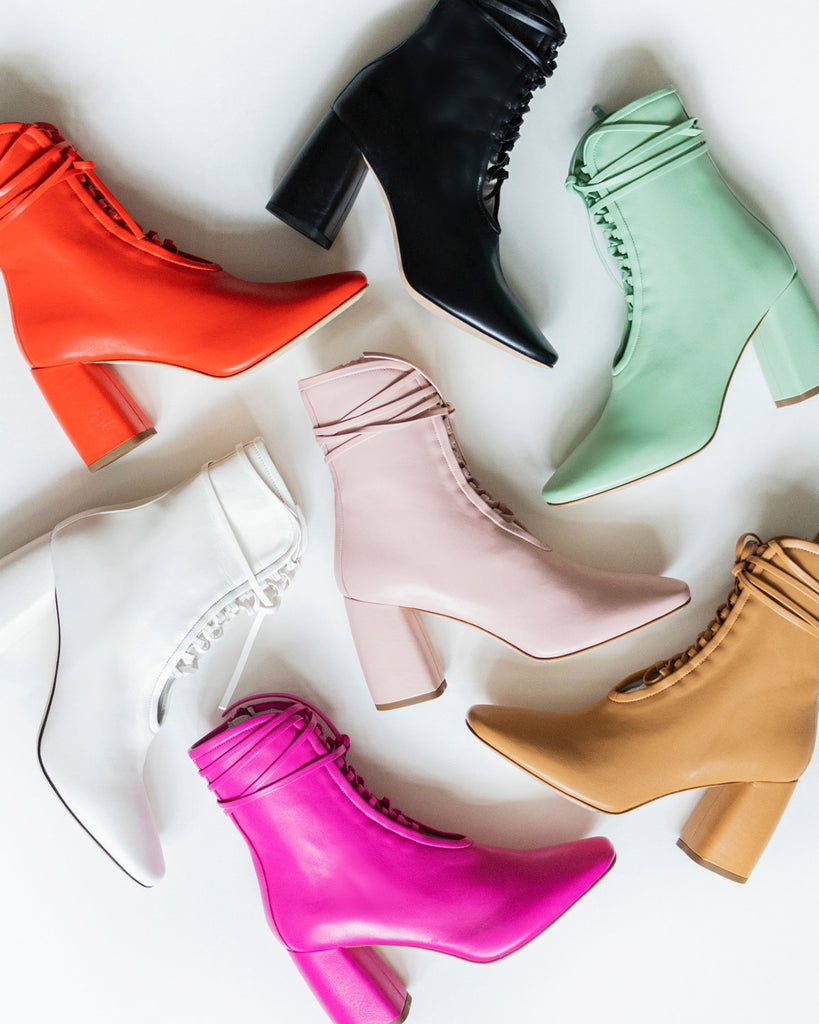


A lot of brides know the exact moment they stop thinking about the music, the flowers, or the photos and start thinking only about their feet. It usually happens when the ceremony shoe that looked perfect in a fitting starts pinching before the party has even found its rhythm.
The best bridal after party shoes solve that problem before it starts. They aren't a throwaway second pair. They're the pair that lets you keep moving, keep celebrating, and keep feeling like yourself long after the formalities are over.
Written by Daniella Shevel, Designer & Founder
The After-Party Dream vs The Painful Reality
The fantasy is simple. You walk into the reception, your dress still looks beautiful, the room softens, the music gets louder, and you stay on the dance floor until the last song.
Actual circumstances are often less glamorous. A bride spends months choosing the right ceremony heel, only to end up barefoot under the table, carrying her shoes in one hand and trying not to trip over her hem in the other.

I've watched bridal footwear change because women got tired of treating pain as part of elegance. A recent wedding footwear trend report notes that comfort-focused alternatives such as bridal sneakers have gained traction, with retailers like Revolve and Shopbop featuring dedicated collections and platforms like Etsy surfacing bridal after-party shoe categories. That shift tells you something important. Brides aren't shopping for a single posed moment anymore. They're shopping for a full night.
The real job of the second shoe
An after-party shoe isn't there to rescue a bad choice. It should be part of the plan from the beginning.
What works:
- A shoe that still feels celebratory so your look doesn't collapse once the formal photos are done
- A shape you can move in when the night becomes more active
- A style with life beyond the wedding for dinners, events, and travel later
What doesn't work:
- A last-minute flat that changes your posture and drags your dress
- A flimsy novelty pair that looks fun online but gives up fast in real life
- A backup you already expect to hate, because you'll wait too long to change into it
The most useful after-party shoe doesn't look like surrender. It looks like intention.
I believe in a no-backup-flats philosophy for brides who want to enjoy the whole evening without carrying a tote of emergency options. The right pair should feel considered, not apologetic.
If you're thinking through dancing comfort early, my guide to shoes for dancing at a wedding is a strong place to start.
Why Do You Need a Dedicated After-Party Shoe?
A wedding asks a lot from a shoe. You're standing for long stretches, shifting your weight during photos, walking across different surfaces, greeting people, and then asking that same pair to handle hours of dancing.
That is a different job from looking elegant for a ceremony.
According to bridal footwear guidance focused on comfort and wearability, traditional thin-soled heels can cause significant pain within 2 to 3 hours, and approximately 70 to 80% of brides report significant foot discomfort by mid-reception when they wear ceremony heels exclusively. That's why the recommendation to bring a more comfortable second pair became so common.
Ceremony shoes and party shoes do different work
A ceremony heel usually prioritizes line, posture, and visual effect. An after-party shoe has to manage repetition. Repetition is what changes everything.
By the time you're deep into the evening, your feet have already done all of this:
- Absorbed pressure while standing through the ceremony and cocktail hour
- Expanded with heat and movement as the event goes on
- Taken impact repeatedly once dancing starts
A shoe that felt fine when you stepped out of the car can feel very different later.
Why this matters more than people admit
Brides often think changing shoes is a style decision. It isn't. It's an energy decision.
When your feet hurt, you don't just lose comfort. You lose presence. You stop circulating. You sit longer. You skip songs you would've loved. You remember the discomfort more vividly than the music.
Practical rule: If you want to dance, greet guests, and stay standing through the final part of the night, choose footwear for the longest stretch of wear, not just the first entrance.
That doesn't mean your ceremony shoe was a mistake. It means your wedding has chapters, and each one places different demands on your body.
The investment logic
A dedicated after-party shoe makes sense when it gives you all three of these:
| Need | Why it matters | Better choice |
|---|---|---|
| Endurance | Late-night discomfort changes the mood fast | Cushioned, supportive construction |
| Continuity | A dramatic height drop can disrupt your dress | A lower heel or stable platform |
| Rewear value | Single-use shoes rarely feel luxurious later | A pair you can wear beyond the wedding |
That last point matters to me. Real luxury isn't something you survive for one evening. It's something you enjoy for years.
The Holy Trinity Style Comfort and Material
A beautiful after-party shoe has to satisfy three standards at once. If one fails, the whole experience usually fails with it.
I always look at style, comfort, and material together. Brides sometimes shop those in the opposite order. They start with sparkle, then hope the rest works itself out. It rarely does.

Style has to survive movement
The right style isn't only photogenic when you're standing still. It has to hold its elegance once the night becomes less controlled.
The silhouettes I trust most for bridal after party shoes are usually:
- Refined low heels that preserve polish without demanding too much from the foot
- Pointed booties that feel modern and secure
- Clean pumps or slingbacks with enough structure to stay stable
- Platforms with balance rather than exaggerated height for its own sake
A useful way to think about it is this. Your after-party pair should still make sense if your reception runs late, your dress changes slightly in mood, or you wear the shoes again with tailoring or denim months from now.
For brides considering a steadier silhouette, this piece on the block heel pump is worth reading.
Comfort starts with construction
Comfort isn't a soft, vague idea. It's built.
When I assess a shoe for all-night wear, I look at the details women often aren't told to ask about:
- Pitch: how steeply your foot is angled forward
- Heel stability: whether the base supports you when you turn and pivot
- Underfoot cushioning: whether the sole absorbs impact
- Toe shape and placement: whether your toes are forced into pressure points
A shoe can be high and still feel manageable. A shoe can also be low and feel terrible. Height alone doesn't tell you enough.
What usually doesn't work is a thin, rigid shoe with little give. It may look sleek in a still image, but it doesn't cooperate once your body starts moving naturally.
Material changes everything
Material decides how a shoe breaks in, how it responds to heat, and how kindly it treats the foot when swelling starts.
I prefer materials that mold rather than fight back. That can include:
- Soft leather that adapts with wear
- Breathable mesh where you need flexibility
- Supple linings that reduce friction
- Handcrafted construction that feels less stiff from the start
Italian and Portuguese craftsmanship still matters here. Not because the phrase sounds luxurious, but because experienced small-batch makers understand tension, finishing, and how a shoe should soften without losing shape.
If you're shopping intelligently, ask yourself three questions before you buy:
- Can I imagine wearing this for hours, not minutes?
- Will this still look elegant once I'm moving quickly?
- Does the material work with my foot, or against it?
If the answer to any one of those is no, keep looking.
How to Match Shoes to Your Dress and Venue
One of the most overlooked bridal problems is the height change between your ceremony shoe and your after-party shoe. Brides tend to focus on comfort alone, then discover the dress now catches the floor differently.
That's why bridal after party shoes need to be chosen with the hem in mind, not after the hem has already been set.

A video discussion of wedding shoe transitions and hem issues notes that many guides talk about pinning for flats but miss the nuance of moving into a lower heel for the after-party, even though surveys from The Knot cited there show up to 70% of brides report dress-tripping issues related to footwear changes. The smarter move is usually a day-to-night shoe with a smaller height differential.
Start with your dress, not the shoe
If you're wearing a floor-length gown, your after-party pair should preserve enough height that the hem still clears naturally. A modest drop often works better than a dramatic one.
Think about these dress categories:
| Dress style | Safer after-party direction | What to avoid |
|---|---|---|
| Full-length gown | Low heel, stable block heel, or balanced platform | Sudden switch to a very flat shoe |
| Tea-length dress | More freedom to change shape or height | Overcorrecting into an overly casual pair |
| Mini or second look | Fashion can lead because hem risk is lower | Shoes that feel disconnected from the outfit |
Brides drawn to classic bridal styling often like a satin silhouette with enough structure to bridge ceremony and reception. This guide to white satin pumps offers a helpful starting point for thinking through that look.
Venue should influence the base of the shoe
Surface matters as much as the dress.
For practical decision-making, I divide venues like this:
-
Garden or outdoor wedding
- A broader heel base helps
- Avoid delicate shapes that sink or wobble
- Closed or more secure uppers can feel steadier on uneven ground
-
City wedding
- Booties and secure pumps often outperform strappy shoes
- Street-to-venue transitions matter
- You want a sole that can handle movement before and after the party
-
Ballroom or formal indoor venue
- You can prioritize line a bit more
- Smooth floors reward stability and grip
- A polished low heel can shine in this setting
A short visual can help if you're still comparing silhouettes and proportions:
What tends to work best in practice
I usually advise brides to test the full sequence, not the shoe in isolation. Put the dress on. Walk. Turn. Sit. Climb a stair. Dance for a few minutes. Then switch into the after-party pair and repeat.
If your hem suddenly changes your stride, the issue isn't only comfort. It's geometry.
That simple test catches problems early. It also keeps you from making a common mistake, which is buying a reception shoe that feels good in your hand but behaves differently once the whole look is on your body.
A Fit for Every Foot Solving Bunion Wide and Narrow Feet Woes
Traditional luxury footwear still leaves too many women out of the conversation. If you have bunions, a high arch, a narrow heel, or a wider forefoot, you're often told to size up, add padding, or accept that beauty comes with compromise.
I don't agree with that.
Aesthetic advice is easy to find. Fit advice is harder, even though the need is obvious. A bridal style article highlighting gaps in fit-focused guidance cites 28% growth in searches for "bunion-friendly bridal heels" and notes a Nordstrom Fit Report finding that 42% of women over 30 have been unable to find a proper fit from traditional luxury brands. That tells me the problem isn't niche. It's widespread.
If you have bunions or width concerns
You need room in the right place, not more space everywhere.
Sizing up often creates a different problem. The front may feel easier, but the heel slips and the whole shoe becomes unstable. Better solutions usually include softer uppers, more forgiving materials, and shapes that don't force the foot into a narrow visual fantasy.
Look for:
- Stretch where pressure concentrates
- A toe shape that doesn't collapse inward
- Materials that mold with wear
- Construction that reduces rubbing at the joint
For more focused advice, this guide to bunion-friendly wedding shoes can help you evaluate options more critically.
If you have narrow feet or heel slip
Narrow-footed brides often get overlooked because people assume less volume means fewer problems. In reality, a shoe that doesn't hold the foot properly can be exhausting.
What helps:
- A higher vamp or more foot coverage
- Secure heel placement
- Shapes that hug the arch without squeezing the toes
This is why many women do better in booties or more structured pumps than in open, strappy styles for long events.
The best fit doesn't feel tight. It feels anchored.
Why handcrafted fit matters
Handcrafted shoes tend to give designers more control over where softness, support, and flexibility happen. That's one reason I care so much about artisanal construction. It allows for nuance.
A good bridal after-party shoe should accommodate how a foot behaves at night, not just how it measures in the morning. Feet warm up. They swell. They shift. The shoe should respect that.
If a bride has a more complicated fit profile, I always recommend testing shoes later in the day and wearing them indoors before the event. That reveals far more than a quick try-on ever will.
The Daniella Shevel Solution Handcrafted for Celebration
The bride kicks off dinner heels under the table, slips into her after-party pair, and expects relief. If that second shoe is poorly made, she gets a different problem. Sliding, rubbing, swelling, and that familiar moment when she starts scanning the room for somewhere to sit. I design against that moment.
My philosophy is simple. Luxury has to feel good on the foot, or it is missing the point. On a wedding day, comfort is part of the design brief from the first sketch.

Our handcrafted women's shoes approach begins in small batches with makers in Italy, Portugal, and Brazil. We pay close attention to line and proportion, but the hidden choices matter just as much. I focus on how the upper softens against the foot, where the shoe flexes, how the insole supports weight over hours, and how the fit holds up once the room gets warmer and feet start to swell.
That is why we build for motion, not just for photos.
We use memory foam cushioning because underfoot fatigue starts long before visible pain does. We use glove-fit stretch leathers because a wedding is not a static event, and the foot does not stay the same shape from ceremony to last dance. I care immensely about this combination because it solves a problem many dress shoes ignore. Brides want refinement, but they also need a shoe that can adapt without losing structure.
I also design with a clear point of view. I do not believe in the backup-flats plan. If a bride loves a heel, sandal, pump, or bootie, that shoe should be capable of carrying her through the celebration with confidence. The after-party pair should still look considered with the dress, still feel special, and still protect the foot at midnight.
Different silhouettes solve different problems.
- ROMI suits brides who want airflow, softness through the forefoot, and a modern finish that still feels polished.
- CLEO helps brides who need a lower heel for stamina but do not want the dress to lose its line.
- ISABELLA gives the bride a classic pump shape with more forgiveness underfoot than traditional occasion shoes usually offer.
I have spent years fitting women who were told their feet were hard to shop for. Many were dealing with bunions, width, or heel slip. The issue was rarely the foot itself. The issue was a shoe designed around appearance first and wear second. We reverse that order. We start with how the foot needs to feel at hour six, then refine the silhouette until it looks as beautiful as it performs.
That is also my definition of lasting luxury. A wedding shoe should not retire after one night. It should come back out for dinners, celebrations, work events, and trips because the craftsmanship, comfort, and design all still hold up.
Comfort is part of the beauty. It lets the night last.
Your Forever Shoes Start Here
It is the last hour of the wedding. The music is still on, your dress still looks right, and your feet should not be the reason the night ends early.
I design bridal shoes with a simple standard. If a pair is meant for your wedding, it has to carry you through the full celebration and still deserve a place in your wardrobe after. Luxury is not about tolerating pain for a beautiful silhouette. Luxury is a shoe that fits closely, cushions the foot properly, and keeps its shape while you move, dance, host, and stay present.
That is why we build our after-party styles by hand with comfort engineering in mind from the first sketch. Memory foam matters. A glove-like fit matters. The way the upper holds the foot without pinching matters. Those details are easy to miss on a product page, but you feel every one of them by the end of the night.
Choose the pair you would be happy to wear again. A wedding dinner. An anniversary trip. A black-tie event. A great bridal shoe should not become a keepsake you cannot stand in. It should become one of the best shoes you own.
Our styles are made for that kind of life. ROMI, CLEO, and ISABELLA each solve a different need, but they share the same goal. Beauty you can wear.