

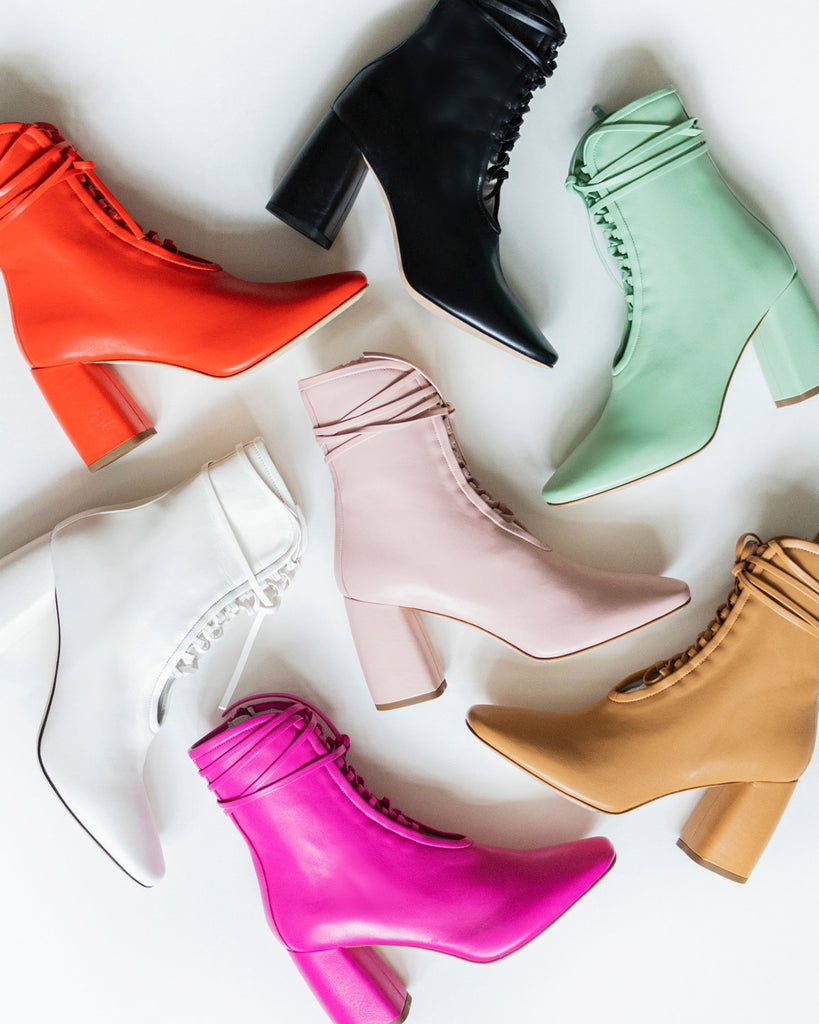


Yes, you can absolutely wear ankle booties with a wedding dress. The smartest choice is a structured ankle-high silhouette with a pointed toe and a 2.5 to 3 inch heel for formal or snowy settings, paired with comfort details that let you stay on your feet all day and night.
If you're reading this while staring at your dress hem, your venue photos, and a row of shoes that all look pretty but feel questionable, I'm going to save you time. Ankle booties for wedding dress styling work beautifully when the proportions are right, the heel is realistic, and the shoe is built for actual wear instead of a single photo.
I design shoes for women who don't want a backup pair hidden under the table. That includes brides, wedding guests, and women who know that elegance means nothing if you're limping by dinner. A wedding shoe should look refined, feel secure, and still make sense after the event is over.
Why Choose Ankle Booties for Your Wedding?
You step out of the car, your dress clears the pavement by an inch, and the ground is colder, rougher, and less forgiving than it looked in the venue photos. That is the moment a serious bridal shoe proves itself.
I recommend ankle booties for weddings because they solve real design problems. They keep the foot protected, hold the ankle more securely than a pump, and distribute pressure more intelligently when the construction is right. A bridal shoe should do more than look beautiful in a still photo. It should carry you through hours of standing, walking, turning, and dancing without punishing your feet.

The right bootie is engineered, not just styled
This is why I care about pitch first. If the heel height is attractive but the pitch is too steep, your weight drops forward into the ball of the foot and stays there all day. A well-made bridal bootie can carry a formal heel because the angle is balanced, the insole supports the foot properly, and the last is shaped for stability instead of display.
Memory foam matters too, but only when it is used with discipline. Too soft, and the foot sinks and strains. Too thin, and you feel every surface change under you. I prefer cushioning that absorbs impact while keeping the foot lifted and aligned.
Shaft height is the third detail brides miss. A bootie that ends at the wrong point can rub, cut the line of the ankle, or fight the hem of the gown. A refined shaft should feel close, smooth, and deliberate. No collapsing. No bulky break at the ankle.
You get polish with actual control
A pump leaves much more exposed. That can look elegant for a short ceremony and a controlled indoor setting, but weddings rarely stay controlled for long. Booties give you better footing on stone, grass, older floors, winter pavement, and long venue transitions. They also keep the silhouette sharp, especially with clean crepe, satin, or lace gowns often paired with timeless designer dresses.
I design for women who want confidence built into the shoe. That means a heel that feels planted, a toe shape that stays refined, and materials that move beautifully without turning stiff by hour three.
They earn their place after the wedding
A good bridal bootie should not feel disposable. It should feel like a piece of your wardrobe with a wedding-level finish. That is why I return to fine leather, precise pattern cutting, soft lining, and comfort construction again and again. Those details determine whether the shoe still looks graceful after a full day of wear and whether you will reach for it again.
If you want examples of that approach, browse this edit of bridal boots designed for polished, practical wedding wear.
My rule
Choose ankle booties if you want a wedding shoe with structure, protection, and longevity. Skip them only if the pair is poorly built, too stiff through the shaft, or pitched so aggressively that it asks your feet to suffer for the look. A beautiful bridal shoe should never require that trade.
Matching the Bootie Silhouette to Your Dress
Proportion decides everything here. Most styling mistakes happen because the bride shops the shoe in isolation, then tries to force it under a dress hem later.
For long-event wear, specialty bridal makers often focus on extra insole padding, and one bridal maker notes a minimum 4-week production time for custom making while designing boots for all-day wear, as discussed in this guide on how to wear ankle boots. That same source also points to the practical checks that matter before the wedding: heel-to-toe pitch, ankle shaft friction, and toe-box pressure.

Long gowns need a disciplined shaft
With a full-length gown, the shaft should do one of two things. It should stay mostly hidden, or it should be visibly intentional.
The awkward middle is what ruins the line. A boot that peeks out unpredictably, leaves an ankle gap, or bunches under the hem makes the whole outfit look unresolved.
Use this filter when you try pairs on:
- Choose a slim shaft: You want a close, clean line at the ankle.
- Favor a pointed toe: It creates a dressier, more flattering shape.
- Avoid excess volume: Too much bulk at the ankle shortens the leg visually.
A pointed toe almost always gives a bootie more formal authority. Rounder shapes feel casual much faster.
If your dress is sleek, bias-cut, crepe, or otherwise minimal, a narrow bootie works especially well. It keeps the line clean and supports a more elegant silhouette.
Tea-length and shorter hems can show more personality
If the shoe will be visible all day, then yes, the bootie becomes part of the outfit instead of a support piece. That means texture, mesh, satin, or subtle embellishment can work beautifully.
My preference is for a more fashion-conscious bootie shape. A refined mesh style can feel airy with a shorter bridal look, while a low, sculptural heel can keep the outfit grounded.
If you're still deciding whether a bootie is right for your look or if a pump might serve the dress better, it helps to compare with classic white satin pumps. Some gowns want continuity. Others need contrast.
You can also borrow inspiration from timeless designer dresses if you're still finalizing the silhouette itself. The dress shape often answers the shoe question faster than the shoe does.
Different dresses need different bootie behavior
Here's the simplest way I guide clients through it.
| Dress shape | Bootie direction | What to avoid |
|---|---|---|
| A-line | Pointed toe, slim shaft, moderate heel | Thick ankle volume |
| Column or slip | Clean upper, narrow toe, minimal hardware | Heavy soles |
| Tea-length | Visible detail, elegant texture, sharper silhouette | Overly casual boot finishes |
| Bridal suit or trousers | High-vamp bootie, tailored shaft, polished leather or mesh | Slouchy shafts |
| Fit-and-flare | Close ankle fit and sleek toe line | Anything that widens at the ankle |
Do the indoor trial before the wedding
This step matters more than most brides realize. Don't wait for the event to discover pressure points.
Try the shoes indoors with your dress or a similar hem. Walk. Turn. Sit. Stand still. Then pay attention to three things:
-
Pitch
If your weight is being thrown forward, you'll know quickly. -
Shaft friction
If the boot rubs at the ankle in a short test, it won't improve during a long celebration. -
Toe-box pressure
Beauty does not excuse crushed toes.
A bootie can be visually perfect and mechanically wrong. Ignore that, and you'll regret it before the first dance.
Selecting the Right Heel Height and Materials
You notice heel height the minute you stand in a bootie. If the pitch is too aggressive, your weight shifts forward, your posture changes, and the shoe starts working against you long before the reception is over. I design bridal booties to hold a refined line without forcing the foot into that forward slide.
For most weddings, I direct brides and guests to an ankle bootie with a pointed toe, a cleanly cut shaft, and a heel that stays in the moderate range. That proportion keeps the leg line long and the dress looking polished, especially under formal hems. For winter ceremonies, I cover that balance in more detail in my advice on winter wedding boots for the bride.

Choose the heel by how the shoe must perform
Start with the ground you will walk on. Pavement, stone, grass, snow, and slick indoor floors all punish a delicate heel. A wedding shoe has to stay elegant under pressure, not just in a fitting room.
Here is the standard I use:
- Low-to-mid block heel: Best for outdoor venues, winter weddings, and hours of standing because the base gives you better stability.
- Refined stiletto bootie: Best for indoor formality, smooth flooring, and brides who want a sharper, more architectural profile.
- Wedge: Serviceable in the right setting, but usually too heavy-looking for a luxurious bridal finish.
If your venue includes uneven ground or a garden path, review these block heel wedding shoes before you commit.
Heel height is only half the equation. Pitch matters more. A higher heel with intelligent pitch can feel better than a lower heel with poor balance, which is why I care so much about the internal architecture of the shoe, not just the measurement on paper.
Material decides structure, movement, and finish
Material changes how the bootie holds its shape over a full day. It also changes how much visual weight sits at the ankle, which is one of the first details I study against a dress hem.
Leather for precision
Smooth leather gives a bootie crisp structure and a polished surface. I prefer it for minimalist gowns, city weddings, and any look that needs a sharp finish. It also holds the shaft more cleanly, which keeps the ankle line neat instead of collapsing.
Suede for depth
Suede has a softer, richer surface that works beautifully in fall and winter. The key is keeping the silhouette sleek. If the shape gets too round or too casual, suede can pull the whole look away from bridal sophistication.
Mesh or lace for lightness
Sheer materials reduce visual density and let the foot read lighter under the dress. They also require excellent construction. Mesh must hold its line, the trim must sit flat, and the shaft height has to hit the ankle at the right point or the whole effect loses precision.
The ROMI mesh bootie fits naturally into this category. It is a mesh ankle bootie style from the brand for brides or guests who want coverage without heaviness.
Here's a visual breakdown to help you compare silhouettes and finishes in motion.
My rule for choosing well
I make this decision in a strict order:
- What surface will the shoe handle for hours?
- How much of the bootie will show under the hem?
- Does the material support the formality of the dress?
Practical rule: Choose shaft height that meets the ankle cleanly, keep the toe shape refined, and pick a material that supports the dress rather than competing with it.
The wrong choice usually looks pretty in isolation and disappointing in wear. The right choice is engineered. Heel, pitch, shaft height, and material must all agree.
The Secret to All-Day Wedding Comfort
Comfort is not luck. It's design.
When I work on a shoe, I'm not asking whether it looks elegant in a still image. I'm asking what happens after hours of standing, greeting, walking, dancing, and crossing a city block because the car couldn't pull up directly in front of the venue.

I start with pitch first
Most women don't describe discomfort by saying “the pitch is wrong,” but that's often the problem. They say the shoe throws them forward, burns the ball of the foot, or makes them grip with their toes.
That's why I care so much about balance. A wedding bootie has to distribute pressure well enough that you're not fighting the shoe by cocktail hour.
A graceful profile means nothing if the foot is sliding downhill inside it.
Cushioning has to support, not just soften
I believe in comfort-first design, but not the kind that turns a luxury shoe into something mushy and unstable. Good cushioning should absorb impact while preserving shape.
My own design philosophy has always been simple: luxury should not be painful. When we work with handcrafted construction and memory foam systems, the goal is to make the shoe feel supportive from day to night, not merely padded for a fitting-room test.
That's also why I prefer materials that mold and move. Handcrafted Italian and Portuguese craftsmanship matters here because experienced makers understand how to create a glove-like upper without making the shoe feel weak or sloppy.
A beautiful bootie should feel secure at the heel, smooth at the shaft, and calm under the ball of the foot.
Fit problems usually show up in predictable places
If a bootie is going to fail, it usually fails in one of these zones:
- At the ankle: The shaft cuts, rubs, or hits the wrong point.
- At the toe box: Pressure builds fast, especially in rigid materials.
- At the heel seat: Slippage creates friction and instability.
- At the arch and forefoot: The foot tires because the support isn't balanced.
This is why I always tell brides and guests to try their shoes in motion, not just in front of a mirror.
What I'd tell you in person
If you walked into a fitting with me, I'd ask you to stop focusing on whether the bootie looks “bridal enough.” I'd ask different questions.
- Do you feel stable when you turn?
- Does the ankle feel held without being trapped?
- Can your toes rest naturally?
- Would you choose this pair if you had to stay in it through dinner?
Those answers matter more than the trend cycle.
For more guidance on what comfortable event footwear should feel like, read wedding shoes that don't hurt. If you're shopping as a guest and want a wardrobe that can move from ceremony to dinner to future events, you can also browse the brand's comfortable wedding guest shoes collection.
Comfort is also confidence
A woman in pain moves differently. She stands differently. She stops enjoying herself.
That's why I care about day-to-night versatility so much. The right bootie lets you stay present. You're not thinking about the floor, the stairs, or when you can sit down. You're thinking about the person you came to celebrate.
If you want a lower-profile option that still fits this philosophy, explore the CLEO low-heel boot. If you want a sharper bridal-leaning shape, the ISABELLA bootie is a useful place to start.
Caring For Your Investment Bridal Booties
A wedding bootie should not become a box memory. If you buy well, care well, and store well, it should keep earning its place in your wardrobe.
That's the heart of sustainable luxury. Buy less. Buy better. Wear it again.
Care depends on the material
Leather, suede, and mesh don't want the same treatment. Treat them like they're interchangeable and you shorten the life of the shoe.
Use a simple approach:
- Smooth leather: Wipe it after wear, keep it away from prolonged moisture, and store it so the shape stays clean.
- Suede: Brush it gently, protect it from saturation, and never grind dirt deeper into the nap.
- Mesh or delicate uppers: Handle lightly, avoid snag-prone storage, and keep embellishment friction to a minimum.
If your pair includes suede panels or a full suede upper, this guide on taking care of suede shoes is the one to save.
Storage is part of the design life
Don't throw bridal booties into an overcrowded shelf after the event. Store them upright, supported, and away from heat.
I also recommend keeping them in their dust bags and checking them before the next wear rather than the night you need them. Good shoes age far better when they aren't crushed, bent, or left to absorb random humidity.
Your wedding shoe becomes an investment piece the moment you plan to wear it again.
Repair is not a failure
Women often think a shoe is “done” the moment it shows wear. That's how disposable fashion trains people to think. A handcrafted shoe deserves maintenance.
Heel caps wear down. Suede gets marked. Stretching may be needed after long storage or if your feet have changed. None of that means the shoe is over.
If you care about longevity, look for brands that support repair, stretching, or circularity. That philosophy matters more than trend language. It's how a bridal purchase becomes part of a real wardrobe.
For brides who want that repeat-wear angle, I'd look at styles that can shift easily into evening dressing after the wedding. The NOLA has that kind of after-event potential, and the brand's bridal collection gives you a clearer view of pieces that can work for both the ceremony and everything after it.
Walk Confidently Into Your Next Chapter
Ankle booties are not the wrong choice for a wedding dress. The wrong choice is wearing a shoe that ignores your venue, your hemline, and your body.
If the silhouette is sharp, the shaft is disciplined, and the comfort is engineered properly, ankle booties for wedding dress styling can look more modern and feel far better than a traditional heel. That's the standard I'd hold for any bride or guest. Style should uplift you. It shouldn't punish you.
Choose the pair that lets you move beautifully, stand confidently, and wear it again long after the vows. That's what makes the purchase intelligent, refined, and worth it.
If you're ready to shop with that standard in mind, start with the Daniella Shevel bridal edit and choose a pair you'll want to wear from the ceremony through the last dance.