

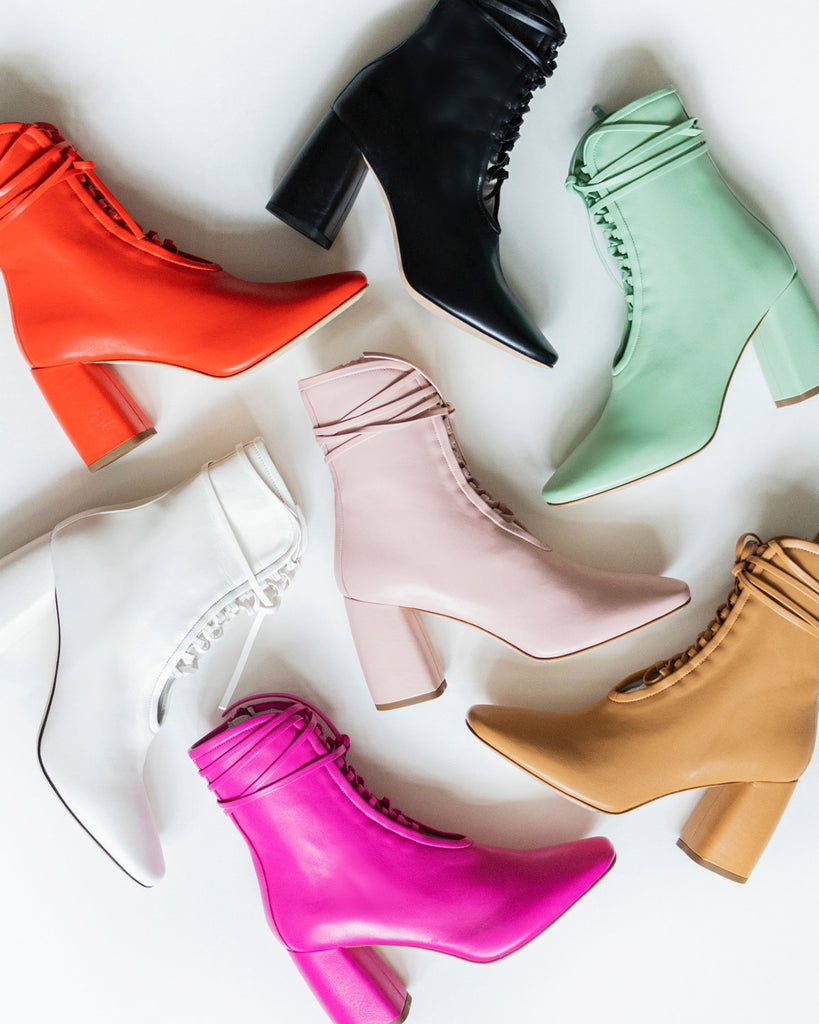


The best heels for plantar fasciitis are well-designed heels under 2 inches with a stable base, real arch support, and cushioning, not totally flat shoes. The strongest guidance points to a modest heel, supportive structure, and shock absorption, because the problem is often poor shoe geometry and hard, thin underfoot construction rather than “any heel at all.”
You might be reading this after one of those dispiriting mornings when your first steps out of bed feel sharp, hot, and unfair. Then you look at your wardrobe and wonder if your beautiful heels have officially become display pieces.
I don't believe they have to.
As a designer, I've spent years thinking about the quiet engineering inside a shoe. The pitch, the heel base, the way leather wraps the foot, the way cushioning supports you at hour one and still matters at hour eight. Luxury should not be painful, and plantar fasciitis doesn't automatically mean surrendering to a life of uninspired flats.
The End of an Era or a New Beginning for Your Heels
A lot of women reach the same conclusion too quickly. They get the diagnosis, push their pumps to the back of the closet, and assume elegance now belongs to another phase of life.
That reaction makes sense. Most advice for plantar fasciitis defaults to flats, but rarely explores which heel geometry effectively reduces strain. The more useful question is not heel versus no heel. It's whether the shoe has the right heel-to-toe drop, stack height, cushioning, and support, as discussed in this overview of heel geometry and plantar fasciitis footwear.
I've seen this mindset shift happen when women stop shopping by category and start shopping by construction. A low block heel with a thoughtful footbed behaves very differently from a rigid fashion heel. A supportive boot that stabilizes the rearfoot feels entirely different from a flat ballet shoe with a paper-thin sole.
Heels aren't the enemy. Poorly engineered heels are.
That distinction matters if you need to look polished for work, events, dinners, travel, or because your style is part of how you move through the world. The answer isn't to abandon your taste. It's to become more selective about design.
I value old-world making greatly because craftsmanship changes comfort. When I visit factories and review samples, I'm not only looking at silhouette. I'm looking at what sits beneath it. The hidden choices matter most. If you love the story behind that process, this piece on handcrafted women's shoes captures why construction is never cosmetic.
There's freedom in learning what works. Once you understand the mechanics, your closet doesn't shrink. It gets smarter.
Why Do My Feet Hurt So Much
Plantar fasciitis is often easier to understand if you think of the plantar fascia like a strong band running along the bottom of your foot. When that band gets overloaded again and again, especially without enough cushioning or support, it starts protesting right where you feel it most. Usually at the heel.
Hard surfaces, long days standing, commuting, poor weight distribution, and shoes that don't absorb impact can all add up. The pain often feels worst when you first get up because the tissue has stiffened, then gets tugged again the moment you step down.

Why this problem is so common
This isn't a niche issue. A review states that plantar fasciitis affects nearly 10% of the U.S. population, that about 2 million Americans seek treatment each year, and that women are 2.5 times more likely than men to report it, according to these plantar fasciitis statistics.
For many women, that means the pain shows up exactly where life is busiest. In your working years. In your event years. In the years when you still want your shoes to say something about you.
What footwear gets wrong
The usual mistake is assuming less shoe is always better. It isn't.
A shoe can be low, soft, and still fail your foot completely if it collapses under load or leaves the heel unsupported. That's why I'm always cautious when someone says, “I switched to flats and I'm still hurting.” I'm not surprised.
Here's what I want women to check first:
- Underfoot feel: If the insole feels hard from the first step, your heel will notice.
- Rearfoot stability: If your heel slides or wobbles, the foot works harder than it should.
- Arch behavior: If the shoe goes limp in the middle, the foot may have to do all the stabilizing work.
If you know you also struggle with arch height, this guide to shoes for high arches can help you decode why one shoe feels relieving and another feels punishing.
Practical rule: The goal is not to immobilize the foot. The goal is to stop asking irritated tissue to absorb every shock unsupported.
The Anatomy of a Pain-Free Luxury Heel
Comfort in a heel is rarely about one magic feature. It's a system. When I review prototypes, I'm looking for several things working together at once, because a beautiful upper can't rescue a poor foundation.
A peer-reviewed study found that 82.2% of plantar fasciitis patients wore shoes with minimal heel height and 55.5% wore shoes with hard, non-cushioned insoles. The authors linked inappropriate footwear to more severe heel pain and noted that lack of built-in arch support was common, which you can read in this footwear and plantar fasciitis study. That's why I don't think in simplistic categories like flats good, heels bad. I think in load management.

Stable heel base
A narrow stiletto concentrates pressure and creates instability. A broader heel base spreads force more evenly and gives the rearfoot something dependable to land on.
That doesn't mean every supportive heel must look orthopedic. A sculpted block heel can still feel refined, especially when the proportions are right and the shoe's pitch is controlled.
Arch support that's built in
Luxury design often disappoints, as many expensive shoes still treat the footbed like an afterthought.
I prefer support that's integrated into the shoe's architecture, not just pasted in as a removable fix later. If a woman has plantar fasciitis, she needs the shoe to help manage pronation and distribute pressure, not merely look delicate on a shelf. This discussion of high heel arch support gets into why that hidden structure matters so much.
Cushioning that doesn't collapse
Cushioning should absorb impact without turning mushy. Too soft, and the foot becomes unstable. Too hard, and the heel takes the hit directly.
When we test cushioning in luxury footwear, I care about what it feels like after hours, not only in the fitting chair. A shoe that feels plush for thirty seconds and punishing by lunch hasn't solved anything.
Forefoot flexibility in the right place
A supportive heel should still bend where your foot naturally bends. If the shoe is rigid through the forefoot, you start compensating in ways that irritate everything from the heel to the calf.
That's one reason I'm so attentive to material choice. Handcrafted Italian and Portuguese craftsmanship isn't only about prestige. Good leather and thoughtful construction can create a glove-like fit that moves with the foot instead of fighting it.
A toe shape that respects anatomy
Pointed styles can be elegant. I love them. But the internal shape still needs to respect the toes.
A refined last can create a sleek line without crushing the forefoot. When the toes are compressed, weight shifts poorly and the rest of the foot often pays for it.
A pain-aware luxury heel should feel supportive before it feels impressive. The impressive part should come naturally from proportion, material, and finish.
How to Choose the Right Heels for Your Feet
When you're shopping for the best heels for plantar fasciitis, don't start with the color or the outfit. Start with the mechanics. If the foundation is wrong, no amount of beautiful leather will save the wear experience.
Podiatry guidance says heels under 2 inches with a stable base are typically best for plantar fasciitis, and that for all-day wear, features like reinforced arch support, anti-fatigue midsoles, and slip-resistant outsoles help reduce cumulative stress, according to this guidance on heels and work shoes for plantar fasciitis.
Look for a heel under 2 inches
A modest heel often gives the foot a better working angle than a totally flat shoe. It can reduce the harsh pull and heel strike stress that many women feel in unsupportive flats.
If you want an office-to-dinner option, I'd look first at a low boot or pump that keeps the foot secure rather than exposed. The Cleo Black Stretch Leather is a good example of the kind of silhouette to study because the lower heel and close fit create more control than a loose, shallow shoe.
Prioritize a block or sculpted heel
Heel shape matters almost as much as heel height. A stable heel gives you balance on pavement, office floors, and long event days.
What to avoid:
- Thin stilettos: They're elegant, but they ask more from an already irritated foot.
- Flimsy kitten heels with poor base support: Some are lovely, but many are unstable in practice.
- Flat dress shoes with no structure: These often fool people because they look “safe.”
What tends to work better:
- Block heels: Better contact with the ground.
- Sculpted low heels: Good when the base remains stable.
- Boot silhouettes: Helpful when the upper holds the foot securely.
If you need help figuring out fit before you buy, this guide on how to measure shoe size and width is worth keeping open while you shop.
Insist on arch support and cushioning
This is a fundamental point. A low heel with a dead-flat footbed still isn't a plantar fasciitis shoe.
I'd check the inside of the shoe as critically as the outside:
- Footbed contour: Can you feel support through the arch, or is it flat?
- Heel seat: Does your heel sit securely, or does it slosh around?
- Insole resilience: Does the cushioning rebound, or does it feel thin and packed down?
One option in this category is the Romi Mesh Heel, which reflects the sort of day-to-night thinking many women need when they're walking, commuting, and then heading somewhere more polished.
A short fitting video can also help you notice details most shoppers miss:
Choose soft materials that still hold shape
Soft doesn't mean sloppy. The ideal material yields where your foot needs room, then continues to support the shoe's structure.
Premium leather, stretch panels, and careful lining choices can make a dramatic difference in daily comfort. You want the upper to reduce friction, not collapse and let the foot work harder.
For event dressing, I'd also consider styles like Isabella or Nola when the shape, fit, and footbed suit your needs. For professional wardrobes, a supportive boot such as Riley can be easier on an irritated heel than a shallow court shoe.
If a heel feels unstable in your living room, it won't become stable on a city sidewalk.
Beyond the Shoe Fit Styling and Professional Care
A supportive heel still has to fit correctly. Even excellent geometry won't help much if the shoe is too short, too loose at the heel, or tight across the forefoot.
Clinical guidance points to a moderate heel-to-toe drop of about 6–10 mm, along with a deep heel cup and structured arch support, because that setup helps reduce plantar fascia strain by shifting load and limiting excessive pronation, according to this clinical article on choosing shoes for plantar fasciitis.

Fit is a styling decision too
Women often treat fit and style as separate conversations. They aren't.
A shoe that grips properly at the heel, supports the arch, and doesn't crush the toes will also look more elegant in motion. You walk differently when you aren't bracing against pain. Your posture changes. Your stride becomes smoother. The shoe looks better because you feel better.
Useful checks before you commit:
- Try shoes later in the day: Feet often feel different after hours of standing and walking.
- Walk on different surfaces: Carpet can hide instability.
- Notice pressure points early: Leather may soften, but a bad pressure point rarely turns into a good one.
If you're trying to retrain your habits around dress shoes, this article on how to wear heels comfortably offers practical guidance that goes beyond the usual “just bring flats” advice.
Professional help matters
Sometimes the smartest move isn't buying a new pair immediately. It's getting the right assessment.
A podiatrist can help if the pain keeps returning, if you've changed shoes and still feel sharp heel pain, or if your symptoms are affecting your gait. If broader body mechanics are involved, a thoughtful rehab approach can help too. For readers who want a plain-language overview, this physiotherapy guide for Bristol patients explains how musculoskeletal care looks at movement patterns, pain, and function together.
Buy less, buy better
I'm a believer in sustainable luxury because comfort improves when you stop treating shoes as disposable. Well-made shoes can be stretched, repaired, maintained, and worn repeatedly across occasions.
That matters for plantar fasciitis. Your foot tends to do better with a few reliable, supportive pairs than with a carousel of beautiful mistakes.
Invest in pairs you can actually live in. The most luxurious shoe is the one you keep reaching for because it never punishes you.
Your Invitation to Walk Confidently Again
A plantar fasciitis diagnosis can feel like a closing door, especially if you love getting dressed and don't want your footwear choices reduced to “least painful.” I understand that feeling. But I don't accept it as the final answer.
The right heel can still be part of your life. Not every heel, and not every day, but the well-made, thoughtfully balanced, comfort-first kind. The kind with a stable base, supportive internal structure, forgiving materials, and enough refinement to carry you from work to dinner, from a ceremony to the dance floor, from commute to meeting without resentment.
That's the intersection I care about most as a designer. Beauty and relief. Craftsmanship and practicality. Day-to-night versatility that doesn't ask you to pay for elegance with pain.
If you're shopping for the best heels for plantar fasciitis, become ruthless about construction. Ignore the marketing fantasy. Look at pitch, support, heel shape, fit, and materials. That's where comfort lives.
And when you find a pair that respects your foot, you feel it immediately. You stand taller. You stop planning your exit. You wear the shoe, instead of the shoe wearing you.
Explore the comfort-first luxury footwear at Daniella Shevel if you're ready to invest in heels and boots designed for real life, polished enough for day-to-night wear, and crafted with the fit, support, and materials that make elegant dressing feel possible again.