

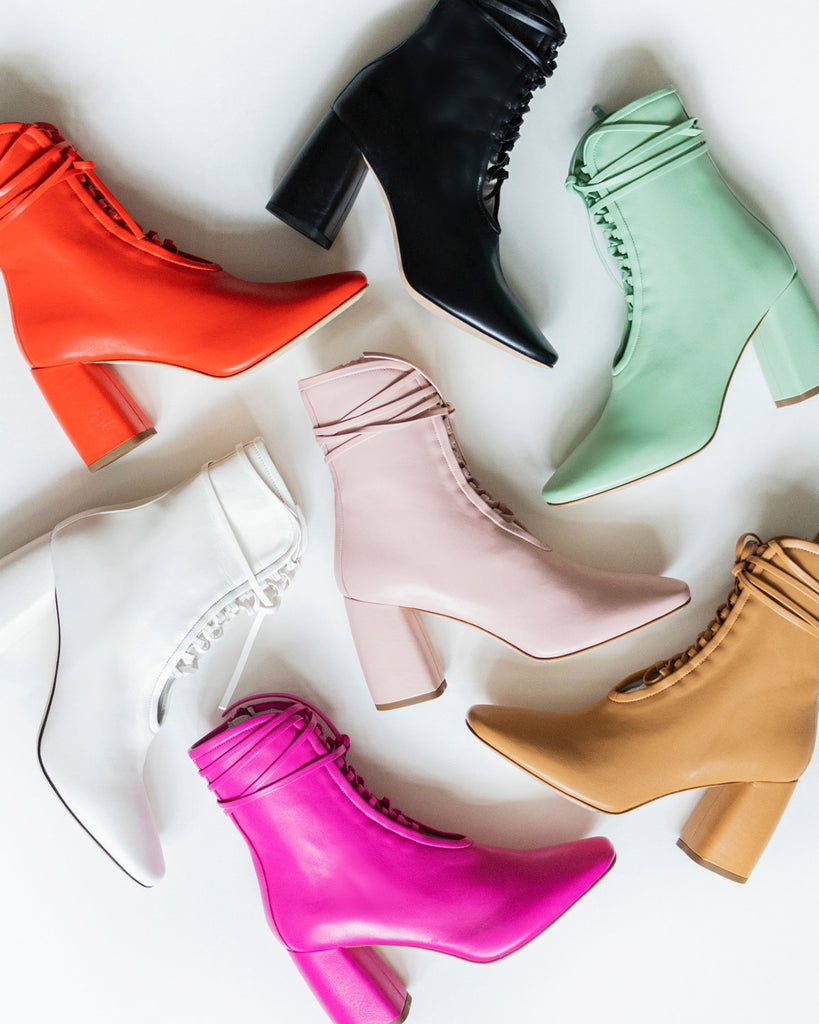


You're probably here because you're tired of planning your outfit around pain. You want boots that can handle a morning commute, a full workday, dinner after, and the walk back home without forcing you into the old ritual of carrying backup flats.
Here's the direct answer. Comfortable boots for women are absolutely possible, but only when the boot is built around fit, support, and real movement, not just a soft insole and a pretty silhouette. I've spent years designing shoes for women who refuse to choose between polish and relief, and I believe luxury should never ask you to suffer for the look.
I learned that lesson the hard way. Before I started designing, I knew the feeling of watching a beautiful day unravel because my shoes were punishing me by lunchtime. The problem wasn't that I wanted style. The problem was that too many brands treated comfort like an afterthought.
That's why I obsess over construction, materials, and how a boot behaves after hours on your feet, not just how it looks in a product photo. If your life involves trains, sidewalks, standing dinners, airport terminals, or long gallery afternoons, you don't need a “comfort shoe.” You need a beautiful boot engineered for endurance.
If that's the standard you're shopping by, my guide to stylish shoes for walking all day is a useful place to keep open in another tab.
Introduction The End of the Backup Flats
The backup flats used to feel like a fact of life. You wore the elegant boots into the meeting, changed for the walk, then changed back for dinner. It was inefficient, inelegant, and a little absurd.
I design for women who are done with that. The executive crossing town for back-to-back meetings. The traveler landing in a new city and heading straight to lunch. The woman going from office to event who wants one pair to do the whole day.
Luxury should make your life easier, not smaller.
That shift matters because comfort isn't one thing. It isn't just padding. It's the relationship between your heel, arch, forefoot, and stride. It's whether a boot holds you securely without squeezing you. It's whether the shape works with a woman's foot instead of asking you to adapt to a generic one.
A lot of shoppers still get sold on the wrong signals:
- Softness alone: A pillowy footbed can still feel awful if the heel slips.
- A familiar label: Plenty of expensive boots are still made on shapes that don't respect female anatomy.
- “Break them in” advice: I reject the idea that pain is part of the luxury experience.
I've had design sessions where a sample looked perfect on the shelf and failed the minute I walked city blocks in it. That's when you learn what matters. Not the showroom. The pavement.
The Anatomy of a Genuinely Comfortable Boot
A comfortable boot starts with anatomy, not marketing. If the structure is wrong, the nicest leather in the world won't save it.
Independent comfort guidance points to a strong formula: arch support, a roomy toe box, a secure heel cup, and a flexible sole working together to reduce pressure, limit heel slippage, allow natural toe splay, and lower fatigue during extended wear, as explained in DuoBoots' guide to the science of boot comfort.

Start with the heel and work forward
Most women blame the toe when a boot hurts. Often, the problem begins at the back.
If the heel isn't held properly, your foot slides forward. Then your toes grip, your arch gets tense, and suddenly the whole boot feels wrong. A secure heel cup is what keeps the rest of the fit honest.
I always think of it this way. The heel is the anchor, the arch is the support beam, and the forefoot is the living space. If the anchor moves, everything else starts compensating.
Practical rule: If your heel lifts noticeably when you walk, don't talk yourself into the purchase.
The toe box should feel generous, not sloppy
A roomy toe box doesn't mean a bulky boot. It means your toes have space to lie naturally instead of being compressed into a decorative shape.
That matters more than most brands admit. Women with bunions, forefoot sensitivity, or late-day swelling know this instinctively, but even women without obvious fit issues feel the difference after hours on their feet.
Look for these signs of a smart forefoot design:
- Natural toe placement: Your toes should rest, not curl or brace.
- No side pressure: The boot shouldn't press hard against the big toe joint or little toe.
- Shape retention while walking: You shouldn't feel your foot ramming into the front on every step.
Cushioning matters, but it's not the whole story
I love a cushioned footbed. I design with that in mind. But cushioning only works when it supports movement instead of masking bad structure.
A flexible sole helps your stride feel natural. Too rigid and the boot fights your walk. Too soft and it can feel unstable by the end of the day. The sweet spot is controlled flexibility, where the boot bends with you but still gives support.
Here's the quick checklist I use when judging a boot:
| Feature | What you want to feel |
|---|---|
| Heel cup | Locked in, not pinched |
| Arch area | Supported, not poked |
| Toe box | Free, not floating |
| Sole | Flexible with control |
| Upper | Soft enough to move, structured enough to hold |
When we test boots, I'm not asking, “Does this feel plush for thirty seconds?” I'm asking, “Would I still want this on after a commute, a workday, and dinner?”
If the answer is no, it's not comfortable. It's just padded.
Why Italian Craftsmanship Is a Comfort Feature
You feel the difference at 8 p.m., not in the fitting room. A boot can look immaculate for five minutes and still become tiring halfway through a real day. That gap between first impression and all-day wear is where Italian craftsmanship matters most.
People hear “handcrafted” and picture tradition. I picture discipline. When I visit factories in Italy and Portugal, I watch the choices that affect comfort long before a customer slips the boot on. I look at how the upper is skived, where the lining sits, how the shaft is balanced, and whether the maker respects the shape of a woman's foot instead of forcing it into a fashionable mold.

Last design is where comfort begins
The last decides everything. It sets the heel fit, the instep curve, the toe shape, and the way your weight settles through the boot. If the last is wrong, no padded insole can rescue it.
One of the clearest examples comes from workwear. Rock Fall explains in its guide to women's safety footwear that women-specific boots are built on a female-specific last, with fit details such as a narrower heel cup and contoured arch support, and it advises leaving 10 to 15 mm of toe space when checking fit in its guide to women's safety footwear.
Luxury boots should take that same fit logic seriously. I do. Women who want Italian design with polish and presence should not have to accept the generic fit problems that come from unisex shapes or mass-market shortcuts. A beautiful silhouette is only worth having if it works on the foot you live in.
If you want a closer look at how material choice and fit interact, I explain that in more detail in this guide to Italian leather boots for women.
Good leather should adapt, not fight you
A great leather has memory, softness, and enough structure to hold the line of the boot. Cheap leather creases harshly, resists where it should relax, and often creates pressure exactly where women are most sensitive. Better leather breaks in with grace. It gives where needed and still looks refined.
I have stood beside artisans in Italian workshops and watched them correct details that many brands would ignore. A cleaner seam placement near the forefoot. A more thoughtful curve over the instep. A topline adjusted by millimeters so it frames the ankle instead of rubbing it raw. Those are not decorative decisions. They are comfort decisions.
I travel constantly, and I pack with a hard standard. Every piece has to earn its place. Boots are no different. The women I design for want the same thing from fashion that they want from travel. Precision, ease, and a better experience than the generic version. That is why some choose tailored luxury itineraries instead of off-the-shelf trips. The details change the whole day.
The most comfortable luxury boots feel calm. They do not pinch, slide, overcorrect, or demand a recovery shoe waiting in your bag. They look sharp, feel secure, and get better with wear. That is what true craftsmanship delivers.
Solving for Fit A Boot for Every Foot
I have never met a standard foot. I have met women in New York, Milan, Dallas, and Paris who were told to size up, add an insert, or accept heel slip as part of wearing beautiful boots. I reject that completely. A luxury boot should solve fit problems with pattern work, materials, and shape. It should not ask you to compensate for bad design.

The women I design for want the line of an Italian boot and the ease of something that feels made for their own foot. That is the definitive standard. Not generic sizing charts. Not the old idea that pain is the price of polish.
If you have bunions or forefoot pressure
Start with shape. A boot can look sharp and still give your forefoot room.
I look for a toe box that follows the foot instead of forcing it into a narrow point, soft leather that yields without collapsing, and an interior with clean seam placement. Those details decide whether pressure builds by lunch or the boot stays comfortable through dinner. I learned that early, watching artisans adjust a pattern by millimeters because they knew exactly where women feel rubbing first.
My advice is simple:
- Choose leather with give: It should relax around pressure points without turning sloppy.
- Look at the toe shape from above: You want definition, not a squeeze.
- Check the interior: Bulky seams and stiff overlays create friction fast.
A good boot skims the foot. It does not clamp the widest part of it.
If you have narrow heels
Heel slip ruins an otherwise beautiful boot. It throws off your stride, makes the forefoot grip, and leaves you tired far earlier than you should be.
Many women assume they need more padding. Usually they need a cleaner rearfoot fit and better hold through the instep. If the heel lifts with every step, the problem is not softness. The problem is movement.
Before you buy, get clear on your actual proportions with this guide on how to measure shoe size and width. It is the fastest way to stop guessing and start choosing boots that match your foot.
If your feet change through the day
This is common, especially if you commute, travel, stand for long stretches, or spend time in heat. A boot that feels fine first thing in the morning can become punishing by late afternoon.
I test for that relentlessly. Try boots on later in the day if you can. Wear the socks you would wear. Walk on hard ground, not just carpet. Pay attention to the top line, the instep, and the forefoot after a few minutes, because that is where the truth shows up.
If you have spent years calling your feet difficult, stop. The issue is usually poor last shape, rigid materials, or lazy grading across sizes.
For women who need polish without pressure, I design soft-structure styles with a more considered fit through the forefoot and ankle. Refined boots should still work for real feet. That is the whole point.
Your Day-to-Night Style Edit Where to Wear Them
It is 7:15 a.m. You pull on a beautiful pair of boots, race to a meeting, cover city blocks by lunch, then head straight to dinner. If your boots only work for the first hour, they are not well designed. A comfortable boot has to hold its shape, support your foot, and still look sharp at 9 p.m.
That standard matters to me because I design for women who do not split their lives into “fashion shoes” and “practical shoes.” I never have. On buying trips in Italy, I have walked factory floors all morning, traversed stone streets all afternoon, and gone straight to dinner in the same pair. The right boot lets you do that without thinking about your feet.
There is plenty of generic advice about comfort. Very little of it addresses the woman who wants refined proportions, real mileage, and styling range in one boot. That is the gap I care about. Luxury should feel custom-minded, not precious.

The morning commute
Start with the pair that can handle hard pavement, stairs, and a rushed schedule without making your outfit look heavy. I recommend a low block heel or a well-shaped low heel with a clean pitch. Your posture stays more natural, and your clothes still look polished.
For commuting, I look for three things:
- A stable base: You should feel steady the second your foot lands.
- A manageable weight: Heavy boots drain energy and change your stride.
- A soft top line: The shaft should sit against the ankle without rubbing every step.
If your weekday wardrobe needs that same balance of polish and practicality, my guide to comfortable office shoes for women will help you build it properly.
I often reach for a sleek ankle boot here. It works with cropped trousers, straight denim, and tailoring, and it does not ask for a wardrobe change by noon.
The office-to-dinner dash
Poor design is quickly exposed. A boot can look sharp at your desk and feel punishing by cocktails if the toe shape is too aggressive or the heel pitch is doing all the work.
I love a pointed toe, but only when the last is built intelligently. You need visual precision with enough usable space across the forefoot. That balance is what makes a boot feel elegant instead of performative.
Wear them with:
- Slim trousers and a long coat for a strong, clean line
- A midi skirt and knit when you want softness without losing structure
- Dark denim and a silk blouse for a day-to-evening uniform that always works
A mesh bootie or a sharper silhouette can be excellent here, especially if the materials flex where your foot needs movement and hold firm where you need support.
A closer look at movement, shape, and styling helps here:
The European getaway
Travel is the quickest fit test I know. Cobblestones, museum floors, airport terminals, and long dinners expose every lazy decision in a boot.
I pack styles that work with a dress, denim, and tailoring, because luggage space is limited and I refuse to bring “backup shoes” for avoidable discomfort. The best travel boot has a secure feel through the midfoot, enough sole substance to handle uneven ground, and leather that looks better after wear, not beaten up by it.
One good pair can cover breakfast, galleries, dinner, and the walk back to the hotel. That is real versatility.
The long event or wedding
Standing for hours changes the equation. You need balance, poise, and a heel that stays trustworthy on mixed surfaces.
I say this as a designer and as someone who has spent too many events watching women give up halfway through the night. A lower, beautifully proportioned heel often looks more refined than a higher one you cannot carry well. Comfort reads in your posture. So does pain.
For this kind of occasion, choose a boot or dress shoe with a stable heel seat, a flattering vamp, and enough structure that your foot is not clawing for control. If you are dressing for a celebration, the wedding guest edit is worth bookmarking because the essential test is simple. You should want to wear the pair again, not recover from it.
Sustainable Luxury Caring for Your Investment
A beautiful boot earns its place by lasting. I design with that standard in mind because the most comfortable pair in your closet should also be the one you trust for years, not one season.
I learned that early, both in the studio and on the road. The pairs I kept reaching for were never the fragile ones. They were the boots made from better leather, shaped on a better last, and cared for properly between wears. Luxury should work hard. It should soften beautifully, hold its line, and become more personal with time.
Sustainability starts there. Buy fewer pairs. Buy the right pair. Then treat it like something worth keeping.
The care habits that actually matter
Care is simple if you stay consistent.
- Brush and wipe after wear: City dust, pavement grit, and moisture break down leather faster than women realize.
- Let your boots rest: Alternating pairs helps the insole, lining, and upper recover their shape.
- Use material-specific care: Suede needs a lighter hand than smooth leather. If you wear suede often, this guide to taking care of suede shoes will keep the finish clean without flattening the nap.
- Store them with intention: Shoe trees or gentle stuffing help preserve the shaft and toe shape.
- Fix small issues early: A minor stretch, heel tip replacement, or sole repair costs less and preserves the fit you already love.
Repair is part of the luxury equation
I do not believe in disposable luxury. If the upper is beautiful and the fit is right, repair the sole. Refresh the heel. Condition the leather before it dries out. Good construction gives you that option, and that is part of what makes handcrafted boots worth the investment in the first place.
I also believe a well-made shoe deserves a long life, even after you are done with it. Circular fashion is not a trend to me. It is good judgment. Passing along or donating pairs that still have real wear left in them respects the craftsmanship, the materials, and the women who can use them next.
Well-made boots should stay in your life, or continue in someone else's. That is the standard.
Conclusion Walk with Confidence
You don't have to accept the old trade-off anymore. Style or comfort is a false choice, and I'm happy to say that plainly.
The boots worth buying are the ones that respect how women live. They account for anatomy, movement, long days, changing schedules, and the desire to look polished without paying for it in pain. That means better last design, better materials, better fit decisions, and craftsmanship that serves the foot instead of fighting it.
I've built my design philosophy around one idea. If a shoe is beautiful but you can't live in it, it has failed.
Written by Daniella Shevel, Designer & Founder
If you're ready to stop rotating between stylish boots and survival shoes, explore the handcrafted collection at Daniella Shevel and find a pair built for real life, real mileage, and real elegance.