

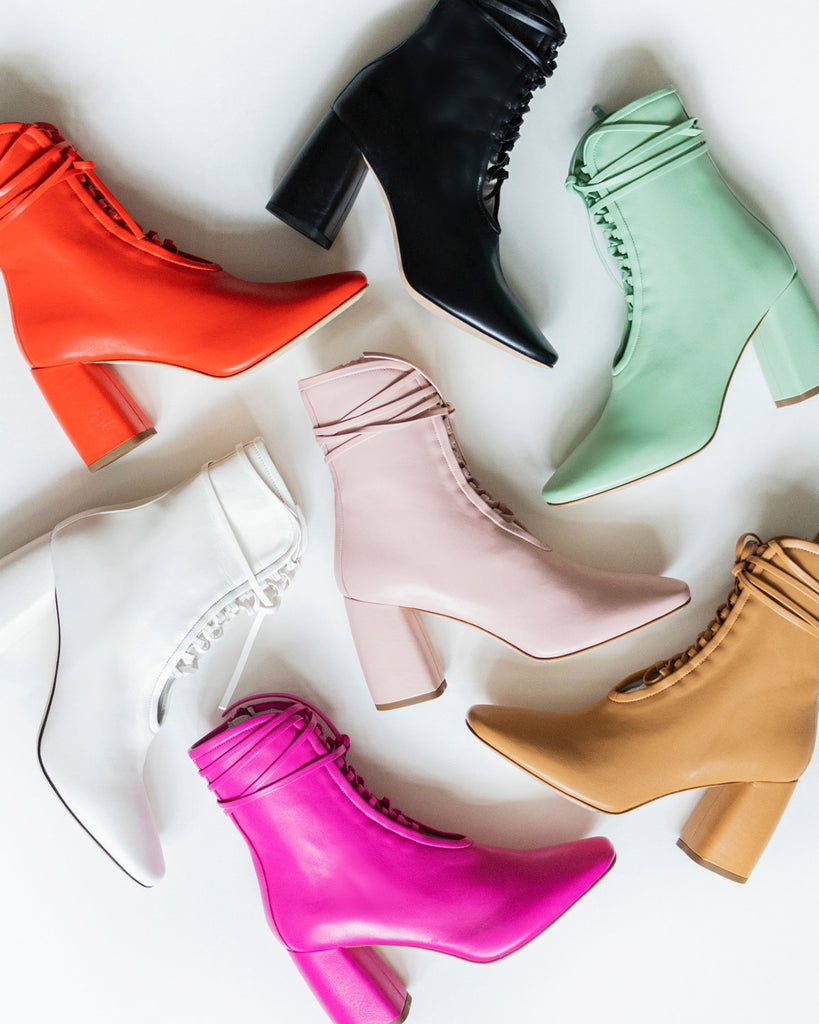


You know the feeling. The shoes look exquisite in the mirror, but by lunch you're already calculating how long you can stand before the ache starts. How to wear heels comfortably comes down to three things: choose a well-built heel, perfect the fit before you wear it out, and walk in a way that works with the shoe instead of fighting it.
I’ve spent years around Italian factories, fitting sessions, and women with demanding lives who want one thing from their heels: beauty without punishment. I agree with them. Luxury should support your life, not interrupt it.
My point of view is simple. Stop treating comfort like an afterthought you patch with inserts at the last minute. The right heel should feel considered from the first sketch, from the leather selection to the pitch, toe shape, lining, and cushioning. That’s the difference between a heel you admire and a heel you wear.
I’ve seen this firsthand on factory visits in Italy and Portugal. The best makers don’t talk only about silhouette. They talk about where the foot sits, how the upper wraps, whether the heel base steadies your stride, and how the shoe behaves after hours of movement. That’s the conversation that matters.
If you’re tired of carrying backup flats, good. Raise your standards instead.
If you want a deeper look at refined, comfort-led footwear design, start with the collection at Daniella Shevel.
Introduction The End of an Era of Painful Heels
For years, women were told that pain was the price of elegance. I reject that completely. A beautiful heel that leaves you limping home is badly designed for real life, no matter how expensive it is.
I’ve met women who plan their evenings around how close they can stay to a chair. I’ve also met women who wear heels through meetings, dinners, events, and city walks because they finally learned what matters: structure, fit, and posture. The second group isn’t tougher. They’re wearing smarter shoes and using better habits.
Practical rule: If a heel feels unstable, pinches your toes, or forces your weight sharply forward when you first try it on, it’s the wrong shoe. Don’t negotiate with it.
My own philosophy started long before any collection. It came from watching women buy shoes for a fantasy life, then pay for that decision with blisters, sore knees, and a short, awkward stride. I wanted something else. Handcrafted shoes that still feel polished after a full day. Shoes made for the office, a dinner reservation, a wedding, a gallery opening, a flight, a commute.
That’s why I’m opinionated about this topic. Comfort-first design isn’t code for boring. It means the shoe has been engineered to respect your body.
A heel can still be sensual, sharp, sculptural, and refined. It just needs to be built with intelligence.
What Makes a Heel Truly Comfortable?
A comfortable heel starts long before you put it on. It starts with the architecture of the shoe itself. If the pitch is too aggressive, the toe box is wrong for your foot, and the heel base is too fragile for your lifestyle, no hack will save it.

Why heel height matters more than women admit
Most women focus on how a heel looks from the side. I focus on what it does to the body. Experts recommend keeping heel heights under 3 inches, and research on healthy women found that balance index, step length, and single support ratio dropped markedly from 3 cm to 6 cm heels, and again from 6 cm to 9 cm, making taller heels less efficient for long wear, according to LECOM Health’s review of high heel harm.
That’s why I always tell women this: if you need your shoes to perform for a full day, stop chasing height for height’s sake. A lower, better-shaped heel often looks more elegant because you move better in it.
The pitch is the secret almost nobody talks about
Pitch is the angle that puts your foot in position inside the shoe. If that angle is too steep, your body tips forward and the ball of your foot absorbs too much pressure. If it’s balanced well, you stand taller with less strain.
In Italian factories, I always pay attention to how a last holds the foot. A shoe can have a moderate heel and still feel brutal if the pitch is wrong. Another shoe can look just as polished and feel dramatically easier because the proportions were resolved correctly.
A smart heel usually includes:
- A stable base: Block heels, wedges, and platforms generally offer a steadier foundation than a thin stiletto.
- A forgiving upper: Soft leather and suede can mold to the foot instead of fighting it.
- A thoughtful toe shape: Wide feet don’t belong in a severe point. Cascading toes need room.
- A flexible forefoot: The shoe should move with your stride, not resist it.
A heel should hold you securely, not trap you rigidly.
Why material and shape change everything
The finest leathers don’t just look rich. They adapt. That matters because comfort is often a game of pressure management. A supple upper reduces rubbing. A shaped lining helps prevent sliding. A thicker heel base steadies the ankle and improves confidence.
I’m especially strict about toe shape. Pointed toes have their place, but not on every foot. If you have a wider forefoot or bunion tendency, forcing yourself into a sharp point is a mistake. Choose anatomy over fantasy.
If you want a technical breakdown of how support changes comfort in high heels, read this guide to arch supports for high heels.
Perfecting the Fit Before You Leave the House
Even a well-designed heel needs preparation. The biggest mistake I see is wearing a new pair straight into a long day and hoping for the best. That’s lazy planning, and your feet will punish you for it.
A heel should be introduced, not thrown into battle.

Break them in the right way
There’s one method I come back to again and again for leather shoes. Break in shoes using thick socks and heat for 20 to 30 minutes daily to stretch rigid material and encourage a glove-like fit. That method can cut blister risk by 40 to 50%, since rigid uppers are a major source of initial friction, according to The Well Heeled’s discussion of heel design science.
I use this carefully. Gentle warmth, not scorching heat. Thick socks, not brute force. You want the leather to relax and shape itself, not dry out or warp.
Here’s the routine I recommend:
- Put on thick socks and slip into the shoes at home.
- Apply gentle heat to the tight areas for short intervals.
- Walk around indoors until the leather starts to soften.
- Repeat daily before the first long outing.
Fit checks I never skip
Before you leave the house, assess the shoe carefully.
| Check | What you want |
|---|---|
| Toe room | Toes can rest naturally without being crushed |
| Heel hold | Minimal slipping at the back |
| Forefoot feel | Firm support, not burning pressure |
| Instep fit | Snug but not strangling |
| Walking test | Smooth stride without wobble |
If one area feels sharply wrong in your living room, it will feel worse three hours later.
Buy for your real foot shape. Not the one you wish you had.
Use support with intention
I like add-ons when they solve a precise problem. I don’t like random padding stuffed into a badly fitting shoe. That usually creates more crowding.
If you have high arches, choose support that helps distribute load without lifting your foot so much that the shoe becomes tight. If your toes slide forward, solve the fit issue first. Don’t pile on inserts and hope they create structure that the shoe never had.
Women with broader feet should also ask a direct question before they buy: is the shoe right for my shape? If that’s been an issue for you, read this guide on whether you need wide shoes.
The Art of Walking in Heels with Grace and Power
A good heel helps. Good technique seals the deal. Most discomfort gets worse because women walk in heels as if they’re bracing for impact.
That bracing shows up immediately. Short, stiff hips. Weight dumped onto the forefoot. Knees locked. Shoulders tense. The result is pain and a clumsy stride.

Walk heel to toe, not toe to toe
This is the simplest correction and the most effective. Scientific studies confirm that heel height impairs balance and gait efficiency, with balance index dropping significantly at 6 cm compared with 3 cm. The same research supports walking with small heel-to-toe steps, engaging your core, and using a slight rear lean to distribute weight across the footbed more evenly, as shown in this biomechanical review on heel height and gait.
In practice, that means:
- Lead with the heel: Let the heel touch down first.
- Roll through the foot: Don’t stamp flatly.
- Push off the toes: Finish the step cleanly.
- Shorten your stride: Big steps make you unstable.
- Engage your core: Your midsection should support you, not collapse.
This doesn’t make you look stiff. It makes you look composed.
Posture changes pressure
The body naturally tips forward in heels. If you exaggerate that by leaning from the waist, you increase pressure on the ball of the foot and stress the lower back.
Instead, think of lengthening upward through the spine while keeping a subtle sense of weight slightly back. Not dramatic. Just enough to stop the forward dump.
The most elegant woman in heels isn’t the one suffering silently. She’s the one moving in rhythm with the shoe.
If you’re dressing for a long event where you know you’ll be standing, mingling, and dancing, this matters even more. For occasion-specific advice, I like pointing women to practical event dressing guidance such as shoes for dancing at a wedding.
A quick visual can help if you want to refine your stride:
What to stop doing immediately
Some habits sabotage comfort fast.
- Don’t rush downhill or on stairs: Place the whole foot more deliberately.
- Don’t take giant commuter strides: Shorter steps create more control.
- Don’t grip with your toes: That creates fatigue and tension.
- Don’t ignore the surface: Cobblestones, grates, grass, and slick floors all demand a steadier heel choice.
The point isn’t to become precious about movement. The point is to move intelligently.
A Strategic Plan for All-Day and All-Night Wear
At 7 a.m., a heel can feel perfect. By 7 p.m., it tells the truth.
That is why I never treat comfort as a last-minute fix. I build for the full day. In Italian factories, I obsess over what happens after the first meeting, after the walk across stone sidewalks, after the standing, the dinner, the event, the taxi, the stairs. A comfortable heel has to keep working when real life starts.

For the city commuter
A city day exposes every weakness in a shoe. Pavement, grates, rushed crossings, long corridors, hard floors. If the pitch is too aggressive or the upper does not hold the foot properly, you feel it by lunchtime.
I tell women this constantly. Stop buying for the first twenty minutes. Buy for hour six.
My advice for this lifestyle is simple:
- Choose a secure upper: Boots, slingbacks with real support, and high-vamp styles usually outperform delicate open pumps for long urban wear.
- Keep the heel practical: A lower block heel or sculpted heel with a stable base handles pavement better than a narrow stiletto.
- Prioritize pitch over height alone: I have seen a well-balanced 85mm heel feel better than a poorly engineered lower heel because the weight sits more evenly.
- Dress for the longest part of your day: The commute, the standing, and the walk to dinner matter more than the hour you spend seated.
If your schedule regularly runs from desk to dinner, this office shoes for women guide will help you choose with more discipline.
For weddings and long events
Events create a different kind of fatigue. You are not commuting. You are standing in place, turning, greeting, posing, walking on mixed surfaces, then dancing after your feet are already tired.
That calls for strategy, not gimmicks.
- Garden wedding: Wear a broader heel with enough surface area to stay upright on grass.
- Historic venue or cobblestones: Choose a shoe with stronger foot coverage and better lateral stability.
- Long indoor reception: Look for built-in forefoot cushioning and a shape that does not force your toes together for hours.
- Day-to-night events: Softer linings and breathable materials matter more than extra accessories packed in your bag.
I have had customers tell me they spent years relying on gel pads and backup flats. Then they tried a pair with the right pitch, proper padding placement, and a last shaped for an actual woman’s foot, and suddenly the whole event felt different. That is the point. Fix the architecture first.
My personal event formula
When I travel or dress for a full schedule, I edit hard. I want one pair that earns its place because it performs, not because it looks good in a photo.
I choose heels that do three things well:
- Hold the foot securely without pressure points
- Distribute weight with a sensible pitch and real cushioning
- Work across more than one outfit and more than one setting
That is how I define an investment shoe. It should save you from overpacking, second-guessing, and suffering through the last hours of the night. Luxury should feel beautiful at hour one and still feel intelligent at hour ten.
Beyond the Basics for Specialized Fit and Sustainable Luxury
A woman walks into a fitting after years of avoiding heels because every pair rubs the same joint, crushes the same toes, and leaves her counting the minutes until she can sit down. I have seen that moment again and again, from private clients to women I meet in Italian factories while refining lasts and testing prototypes. The problem is rarely that her feet are wrong. The problem is that too many shoes were built around a narrow fashion sketch instead of a real foot in motion.
If you have bunions, a fuller forefoot, high arches, or proportions that standard luxury sizing ignores, stop trying to force adaptation with inserts and wishful thinking. Choose shoes with better architecture. Comfort starts with shape, pitch, materials, and pressure distribution. That is design work, not damage control.
Shape first. Padding second.
Women often ask me for more cushioning. Many of them need a different toe box, a cleaner vamp line, or leather with more give in the right area. I have stood on factory floors in Italy pressing uppers by hand because a few millimeters of stiffness at the forefoot can turn a beautiful heel into a shoe you never wear twice.
Start with these fit corrections:
- A severe pointed toe often crowds the forefoot. Choose a square toe or a softer almond shape if you need more room.
- A rigid closed vamp can press directly onto sensitive joints. An open vamp or lower-cut front often relieves that pressure.
- Stiff, unforgiving leather resists the foot. Softer materials adapt better and create fewer hot spots over time.
Expensive shoes can still be badly shaped. Price does not fix poor proportions.
I tell customers this constantly: if a shoe hurts in a quiet fitting room, it will punish you at dinner, at a wedding, and on the walk back to the car. A better last solves more than an extra pad ever will.
Sustainable luxury should wear beautifully for years
The most comfortable wardrobe is usually the most edited one. Buy fewer heels. Buy pairs with enough craftsmanship behind them to justify care, repair, and repeat wear. That is how I define luxury. Not novelty. Longevity.
I care profoundly about this philosophy because I know what goes into a well-made shoe. The right factory can build cushioning into the structure, balance the pitch so weight is not dumped onto the ball of the foot, and select linings that stay gentle against the skin after long wear. Those decisions improve comfort on day one and preserve the shoe over time. If you care about that standard, read more about our approach to sustainable luxury and thoughtful craftsmanship.
Maintenance matters here too. Replace worn heel tips. Condition leather before it dries out and stiffens. Revisit stretched straps before they change how the shoe holds your foot. A shoe that is worth owning is worth maintaining, because comfort changes the second the structure starts breaking down.
Conclusion Your Journey to Effortless Style
You don’t need to choose between elegance and relief. You need better standards. Choose a heel with sound proportions, shape it to your foot before a long outing, and walk with control instead of tension.
That’s how to wear heels comfortably. Not with denial, and not by stuffing your way through a bad fit. With intention.
Written by Daniella Shevel, Designer & Founder. I believe the best luxury shoes earn their place in your life because they let you move through it beautifully.
Ready to stop compromising? Explore the handcrafted, comfort-first collection at Daniella Shevel and find the heels, boots, and event shoes you’ll want to wear from day to night.