

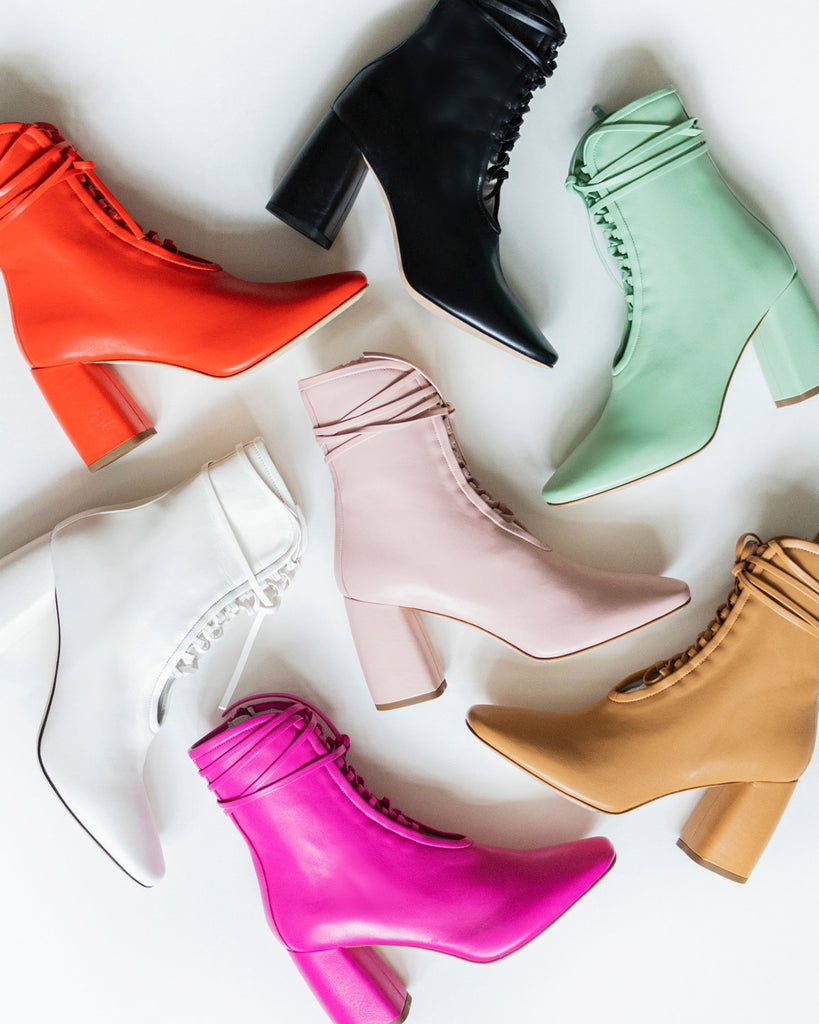


Bridal ankle boots are one of the smartest wedding shoe choices you can make if you want style and staying power. A 6cm block heel offers stronger balance for long wear than a stiletto, and lower block heels can reduce peak plantar pressure by 25 to 30% during 8+ hour events.
If you're reading this, you're probably trying to avoid the classic bridal mistake. Beautiful shoe. Perfect in photos. Miserable by cocktail hour.
I design shoes for women who don't carry backup flats, and I feel strongly about this. Your wedding footwear should support you through the ceremony, the walk across stone or grass, the dinner, the dancing, and the last photo of the night. If it can't do that, it isn't luxury. It's decoration.
Bridal ankle boots solve a problem most wedding style guides ignore. They give you polish, structure, security, and personality in one silhouette. They also happen to be far more interesting than a forgettable pump.
Why Choose Ankle Boots For Your Wedding Day
You do not need to justify wanting something less predictable than a satin heel. Bridal ankle boots are elegant, grounded, and far more practical than most traditional wedding shoes.
They also aren't some passing fashion trick. The history is far richer than that. In 1840, Queen Victoria paired her white wedding look with elastic-sided "half boots," helping establish bridal boots as part of white wedding fashion, a legacy traced in this history of wedding boots. I love that detail because it confirms what modern brides already know. Boots can be romantic and intelligent at the same time.

They give you stability without sacrificing beauty
A wedding day includes a shocking amount of standing, pivoting, walking, and pausing. Ankle boots support the foot and ankle in a way a delicate sandal does not.
That matters if you're marrying in a garden, on old stone, in a vineyard, or anywhere the ground isn't perfectly polished marble. Structure is chic. So is not wobbling during your vows.
Practical rule: If your venue includes grass, gravel, cobblestones, wood planks, or stairs, choose support first and let the styling follow that decision.
They work from morning to midnight
I always tell brides to stop thinking in ceremony-only terms. Your shoes need day-to-night versatility.
Bridal ankle boots handle:
- The first walk: From hotel suite to car, or from dressing room to aisle.
- The long middle: Standing for greetings, photos, dinner, and speeches.
- The final hours: Dancing, after-party movement, and that tired but happy walk back to your room.
That is precisely why so many women start looking for a shoe they can wear once and keep forever. A bridal ankle boot has far more wardrobe life than a hyper-formal heel you'll never touch again.
If you're still comparing silhouettes, this guide to perfect bridal shoes is a helpful place to refine what works with your dress, your venue, and your tolerance for discomfort, which should be low.
They let your personality show up
A bridal look doesn't need to be timid. In fact, the most memorable wedding styling usually has one element of conviction. Sometimes that's the veil. Sometimes it's jewelry. Sometimes it's the shoe.
Bridal ankle boots tell people you dressed for yourself. They also photograph beautifully with:
- a slit gown
- a tea-length hem
- a crisp bridal suit
- a high-low dress
- a clean crepe column
And yes, they can be soft, feminine, and refined. Handcrafted materials, glove-like lines, and clean proportions make all the difference. I lean toward shapes that feel architectural rather than costume-like. That's the difference between fashion and novelty.
How To Choose Boots for Your Dress and Venue
The right bridal ankle boots should look intentional with your dress, not like a last-minute comfort swap. Start with silhouette first, then venue, then season.
That order matters. Brides often reverse it and end up with a shoe that solves one problem while creating three others.

Match the shaft and toe shape to the dress line
A dress creates visual movement. Your boot should either disappear cleanly into that movement or become a deliberate focal point.
With A-line and ballgown shapes
Choose a sleek, fitted ankle boot. The dress already gives you volume, so your boot should stay refined.
Look for:
- A close shaft: Nothing bulky at the ankle.
- A clean toe: Pointed or softly tapered works beautifully.
- Quiet surface detail: Smooth leather, satin, or subtle mesh instead of heavy embellishment.
With sheath, trumpet, or more body-skimming gowns
You can go a little more directional here. A slightly taller shaft or more sculpted silhouette works because the dress line is already narrow.
I like this pairing because it feels modern and confident. It also gives you one of the most flattering proportions in bridal styling.
With tea-length, mini, or high-low dresses
Now the boots are visible. Let them matter.
You can choose:
- a sharper pointed toe
- a distinctive texture
- a stronger heel shape
- a tonal contrast if the rest of the look is simple
Let the venue decide the heel architecture
This is the part too many brides ignore. A shoe that looks exquisite on a studio floor may be a terrible wedding shoe in real life.
For outdoor ceremonies, I want a more grounded heel and secure footing. If you're still narrowing down locations, browsing examples of outdoor wedding venues in Cape Town is useful because it quickly shows you the range of surfaces a wedding can involve, from lawns to courtyards to uneven outdoor settings.
For venue matching, keep it simple:
- Garden weddings: Choose a block heel or low heel, and keep the boot fitted.
- City lofts: Sharper toes and more fashion-forward shapes work beautifully.
- Barn or rustic spaces: Texture can be lovely, but keep the silhouette polished.
- Historic estates: A Victorian-inspired lace-up shape can be stunning if the dress is restrained.
Your venue is not background scenery. It directly affects whether your shoes help you move well or trap you in one spot.
Season changes the material, not the principle
For warm-weather weddings, breathability matters. A mesh bootie can work beautifully because it gives coverage without visual heaviness.
For cooler months, I prefer supple leather or suede with a soft glove-fit feel. High-quality Italian/Portuguese craftsmanship really earns its place here. Better material doesn't just look richer. It flexes better and breaks in more gracefully.
If you're comparing materials more broadly, this article on Italian leather boots for women is worth reading because leather quality has a direct effect on softness, molding, and long-term wear.
Keep the hem in mind
Before you commit, walk in the boots with the dress hem length you're planning. Not a guess. Use your actual hem.
A few styling rules I stand by:
- Long dress, minimal reveal: Prioritize toe shape and shaft fit.
- Visible shoe moments: Make sure the boot looks beautiful from the side.
- Pantsuit or structured bridal set: Lean into a sharper, cleaner boot.
- Shorter hemlines: Treat the boot as part of the statement, not an afterthought.
I also love a bridal ankle boot for rehearsal dinner, city hall weddings, welcome parties, and second looks. That continuity feels polished. You don't need ten separate bridal identities. You need one strong point of view.
Can Bridal Boots Truly Be Worn for 8+ Hours

You step into your ceremony feeling poised, then by cocktails your toes are numb, your arch is burning, and every photo becomes a negotiation with pain. I design against that outcome. A bridal ankle boot can last through eight or more hours, but only when the shoe is built like fine footwear and fitted like a support device.
I will say this plainly. Beauty without pressure management is amateur work.
Heel geometry decides whether you last the day
Height gets too much attention. Shape, pitch, and base width decide how stable you feel after hours of standing, walking, turning, and dancing.
Verified bridal footwear guidance summarized in this bridal boot reference points to block heels around 6cm as a strong choice for long wear. I agree. In my fittings, that range gives many brides enough lift to feel dressed, while keeping the foot at an angle the calf and forefoot can tolerate for a full event.
A narrow stiletto concentrates force. A well-proportioned block heel spreads it out and keeps the foot from fighting for balance all day.
| Heel Type | Stability Level | Ideal Comfort Duration | Best For Venue Type |
|---|---|---|---|
| Block heel around 6cm | High | Long event wear | Gardens, estates, city venues, receptions |
| Low heel boot | Very high | Extended wear with maximum security | Outdoor ceremonies, travel-heavy days, long receptions |
| Stiletto ankle boot | Lower | Better for shorter wear or highly controlled settings | Indoor city venues with minimal walking |
Comfort has to be engineered into the footbed
A wedding shoe fails slowly. First comes forefoot fatigue. Then gripping in the toes. Then the arch drops, the ankle stiffens, and your posture changes in every photograph after dinner.
That is why I care so much about insole structure, not just softness. Cushion alone is not enough. The footbed has to support the arch, absorb impact at the ball of the foot, and keep the heel steady so you are not sliding forward with every step. This matters even more for brides with bunions, high arches, a sensitive first metatarsal joint, or a history of plantar fascia pain.
When we develop a boot, I look at where the foot collapses under load, whether the top line cuts into the ankle, and how the toe box behaves once the foot warms and swells. Millimeters matter. A beautifully made bridal boot should reduce strain as the day goes on, not create new pressure points by hour four.
If dancing matters to you, read this guide on shoes for dancing at a wedding. It covers the movement demands brides often ignore until the final fitting.
Brides with foot concerns should choose boots more carefully, not avoid them
Ankle boots are often better for problem feet than open pumps because they can secure the heel, reduce excess sliding, and create a more controlled fit through the midfoot. That control is a gift if you have bunions, narrow heels, unstable ankles, or arches that tire quickly.
Here is what I recommend:
- For bunions: Choose a soft upper with give at the forefoot. Rigid overlays and sharply tapered toe shapes will punish you.
- For high arches: Look for a contoured insole or enough removable volume to add a slim orthotic.
- For sensitive heels: Prioritize collar padding and a heel counter that holds without rubbing.
- For swelling: Leave proper toe room from the start. Do not buy a tight boot and hope it stretches into comfort by your wedding day.
Luxury craftsmanship matters here because premium leather and well-cut mesh adapt more intelligently to the foot. Cheap synthetics crease hard, trap heat, and press back in all the wrong places.
Material behavior changes by hour six
The wrong upper forces your foot to comply. The right upper begins to move with you.
I learned that lesson on factory floors years ago, watching prototypes go from visually perfect to wearable. The first sample usually flatters the eye. The later sample earns its place because the flex point is corrected, the lining stops biting, and the shaft holds the ankle without stiffness. That is craftsmanship. It is not decorative. It is structural.
A closer look at movement helps too:
My recommendation
If you want one shoe from first look to last dance, choose a bridal ankle boot with a moderate block heel, a pressure-friendly toe box, a stable footbed, and an upper that softens instead of resisting. Do not treat backup flats as a rescue plan for a bad primary shoe.
One factual example in this category is Daniella Shevel, whose ROMI mesh bootie and CLEO low-heel boot are described by the publisher as handcrafted styles with a three-part memory foam system and glove-fit construction for extended wear. That design approach makes sense for brides who want one pair for the entire event.
The Guide to a Flawless Fit
Fit is where most bridal shoe shopping breaks down. Style gets all the attention, but fit determines whether you enjoy your wedding or count the minutes until you can sit down.
This matters even more if you have bunions, high arches, narrow heels, a wider forefoot, or feet that do not match the luxury industry's absurdly narrow assumptions.
Verified guidance on bridal fit notes that style coverage often ignores foot issues that affect 60 to 70% of women, and searches for terms like "bridal shoes for bunions" and "arch support wedding booties" are up 45% year over year, as summarized in this discussion of arch-support bridal boots. I am not surprised. Brides are tired of being told to choose between elegance and tolerance.

Start with a real at-home fitting check
Perform this task in the late afternoon or evening rather than first thing in the morning. Feet are more honest then.
Check four things:
- Toe space: You need room to spread naturally, especially if your event is long.
- Instep pressure: The top of the foot shouldn't feel compressed.
- Heel hold: Your heel should feel secure without friction.
- Ankle line: The shaft should support, not rub.
Walk on hard flooring, carpet, and a slightly uneven surface if possible. A bridal shoe that only feels good while standing still hasn't passed the test.
If you have bunions, stop buying for appearance alone
A narrow pointed shape can still work, but only if the interior volume and material softness are right. The answer is not automatically "round toe" or "size up." The answer is smarter construction.
What helps:
- Glove-fit uppers: They accommodate contours more naturally.
- Softer materials: Stretch where you need it, structure where you don't.
- A wider forefoot feel: The foot should rest, not compress.
- Strategic vamp shape: It should avoid cutting directly across the bunion area.
If you've struggled with fit before, you'll probably also find this useful: do I need wide shoes.
If a boot pinches in the fitting room, it won't become generous on your wedding day. It will become cruel.
High arches need support and calm
High-arch feet often look narrow and elegant in a shoe, which fools people into thinking almost anything will work. It won't.
You need a boot that lets the arch sit naturally instead of forcing the foot downward into an artificial angle. Good cushioning helps, but so does the shape of the shoe through the midfoot. If that area is wrong, you'll feel fatigue fast.
I tell brides with high arches to pay attention to where they feel pressure first. If it's immediate through the ball of the foot, the pitch may be too aggressive. If it's through the top of the foot, the vamp may be too restrictive.
Narrow feet need hold, not just size reduction
A smaller size won't solve a fit problem if the last is wrong. It may only push your toes forward.
For narrow feet, I prefer:
- lace-up adjustability
- a more secure heel cup
- a close, sculpted shaft
- interior cushioning that prevents sliding
This is one reason bridal ankle boots can be brilliant. They secure more of the foot than a pump does. That extra contact can create a much more customized feel.
The fitting standard I believe in
Luxury service should include actual fit support, not just a nicer box. Brides with non-standard feet need practical solutions such as guidance on material choice, stretching, and which silhouettes are worth trying at all.
The right fit should feel polished, not apologetic. You are not the problem. The wrong shoe is.
How To Maximize Your Investment Post-Wedding
A bridal shoe should not become a museum piece in your closet. If it only works once, it wasn't an investment. It was a costume expense.
This is one reason I like bridal ankle boots so much. They move beautifully into real life. The silhouette already has built-in versatility, so the styling transition is easy.
Wear them as fashion, not memory
After the wedding, style them with:
- Straight-leg denim: Clean, sharp, and effortless.
- A slip skirt or knit dress: Soft contrast with structure at the foot.
- Structured trousers: Excellent for work dinners or events.
- A wool coat and fine knit: Ideal for travel and city dressing.
A white, ivory, metallic, or soft neutral boot can become a signature piece. Brides often underestimate how modern a bridal boot looks once it's paired away from the wedding context.
Sustainable luxury starts with rewearability
Verified trend coverage notes that searches for "vegan bridal boots" and "sustainable wedding shoes" rose 62% after 2025, with Millennial and Gen Z brides prioritizing cost-per-wear longevity, according to this bridal trend overview.
That shift makes sense. Women want sustainable luxury, not sentimental clutter. They want craftsmanship, flexibility, and a reason to keep wearing what they buy.
If your boots are suede, proper maintenance matters. This guide on taking care of suede shoes is a smart read before you store them or wear them again after the event.
Think in wardrobe years, not wedding hours
When I evaluate a bridal boot, I ask three questions:
- Will it still look elegant with non-bridal clothing?
- Is the material quality strong enough for repeat wear?
- Would I pack it for a trip?
If the answer is yes, you've made a solid decision.
I also support circular fashion for this category. The verified trend note above connects this investment mindset to Soles4Souls donation credits, which gives brides a practical off-ramp when they are ready to rotate pairs responsibly. That's a much smarter model than buying disposable event shoes.
Buy the pair you can imagine wearing on a honeymoon dinner, a fall gallery opening, and a winter work event. That is how bridal becomes wardrobe.
Your Bridal Boot Questions Answered
Should I size up in bridal ankle boots for swelling
Do not size up by default. Oversized boots create heel lift, toe gripping, and friction, which is exactly how you end up with blisters before dinner.
Buy for your actual foot shape, then solve swelling intelligently. I design for this every season. Brides with bunions need a clean toe box with real width across the first joint, not extra length. Brides with high arches need stable midfoot support so the foot does not slide forward and jam the toes. If you are considering a taller shaft or a close fit through the leg, use proper calf measurement and lace-up fit guidance before you order.
Are lace-up bridal boots better than zip styles
Usually, yes.
A zip gives speed. Laces give precision. Precision wins on a wedding day because feet change over hours of standing, dancing, heat, and travel between locations. If you have bunions, a narrow heel, one foot slightly larger than the other, or a high instep, lace-up construction gives you the control a zipper never will.
I love an inside zip paired with functional lacing. That combination gives you daily ease and a fit you can fine-tune.
Can I wear bridal ankle boots in summer
Yes, but choose them like a designer, not like a shopper scrolling late at night.
Go for kidskin, soft calf, silk satin, or a breathable leather lining. Skip thick synthetic uppers that trap heat and make your foot swell faster. Keep the silhouette refined. A slim ankle line and a lighter visual weight will sit far better under a summer dress than anything bulky or heavily padded.
How do I break them in without risking blisters
Break in the boot. Do not punish the foot.
Wear them indoors in short sessions with the exact sock, liner, or hosiery you plan to use. If a spot rubs, mark it immediately. A skilled cobbler can stretch a pressure point at the bunion, soften the collar, or adjust the shaft. Hydrocolloid blister patches on known hot spots work well because they reduce shear friction, which is what usually damages skin.
Pain during break-in is not a rite of passage. It is a fit problem.
What if my outdoor venue gets dusty or damp
Prepare the material before the wedding. That matters more than frantic cleaning on the day.
Use a protector suited to the leather or suede, then pack a soft cloth and blot gently if needed. Never scrub satin, suede, or metallic finishes at the venue. You will spread the mark and dull the surface. If you are refining the rest of your look, this edit of bridal accessories at Battle Abbey Weddings is a useful visual reference.
Are bridal ankle boots too unconventional
Only if the pair is poorly chosen.
A beautifully cut bridal boot reads assured, polished, and expensive. It also solves real problems that traditional bridal shoes ignore. Better ankle stability. Better arch control. Better pressure distribution for long wear. That is not a trend. That is smart design.
I have watched brides stand taller and move differently the moment they stop fighting their shoes. That confidence shows in every photograph.
If you're ready to find a pair that feels polished from ceremony to last dance, explore Daniella Shevel and shop with a comfort-first, handcrafted point of view. Start with the bridal collection, look closely at the bootie silhouettes, and choose the pair you'll still want to wear long after the wedding.