

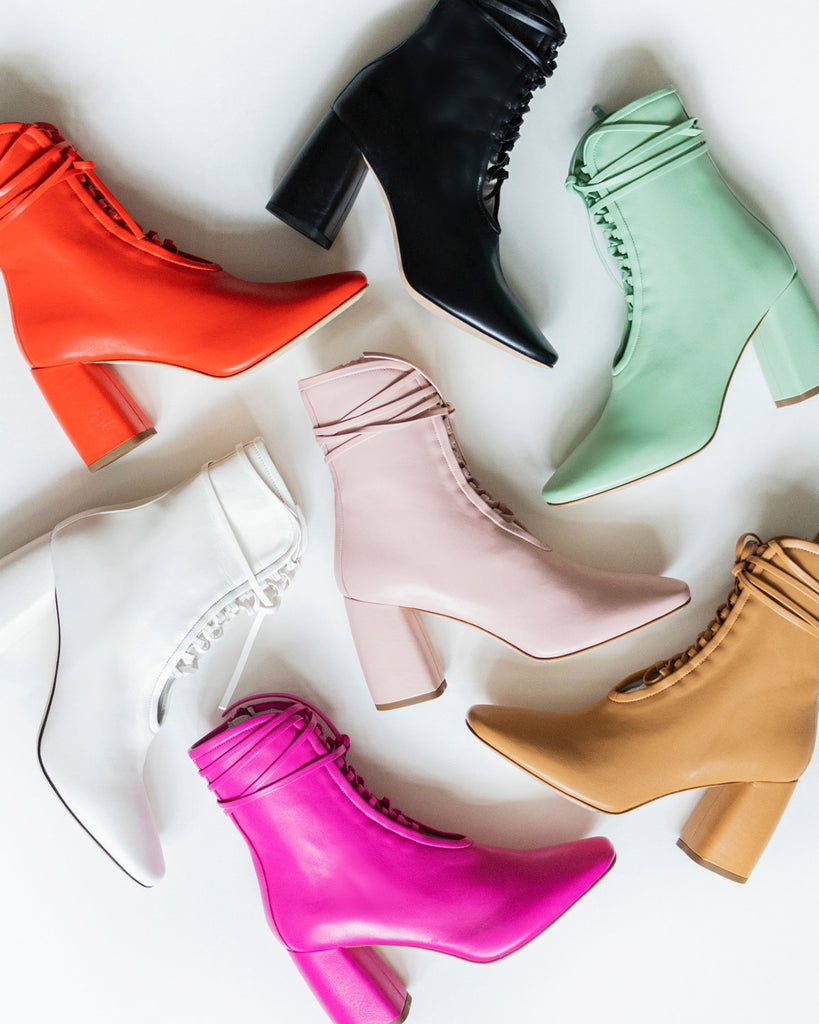


Sustainable fashion is a way of making, buying, and using clothes and shoes that considers their environmental, social, and ethical impact from design through end of life. In practice, it means choosing pieces that last longer, create less waste, and earn their place in your wardrobe through quality, repairability, and repeated wear.
You've probably felt the confusion firsthand. You pick up a shoe with an “eco-friendly” tag, another with “conscious materials,” and a third with “crafted responsibly,” and somehow you still don't know what any of it really means.
That uncertainty is reasonable. The idea of sustainability has expanded well beyond a single fabric, label, or trend. It now includes circularity, repair, resale, durability, and verified product information. It also asks a more elegant question: not just “Is this greener?” but “Will this deserve a long life in my closet?”
From my perspective as a luxury footwear designer, that's where the conversation gets more useful. Sustainable luxury isn't about buying joyless basics or feeling guilty every time you love something beautiful. It's about intention. A handcrafted boot you wear for years is often a more thoughtful choice than three impulse purchases that never quite fit, never feel comfortable, and never leave the back of the closet.
I think of it the same way collectors think about other long-lasting objects. If you've ever wanted a smart framework for judging enduring value, this guide for selling luxury timepieces is a good example of how quality, provenance, and condition shape worth over time. Fashion should be judged with similar discernment.
That buy less, buy better philosophy has always shaped how I think about design, comfort, and craftsmanship. You can see that mindset in Daniella's story and design approach, where the goal is luxury that supports real life instead of fighting it.
An Introduction to Conscious Luxury
Conscious luxury starts with honesty. A beautiful shoe can be exquisitely made and still raise questions about materials, labor, transport, and end-of-life. A shoe can also use a lower-impact material and still be a poor purchase if it pinches your feet, falls apart quickly, or only works with one outfit.
That's why the phrase what is sustainable fashion is best understood as a full-system question. It asks how an item is designed, how it's made, who made it, how long it lasts, how often it gets worn, and what happens when you're done with it.
In luxury footwear, this matters even more because shoes are complex objects. A dress might be one fabric. A shoe often combines leather or textile uppers, lining, insole, outsole, hardware, glue, reinforcement, and finishing. That complexity makes vague claims especially unhelpful.
Sustainable fashion becomes practical when you stop looking for a perfect label and start looking for proof of longevity.
For many women, the most sustainable shift isn't dramatic. It's choosing a day-to-night boot that works for the office, dinner, and travel. It's buying fewer pairs that do more. It's valuing Italian or Portuguese craftsmanship, comfort-first design, and a silhouette you'll still want to wear next year.
That's also why I don't see sustainability as separate from style. Timelessness is part of it. Versatility is part of it. Fit is part of it. If a pointed-toe boot is handcrafted beautifully but hurts by noon, it won't become a wardrobe staple. If a heel feels like a chair for the feet, it has a much better chance of becoming one.
The Real Meaning of Sustainable Fashion
Sustainable fashion rests on three pillars. If one is missing, the whole claim feels shaky.
The first is environmental impact. The second is social responsibility. The third is economic longevity, which is a practical way of saying the product and business model need to support long-term value rather than disposable consumption.

Environmental impact
Fashion's waste problem is one reason this topic moved from niche to mainstream. The industry produces about 100 billion garments a year, and an estimated 87%, or about 40 million tons, end up in landfills, according to Mintel's coverage of circular and sustainable fashion trends.
That number changes the conversation. Sustainable fashion isn't just about swapping one fiber for another. It's about reducing overproduction, extending product life, and keeping useful items in use for longer.
In footwear, environmental thinking often looks like this:
- Longer wearability: Shoes that hold shape, support the foot, and survive repeat use.
- Repair potential: Construction that makes stretching, sole work, or restoration worth doing.
- Small-batch decisions: Producing more carefully instead of chasing endless volume.
If you want a closer look at how smaller runs support this slower, more considered model, I like this piece on small-batch handmade Italian shoes.
Social responsibility
A sustainable product also carries a human story. Someone cut the pattern, stitched the upper, lasted the shoe, finished the edge, and inspected the final pair. When brands talk only about materials, they often skip the people.
That's a problem because true sustainability includes fair labor, ethical practices, and respect for skilled work. In luxury, craftsmanship shouldn't be treated as marketing poetry. It should mean the maker's expertise is valued, visible, and central to the product.
Economic longevity
This pillar gets less attention, but it's one of the most useful for shoppers. A sustainable piece should make sense over time. It should justify care, repair, and repeat wear.
Here's a simple way to think about it:
| Pillar | What it asks | Footwear example |
|---|---|---|
| Environmental impact | Does this reduce waste and harm? | A boot designed to last across seasons |
| Social responsibility | Were people treated responsibly? | Production with skilled artisan partners |
| Economic longevity | Will this stay valuable in use? | A versatile heel you wear from work to evening |
A handcrafted shoe with comfort-first design often supports all three pillars at once. It lasts longer, respects skill, and becomes part of your real life rather than a one-event purchase.
What Should You Look for in a Sustainable Brand
The easiest way to get lost in this category is to focus only on materials. Materials matter. They just aren't the whole story.
A more reliable method is to evaluate a brand the way a product developer would. Look at what it uses, how it makes, what it discloses, and whether the item is built for a long life.

Start with the product, not the slogan
The fashion sector is responsible for an estimated 2% to 8% of global carbon emissions, and one cited benchmark found that a single T-shirt has a median footprint of 3.01 kg CO₂e, with over 60% of that impact occurring in manufacturing, as explained in this overview of life cycle thinking in sustainable fashion.
That's useful because it shows where impact often sits. Many shoppers assume sustainability starts and ends with the fabric. In reality, manufacturing energy, process efficiency, and sourcing decisions can matter just as much, and often more.
For shoes, that means asking practical questions:
- Where was it made? Country alone isn't enough, but it's a starting point.
- How transparent is the brand? Can you learn about factories, materials, and processes?
- Is the product meant to be repaired or maintained? If not, it may be designed as semi-disposable.
- Does the design invite repeat wear? Versatility is part of sustainability.
Materials need context
Leather versus vegan alternatives is where readers often want a simple verdict. There isn't one.
A well-made leather shoe can last for years, mold to the foot beautifully, and justify maintenance. Some alternatives reduce animal input but rely heavily on plastic-based components. That can create a different set of tradeoffs around durability and end-of-life.
So instead of asking “Which label sounds better?” ask:
A smarter shopping question: Will this material age well, wear well, and support a longer product life?
That question often leads to better decisions than chasing a trendy material claim.
Transparency beats vague virtue
If a brand says it's sustainable, look for specifics. Good signs include supplier information, manufacturing details, repair programs, and clear language about product construction.
A useful place to compare those signals is a brand's sustainability page. You're looking for concrete evidence, not polished adjectives.
Here's a quick evaluation checklist:
- Traceability: Can you identify where the product was made?
- Durability: Does the brand explain construction, wear, or longevity?
- Care support: Does it offer repair guidance or after-purchase services?
- Honest scope: Does it admit tradeoffs, or does it claim perfection?
- Certifications or standards: Are these presented as proof points, not decoration?
Think in lifecycle terms
A lifecycle mindset means following a product from raw material to disposal. You don't need to run an LCA yourself. You just need to train your eye to think beyond the first impression.
That's especially important in luxury footwear. A pointed-toe boot that transitions from meetings to dinner, works across seasons, and still looks polished after repeated wear may do more for your wardrobe than several cheaper pairs with shorter lives.
A Look Inside Handcrafted Sustainable Footwear
A sustainable shoe becomes clear the moment real life starts. You put it on at 8 a.m., walk to work, sit through meetings, head to dinner, and notice when the day is done that it still looks polished and still feels good on your foot. That is a more useful test than any slogan.

I learned that lesson in factories long before I used the phrase “sustainable fashion” with any confidence. In Italy and Portugal, craftsmanship shows up in details that are easy to miss unless you know where to look. A maker resets a seam because the line is slightly off. An artisan rejects a component that technically passes inspection but will not age well. Someone adjusts the pattern or tension so the shoe sits better on the foot, not just better in a box.
Those decisions shape the whole life of the product. A handcrafted shoe works a bit like a well-built chair. You may not think about the joinery every day, but you feel the difference every time you use it.
If you want to see how those choices appear in finished design, this look at handcrafted women's shoes offers helpful context.
Craftsmanship changes what “sustainable” means in practice
In luxury footwear, sustainability is not only about what the shoe is made from. It is also about whether the shoe deserves to stay in your wardrobe.
That standard sounds simple, but it clears up a lot of confusion. A shoe can use a responsible material and still have a short life if the shape feels dated in six months, the construction breaks down, or the fit makes you avoid wearing it. By contrast, a beautifully made pair with a refined silhouette, stable heel, soft lining, and thoughtful proportions can serve you for years. That longer relationship is part of sustainability.
As a designer, I keep returning to three questions:
- Will she reach for it on an ordinary Tuesday, not just a special event?
- Will it stay comfortable enough to earn repeat wear?
- Will the design still feel relevant after the trend cycle shifts?
That is why a low-heel boot, a polished mesh bootie, or a sculpted pump often makes more sense than a novelty purchase. These are wardrobe workers. They carry more of the load.
Styles such as CLEO and ROMI fit that logic because they are designed for repetition. The shape is refined, the heel height is wearable, and the overall line works with tailoring, denim, and occasion dressing without asking you to build an outfit around the shoe.
Comfort determines whether a shoe can actually be sustainable
This is the part people often skip, and it matters a great deal.
If a shoe hurts, it becomes shelf decoration. The materials may be excellent. The factory may be responsible. The story may sound impressive. None of that changes the outcome if the pair stays in its dust bag.
Comfort gives sustainability a real chance to succeed. In footwear, that means looking closely at pitch, cushioning, toe shape, lining, flexibility, and how the shoe holds the foot as you move. Luxury should support a full day, not just the first ten minutes.
I care about that personally because I design for women with busy, varied schedules. The goal is not to create shoes that look delicate and live carefully. The goal is to create shoes that hold up through movement, travel, and long days while still feeling elegant.
A shoe you can walk in has a longer future.
Durability is becoming easier to verify
Regulators are starting to ask for the kind of proof careful shoppers have wanted for years. Under the EU's upcoming rules, textiles will require a Digital Product Passport with verifiable data on durability, reparability, and recycled content, according to this review of ESPR and the Digital Product Passport for textiles.
Shoes sit in their own category, but the direction is clear. Brands will need to show more of the product's story, not just describe it beautifully. That shift favors careful construction, repair-minded design, and products made to stay in use.
Handcrafted footwear also teaches a useful habit. You start noticing whether a pair was built to be worn hard and maintained, or built to sell fast. Once you notice that difference, it is difficult to unsee.
If you want to understand construction more fully, even basic making skills help. Learning to start your sewing journey can sharpen your eye for stitches, finishing, and why some products last longer than others.
That perspective changes how you shop. A style like ISABELLA or NOLA is not appealing only because it is elegant. It makes sense because elegance, comfort, and repeat wear are working together. In sustainable fashion, that combination is genuine luxury.
Your Practical Guide to Building a Sustainable Wardrobe
A sustainable wardrobe doesn't need to start with a dramatic closet purge. It usually starts with one calmer purchase decision.

When I'm deciding whether a shoe deserves space in my own wardrobe, I don't ask whether it's trendy. I ask whether it's useful, lasting, and wearable enough to become part of my actual week.
Ask better questions before you buy
A few questions can stop a lot of regret:
- Can I wear it three different ways? With tailoring, denim, and occasion dressing is a good test.
- Would I reach for it on a long day? If the answer is no, it may become dead weight.
- Does it solve a wardrobe problem? Great shoes should create ease.
- Can it be maintained or repaired? If not, its life may be shorter than you think.
That's where day-to-night versatility becomes more than a styling phrase. It becomes a sustainability filter. A pair that moves from commute to client dinner has more value than a pair reserved for one setting.
If you want to build some of those skills yourself, even basic mending changes how you relate to clothing. This resource on how to start your sewing journey is a nice reminder that repair can be approachable.
Care is part of the commitment
Once you own a piece, the sustainable choice is to keep it in use. Clean it properly. Store it well. Stretch it if the fit needs a slight adjustment. Repair it before small issues become major damage.
That's why after-purchase services matter so much in luxury. A brand that supports repair is signaling that the product is meant to live a long life.
For shoes, practical care often includes:
- Regular cleaning: Dirt and buildup shorten the life of beautiful materials.
- Proper storage: Shape retention matters, especially for boots and soft uppers.
- Preventive maintenance: Small fixes early are easier than major restoration later.
- Fit adjustment: A thoughtful stretch can rescue a pair that would otherwise sit unused.
A woman who cares for one excellent pair often gets far more value than someone rotating through several mediocre ones.
Circularity makes the wardrobe smarter
The final stage of sustainability is what happens when a product no longer serves you. Sometimes a shoe is still beautiful, but your lifestyle has changed. Sometimes the fit no longer works. In those moments, donation and recirculation matter.
Programs that extend product life become useful. The guide to donating designer shoes for credit shows one way to keep shoes in motion instead of sending them to the back of a closet or the landfill.
Later in the process, a closer look can help too:
One practical option in this space is Daniella Shevel, which offers repair-related support and a Soles4Souls donation credit program as part of a longer-lifecycle approach to footwear. That kind of support matters because sustainability isn't only about the purchase. It's also about what the brand helps you do afterward.
Buy with the second life in mind, not just the first wear.
If you adopt that mindset, building a sustainable wardrobe feels less like restriction and more like refinement.
Answering Your Questions on Sustainable Fashion
A client once asked me a question I hear often in footwear design: if two black pumps look similar on a shelf, why does one cost far more, and is the higher price really connected to sustainability? It is a fair question, because sustainable fashion can sound abstract until you bring it down to the level of a single object in your wardrobe and ask what it is made of, how it was made, how long it will last, and what happens after years of wear.
Is sustainable fashion always more expensive
Price and value are not the same thing.
A well-made shoe often costs more because it reflects better materials, skilled handwork, smaller production runs, and more attention to fit and finish. In luxury footwear, that difference shows up in places many shoppers do not see at first glance: the lining that feels better after hours of wear, the construction that holds its shape, and the components that can be repaired instead of discarded.
The better question is cost per wear. A handcrafted pump or boot that works for meetings, travel, and dinner can end up being the more economical choice if you wear it for years.
Does vegan automatically mean sustainable
Vegan is one piece of information, not the whole story.
It tells you the product avoids animal-derived materials. It does not tell you whether the upper is plastic-heavy, whether the shoe will crack after one season, whether workers were treated fairly, or whether the brand has thought about repair and resale. A sustainability claim needs the full picture.
Footwear works like architecture. The visible surface matters, but the structure underneath matters too.
How can I spot greenwashing
Start with the language. If a brand uses words like “eco-conscious” or “green” without explaining what those words mean in practice, slow down and read more carefully. The European Commission reported in 2024 that 60% of environmental claims in the EU were found to be vague, misleading, or unsubstantiated, as discussed in this analysis of how to define sustainable fashion and avoid greenwashing.
A few red flags come up again and again:
- Broad claims with no details: “Sustainable” appears on the page, but there is no explanation of materials, sourcing, or production.
- No traceability: You cannot tell where the product was made or who made it.
- No discussion of longevity: The brand talks about one good material but says nothing about quality, repair, or expected lifespan.
- Single-issue marketing: One positive feature is used to distract from the rest of the product's impact.
What deserves more trust? Specific information. Clear material descriptions. Relevant certifications. Honest explanation of tradeoffs. In footwear, I also look for signs that the brand respects the life of the product after purchase, because a shoe built to be worn, maintained, and recirculated is usually a shoe that was designed with more care from the beginning.
Sustainable fashion is not about getting every purchase perfect. It is about buying better, wearing longer, and choosing pieces with enough substance to earn their place in your wardrobe.
If you're ready to build a more intentional wardrobe, start with Daniella Shevel. Explore handcrafted, comfort-first styles designed for day-to-night wear, then choose a pair you'll love enough to keep in rotation for years.