

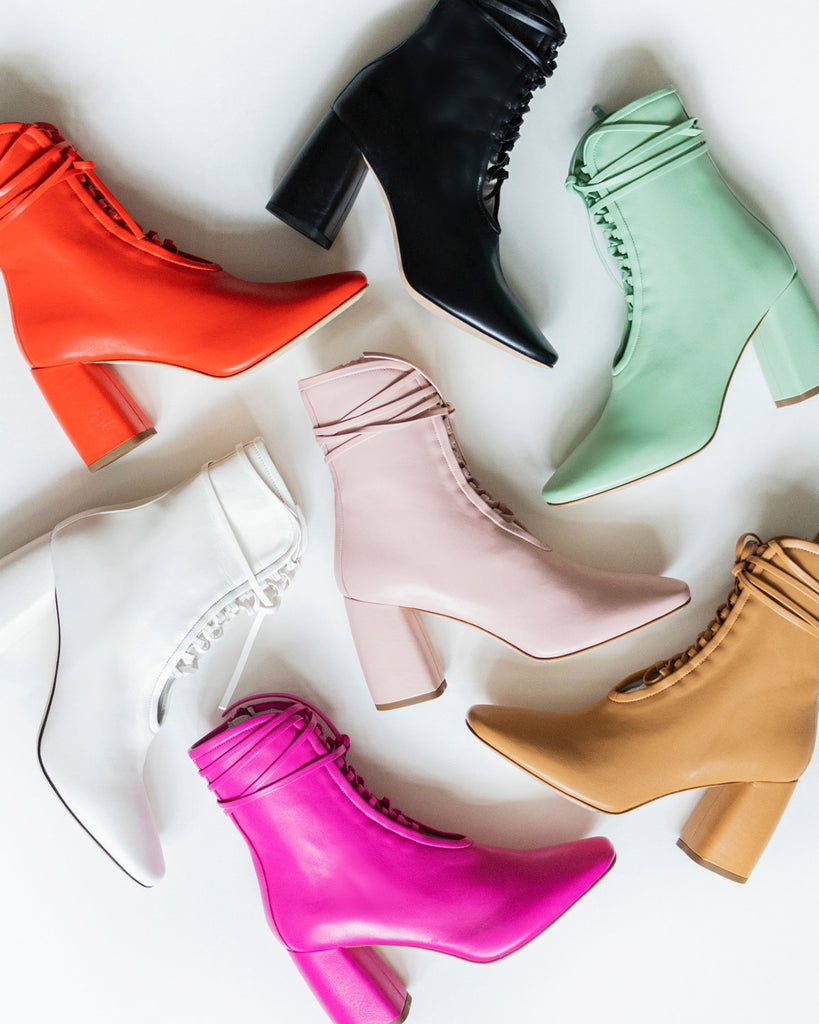


The global women's footwear market was valued at USD 31.93 billion in 2024 and is projected to reach USD 46.11 billion by 2032, because women are buying shoes that balance style with all-day comfort. The right stylish travel shoes for women do exactly that. They combine handcrafted quality, real comfort engineering, and day-to-night versatility so you can stop packing a “just in case” pair.
You're probably staring at an open suitcase right now, doing the same negotiation women have done for years. One pair for airport comfort, one for meetings, one for dinner, one emergency flat you hope you won't need.
I don't pack that way anymore, and I don't design that way either.
My philosophy is simple. Luxury should not be painful. If a shoe is beautiful but forces you to limp by lunch, it has failed. If it's comfortable but drains every bit of polish from your outfit, it has also failed. The only pair worth bringing is the one that works all day and still looks right at night.
Written by Daniella Shevel, Designer & Founder
The End of the Backup Pair of Flats
I used to watch women arrive at dinner with that tired look I know too well. Their outfit was polished, their bag was beautiful, and their feet were finished. Somewhere in the day, the glamorous shoe became the problem, and the emergency flat became the solution.
I reject that entire system.

The shift is bigger than personal preference. The global women's footwear market report says the market was valued at USD 31.93 billion in 2024 and is projected to reach USD 46.11 billion by 2032, driven by demand for footwear that balances fashionable aesthetics with all-day comfort and versatile, packable wear.
That doesn't surprise me. Women are done buying for fantasy. We buy for real days.
What I look for before any trip
When I pack, I ask three questions.
- Can I walk in it for hours: Not from the car to the restaurant. I mean airport, pavement, stairs, detours, and a long dinner after.
- Can it hold its shape in a suitcase: Soft is good. Collapsing into a sad little lump is not.
- Can it move from day to night: A travel shoe should work with tailoring, denim, and a dress. Otherwise it's luggage clutter.
The backup flat isn't a smart packing trick. It's usually evidence that the main shoe was wrong.
If you've been trained to think comfort must look compromise-driven, start with my guide to packable luxury flats for travel. It explains the standard I believe every investment pair should meet.
And if you're shopping with a buy less, buy better mindset, that standard matters. A travel shoe should earn its place in your closet long after the trip is over.
Deconstructing the Perfect Travel Shoe
You leave the hotel at 8 a.m. in a polished shoe that looks perfect in the mirror. By lunch, your heel is slipping. By mid-afternoon, your forefoot is burning. By dinner, you are scanning the room for a chair. That is not a stylish travel shoe. It is a badly engineered one.
I have no patience for vague comfort claims. A travel shoe earns its place through construction, material choice, and fit. Analysts at OutdoorGearLab in this walking shoe testing review found that cushioning, support, and fit make the difference on long walking days. I agree, but I care about how those elements are built into a beautiful shoe, not just an athletic one.

The three things I always inspect first
I start inside the shoe.
- Cushioning with structure: Softness alone is useless. I want layered support that keeps responding after hours on stone streets, airport floors, and uneven pavement.
- Precise fit: Heel security, toe room, vamp placement, and instep pressure all matter. One bad proportion will ruin the day.
- An upper that flexes intelligently: The best uppers hold the foot without pinching it. That is where supple leather, mesh placement, and pattern engineering matter.
This is what women with demanding itineraries often get wrong. They shop for appearance first and hope comfort appears later. It rarely does. If a shoe cannot manage pressure, absorb repeated impact, and move with your foot from the first hour to the tenth, it does not belong in your suitcase.
Why the insole and upper matter more than the sales copy
I care about memory foam, but only when it is part of a real system. Cheap foam feels pleasant for a few minutes, then compresses flat and stays there. Good cushioning has layers, rebound, and placement. It supports the heel strike, softens forefoot load, and prevents that tired, heavy feeling that starts halfway through the day.
The upper has an equally important job. Italian glove-fit leather is one of the smartest choices for travel because it molds to the foot instead of fighting it. That matters even more if you deal with bunions, a narrow heel, a fuller instep, or one foot that runs slightly larger than the other. Beautiful shoes become wearable shoes when the material has enough integrity to hold shape and enough softness to adapt.
I explain that standard in more detail in my guide to handcrafted Italian leather shoes. The short version is this. Better materials age with you. They should soften, conform, and still look polished after repeated wear.
My rule: If a brand can describe the color story but says nothing useful about the insole, lining, or upper construction, I assume the shoe was designed for photos, not travel.
My travel-shoe checklist
Before you buy, inspect the shoe like an editor.
| Feature | What to check | Why it matters |
|---|---|---|
| Insole | Layered cushioning with rebound, not one flat pad | Reduces fatigue over long walking days |
| Upper | Soft, adaptive material with secure hold | Prevents rubbing, heel slip, and pressure points |
| Heel pitch | Balanced angle under the foot | Keeps weight from dumping into the ball of the foot |
| Outsole | Reliable grip on polished floors and city streets | Helps you walk confidently, not cautiously |
| Silhouette | Refined enough for dinner, grounded enough for daytime mileage | Cuts down the number of pairs you need to pack |
A great travel shoe never asks you to choose between elegance and endurance. It gives you both through engineering you can feel by the end of the day.
Why Is Italian Craftsmanship Better for Travel
You land in Milan at dawn, walk the airport length twice, spend the afternoon on stone streets, and still need your shoes to look sharp at dinner. That is the ultimate test. Travel exposes every shortcut in construction.
I care less about the country stamped on the sole than the choices made inside the shoe. I've spent time in factories in Italy and Portugal because I want to see the upper pulled over the last, feel the leather before it is finished, and inspect where friction starts. A beautiful travel shoe is built from the inside out. If the leather is too rigid, the lining is cheap, or the insole is flat, you will know by lunchtime.
Italian making stands out because the materials and construction are often chosen for movement, not just appearance.
Leather that adapts instead of fights back
For travel, I want leather with memory and resilience. Italian glove-fit leather does this especially well. It softens, molds, and keeps enough structure to hold the foot securely, which matters if one foot runs slightly wider, your instep swells in flight, or you spend ten hours walking instead of four.
I explain that standard more fully in my guide to handcrafted Italian leather shoes. The short version is simple. Better leather breaks in without breaking down.
That is the difference women feel on demanding itineraries. Cheap uppers crease, stiffen at the flex point, and start rubbing exactly where your feet are most vulnerable. Good Italian leather moves with you.
Construction shows up at 10,000 steps
Travel comfort is rarely about one soft layer. It comes from several decisions working together. The last has to follow the foot naturally. The upper has to flex where you flex. The lining has to reduce friction. The insole has to cushion and rebound, not just feel plush for five minutes in a fitting room.
Small-batch production helps because more of those details are checked by hand. In practice, that means cleaner stitching, better alignment through the arch and heel, and fewer internal pressure points. I see the difference immediately in how the shoe bends and how stable it feels on uneven pavement.
This is why I keep returning to Italian and Portuguese makers for travel shoes. They are often better at balancing softness with structure. That combination is what lets a polished shoe survive long walking days, airport sprints, and repeated wear without collapsing into a tired shape.
- The upper conforms more intelligently: It gives where your foot needs room and still keeps its line.
- The interior feels smoother: Better lining and finishing reduce hot spots and rubbing.
- The shoe lasts longer: The shape stays refined after real use, which is the whole point of an investment pair.
A travel shoe should improve with wear. If it only looks good in the box, it is not made well enough for the way women travel.
The Perfect Silhouettes for Every Itinerary
You land in Milan at 7 a.m., walk hotel to showroom to lunch to dinner, and by 4 p.m. your shoes have decided the day for you. That is why silhouette matters. The right shape determines how a shoe carries weight, protects your foot, and still looks polished after ten thousand steps.
A significant number of women planning Europe trips talk about foot pain, swollen feet, and shoes that fail by day two. Generic advice usually points them straight to sneakers. That overlooks the core problem. Many women need one refined pair that can handle cobblestones, long museum days, and a proper dinner without looking like an athletic compromise. I see that problem constantly, especially among women with bunions, narrow heels, or feet that swell in transit.

For European city days
Start with a low-heel boot or bootie. It gives you coverage, stability, and enough structure to keep your foot from sliding forward on uneven pavement. The heel should be modest and well-positioned under the body, not pitched in a way that throws your weight into the ball of the foot. The upper should feel soft from the first wear, ideally in a glove-fit leather that flexes around the foot instead of forcing your foot to adapt to the shoe.
I choose this silhouette for cities because it does more than one job well. It works with trousers during the day and a dress at night. It also shields the foot better than a flat when streets are rough, wet, or crowded.
Read my guide to the best shoes for walking in Europe if your trip includes old streets, long gallery days, and late reservations.
- Wear it with: cropped trousers, knit dresses, dark denim
- Works for: flights, walking tours, meetings, dinners
- Skip it if: your trip is beach-focused and completely casual
In warmer weather, I still like a covered silhouette if the material is right. A breathable mesh or perforated upper can give you airflow without losing the clean line that makes a travel wardrobe look intentional. Coverage matters for comfort. Weight matters too.
Here's a closer look at how one pair can carry a travel wardrobe.
For business trips that turn into dinner
Pack one sharp shoe that can survive the walk before the meeting. I prefer a pointed bootie or a sculpted heel with real internal cushioning, a stable heel base, and enough toe room that your foot is not compressed by noon.
The wrong business shoe looks polished for an hour and punishes you for the next eight. The right one keeps a strong line but is built with better foam, better balance, and leather that softens instead of fighting back. That is what lets one pair handle a presentation, a car ride, and dinner without needing a backup in your tote.
If a shoe can't survive the walk before the meeting, it doesn't belong in the meeting either.
For destination weddings and dressier evenings
Evening shoes still need architecture. I do not care how pretty the sandal is if the straps cut in, the insole is flat, or the heel is too narrow for real ground.
Choose lower heels, cleaner lines, and a shape that keeps you secure when you stand, turn, and walk across stone, grass, or a hotel terrace. For special events, I want the shoe to look elegant in photographs and feel grounded in motion. Those two things can coexist. They should coexist.
For warm-weather travel with a lighter wardrobe
A sandal has to earn its place. If it only works with one dress, leave it home. If it slips, flaps, or makes you grip with your toes, leave it home faster.
Look for:
- A secure fit: the foot stays in place without clawing
- Support through the insole: enough cushioning and rebound for long days
- A refined shape: clean straps and good proportions that finish an outfit properly
The smartest packing strategy is overlap. Choose silhouettes that can cross from day to evening, from walking to dinner, from structured pieces to relaxed ones. That is how you stop packing apology shoes and start packing investment pairs that travel well.
Solving for Your Feet and Finding a Perfect Fit
Women with bunions, narrow heels, high arches, or sensitive feet have been sold a lie. They've been told that if they want relief, they must accept orthopedic-looking shoes. I don't accept that.
An underserved angle in travel content is fit. 65 percent of luxury buyers with foot deformities abandon purchases due to poor fit, yet guides rarely mention glove-fit construction or three-part memory foam cushioning in artisanal footwear, according to this travel forum discussion on fit issues in luxury shoes.

What glove-fit construction actually means
This isn't a poetic phrase. It's a build principle.
The technical benchmark for glove-fit construction uses stretch-leather uppers with 15 to 20 percent elongation capacity and a zero-seam interior lining. That combination reduces internal friction by 60 percent and accommodates bunion variances up to 8mm without pinching, according to the technical data in this Rick Steves travel community post.
That matters because friction, not just pressure, causes a lot of the misery women blame on “bad feet.”
How I advise women to shop for fit online
Don't buy by size number alone. Buy by shape.
Start with your real foot behavior after a day's activity, not first thing in the morning when everything is calm and narrow. If one foot is slightly different, shop for the larger or more sensitive foot. If your bunion flares after walking, look at the upper material before you look at the toe shape.
Use this sequence:
- Measure length and width properly using a guide like how to measure shoe size and width.
- Check the upper material for softness and adaptive structure.
- Inspect the interior for seams that will sit directly on a pressure point.
- Look at the toe box shape and whether it allows your forefoot to settle naturally.
- Ask about stretching or fit support if you're buying investment footwear.
Matching foot concerns to design solutions
| Foot concern | What to prioritize |
|---|---|
| Bunions | Stretch leather, zero-seam interior, forgiving forefoot |
| Narrow heels | Secure heel hold and precise shaping through the back |
| High arches | Supportive insole design and stable weight distribution |
| Sensitive skin | Smooth lining and minimal internal friction |
A beautiful shoe that pinches is badly designed. It is not a discipline problem on your part.
For women who've struggled with fit for years, the answer is usually better construction, not lower standards. If you need a dressier style that doesn't feel brutal, start with options built around softer leather and cushioning, such as the RILEY boot, which suits women who want shape without harshness.
Packing Care and Ensuring Longevity
A good travel shoe deserves better than being shoved beside a charger and a cosmetic bag. If you buy handcrafted footwear, pack it like it matters.
I always recommend stuffing the toes lightly with socks or tissue, using shoe bags, and placing heavier items away from the uppers. Leather remembers pressure. Treat it carelessly for a week and you'll spend months trying to reverse the damage.
How I pack leather shoes
Keep it simple and disciplined.
- Stuff the front gently: This helps preserve shape without overexpanding the toe.
- Use separate shoe bags: Outsoles don't belong against clothing or delicate leather.
- Place shoes along the suitcase edge: That keeps the center free and reduces crushing.
- Avoid overpacking on top: Compression leaves marks, especially on softer uppers.
For a practical walkthrough, read my guide on how to pack shoes for travel.
How I keep investment pairs looking good on the road
Travel exposes shoes to dust, polished floors, pavement, and weather shifts. That doesn't mean they should look tired after one trip.
Carry:
- A soft cloth: For quick wipe-downs at the hotel
- A small leather-safe conditioner: For scuffs and dryness
- Bandages only as insurance: Not as your core comfort strategy
If you're planning a long itinerary, I also like pairing shoe planning with broader logistics. SafePing's complete travel planning is a useful resource for organizing the rest of the trip with the same level of intention.
Buy less, care more
Sustainable luxury isn't about saying the right words. It's about wearing beautiful things longer, repairing them when needed, and choosing quality from the start.
That's also why I believe in circularity. Through our Soles4Souls partnership, customers can donate pre-loved shoes for a $75 credit toward a new pair. I like systems that reward responsible habits instead of endless disposal.
If you want the last travel shoe you'll need to pack for years, choose the pair that can handle movement, weather, and repetition without asking you to compromise your style.
Ready to find the last travel shoe you'll ever need to pack? Shop Daniella Shevel, explore the Bestsellers collection, and start with a pair designed for real movement, elegant dressing, and no backup flats.